The Journey Through KCS

GrowthLots of little ones are joining KCS this week. And this year they’re littler than ever.

As of this September, KCS now has pre-, junior and senior kindergarten, in addition to grades 1 to 8. The excitement among faculty is palpable, and the desire to do our best for these youngest of students as strong as ever. Like we do for every student, we’ll follow their journey through to graduation from KCS with heartfelt interest. Here’s some of what they will come across:

  1. Deeply caring and driven teachers who are constantly improving what they do to best meet their students’ needs.
  2. A school experience committed to giving students the academic foundation and Habits they need to be successful in school and throughout life.  Their learning will be enriched, at times accelerated, and differentiated to meet the strengths and needs of all.
  3. A house system, led by senior students, that brings community, spirit-raising and friendly competition to the school day.
  4. An immersion in student leadership that makes clear everyone can be a leader, and that leadership can unfold in infinite ways.
  5. When in grade 1, they will have a grade 8 buddy who will organize get-togethers, high five them in the hall and be an example of the fine young men and women they will also become.
  6. An extra-curricular schedule with around 35 club and team opportunities available to the students each term.
  7. A regular message that they can make the world better, through acts big and small, through our Wall of Service and service learning projects.

Some will start shy and become contest-winning public speakers. Some will become passionate artists.  Some will discover a penchant for politics, and will debate provincial legislation at the Ontario Legislature in grade 8. Some will bring home championship banners in sports. Some will become published authors in our YAKCS program. Some will discover special talents in math contests and robotics. Some will perform in an orchestra at Roy Thomson Hall. Many will become leaders with experience and skill beyond their young years.

It’s amazing to watch little ones grow. Immersed in the same opportunities, the unique core in every child will blossom in whatever way it chooses to.

That’s why we watch with so much interest. And why we’re so excited to be part of the journey.

Andrea Fanjoy,
Assistant Head, Academics
You can follow Andrea on Twitter @afanjoy.

Summer Learning

SummerCubbies are cleaned. Lockers lay bare. Papers have been sifted through with favourites kept and the rest thrown out.

Summer holidays have arrived, and the weight of the academic world has been lifted for another year.

I’ve been guilty of thinking that children have it relatively easy. I can remember once pointing out to a group of teens how hard their teachers are working, leading extra-curriculars, teaching all day, marking and planning every evening. I deserved their immediate challenge. They reminded me that, in fact, students also have a lot of demands on them. They’re involved in those school extra-curriculars and more, they’re in those classes throughout the day, and they’re doing homework every evening. They have endless expectations on them for managing themselves and their work. Many regularly face misunderstanding, mistakes and reprimand in both academics and social relations. They navigate this world with the vulnerable self-esteem, self-confidence and skill set inherent in being young. Even in the best schools, the days are not easy.

Many parents and teachers bemoan the long gap between June and September. It’s true that some academic learning can take a hit. Having said that, other learning should be savoured in the summer. Because the school year doesn’t always make enough time for it, here is some of the summer learning I hope all children work hard at this holiday:

  1. Learning through play
  2. Learning through mistakes
  3. Learning within one’s strengths and passions
  4. Learning and relaxation in a healthy balance
  5. Learning what and how you want, just for the love of it

Lots of important things are learned at school. And lots of important things are learned outside of school. Like students, teachers also learn a lot over the summer. Maybe, as a result of all their learning, more of this summer learning will work its way into the school year.

Have a wonderful, learning-filled summer.

Andrea Fanjoy,
Assistant Head, Academics
You can follow Andrea on Twitter @afanjoy.
This article will be published in the July 2013 edition of SNAP Etobicoke.

Teacher, Meet Brain.

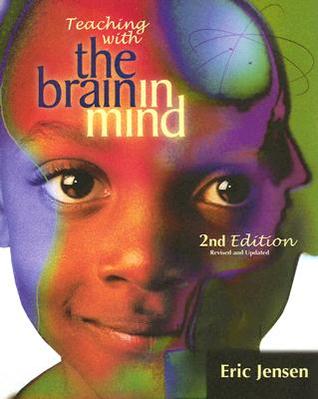
Teaching with the Brain in MindThat’s how it felt to read Teaching with the Brain in Mind by Eric Jenkins. While the bond between the brain and learning has been known for centuries, the two have been notably coy. It is only recent research which has started sharing and subsequently sparking the intimate side of this complex relationship. And like the rush of first love, it will blow your mind.

My measure of a great book on education is the degree to which it ends up highlighted. Barely a page of Jenkins’ book escaped my yellow swipe. Starting with Neuroscience 101, Jenkins addresses many of the major areas related to learning and highlights the research and implications it has for teaching. From birth and beyond, he looks at preparing the brain for school; the connections between movement, emotions, and one’s physical environment with learning; managing the social brain; and optimizing motivation, engagement, critical thinking, memory and recall. Clearly affecting a significant chunk of the school experience, Jenkins is devoting his career to having teachers ‘teach with the brain in mind’.

Some insights include:

  1. The brain changes and can even grow new neurons throughout life. Nature and nurture both clearly play a role in defining who we are, with growing evidence revealing that nurture can override some nature, even to the degree of changing the impact of our genes.
  2. Exercise offers much more than just physical health. If you desire a denser and better brain, make regular exercise a lifelong habit.
  3. Much of what distinguishes teenage behaviour is rooted in the enormous changes taking place in their brains. Teens even temporarily regress in a number of abilities, such as their ability to recognize emotions in others.
  4. While collaborative learning gets most professional press these days, brain research supports the integration of group activities with traditional learning tasks for optimal learning.
  5. Emotions play a central role in learning and can hinder as much as enhance the brain’s ability to remember. Teachers would benefit from mindfully leveraging them.
  6. Frequent opportunities for movement, and breaks where no new learning happens, are important for long-term storage of learning.

Teachers, indulge in the intimate details of the learner-brain relationship. Meddle even. This is one couple that needs you in the middle.

Andrea Fanjoy,
Assistant Head, Academics
You can follow Andrea on Twitter @afanjoy.
This article was first published in SNAP Etobicoke, May 2013.

Kind Gesture Leads to Unexpected Encounter

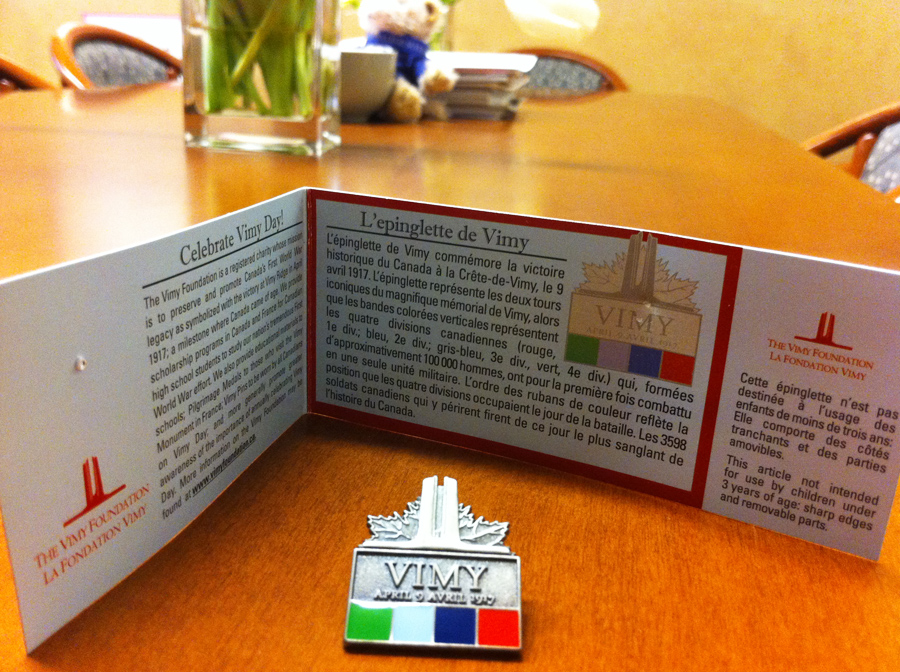
Vimy PinLast Monday I was sitting in my office when one of our grade 8 students knocked on my door and asked to speak to me. He had been on our European Battlefield trip with his Dad in March and they had written a thank you letter to me (as well as the five other faculty and staff who were on the trip). In addition he gave me a Vimy Pin. April 9th was the 96th anniversary of the Battle of Vimy Ridge, and he asked me to wear the pin the next day to commemorate the battle and honour those Canadians who had fought in 1917.

The next morning, I put the pin on and went outside during drop off. A parent rode up with her son on her bike. She noticed the Vimy Pin and said that she saw an article in that day’s National Post about Vimy. This led me to stop into our Business Manager’s Office later in the morning as I knew she had the Post delivered to her house. I asked her if she would save the article for me as I was interested in reading it. While standing in the doorway of her office, the Church receptionist overheard us talking. She asks me if she heard correctly that I was speaking about Vimy. I said yes, and then she asked me whether I knew the name of the designer of the Memorial.  Of course, I couldn’t remember on the spot!  That’s when she told me she was related to Walter Seymour Allward, the designer. She told me some stories, including that she has visited the Memorial twice, the last time in 2007 after it was refurbished; that she’s been in the catacombs beneath the Memorial; that Walter has other pieces of work at Queen’s Park, in Brantford, etc., and that he’s buried locally in Toronto. Her and her sister have researched Walter over the years. Of course this led me to a further conversation with one of our history teachers and one of the main organizers of our biannual battlefield trip. She said she would arrange for some of our students to interview the Church receptionist for their end-of-the-year history project.

The above story started with a thank you. A very kind gesture indeed, but one that had the added bonus of leading to an unexpected encounter at KCS. You just never know where good deeds will lead and where this story may go next.

Derek Logan
Head of School

Learning What We Don’t Want to Learn

Habits of Mind, Body and ActionThe first Habit on our poster is ‘Embrace Learning’. Don’t let the soothing tone of the word ‘embrace’ deceive you. We could have just as easily described it as ‘Learn whether you like it or not’.

Learning can be like that. Thankfully, most of the time, and certainly at KCS, learning does feel like a warm embrace. It’s delivered by teachers who evidently care about their students and about making learning as positive as possible. And so it should be.

I’ve been reminded recently, however, about the underbelly of ‘embrace learning’, a side that was always intentionally part of that Habit, but that may have gone unnoticed, hidden in the shadows of the ever-more pleasant type of learning that is more the norm here. I’m talking about those important lessons in life that we resist, the lessons we’d prefer not to learn, but learn we should. They may challenge our character, or reveal a sandy foundation upon which we had built mighty assumptions. These lessons may arise when exams yield lower marks than expected; sometimes they arise when we’ve done something we’re later ashamed of; sometimes they will trip up students who otherwise find learning very easy, but then are faced with a topic that is annoyingly difficult to understand. Though these examples focus on the young, we’re never too old for these lessons. And while these examples focus on others, I don’t pretend to be immune.

Humans are generally a comfort-seeking lot. Daniel Willingham, cognitive scientist and author of Why Students Don’t Like School, argues that the brain strives to be as efficient as possible, lazy even, preferring to do as it wishes and not as it is forced to do. Add a dash of limited understanding, bias, immaturity, emotion, or over-confidence, and you have someone ready for one of these most humbling lessons. If they embrace it.

Most learning should feel like a warm embrace. But growing up and being our best self will include these more challenging lessons too. While decidedly uncomfortable, the reward for their steep price is broader understanding, growing maturity, more rational thought and healthy humility. Resilience, thinking flexibly and the ability to persist, three other noteworthy habits, also grow as a result.

That’s learning worth embracing.

Andrea Fanjoy,
Assistant Head, Academics
You can follow Andrea on Twitter @afanjoy.

Testing What Matters in Life

How did you do on your last test?

If you’re not a student you probably can’t remember. Tests are for students, right?

Formal education has a long history of testing. Spelling, math, science, history – no other institution tests more than schools. Obviously.

KCS CaresWhat’s not as top of mind, however, are the tests that we face minute-by-minute, wherever we are, whomever we’re with and whatever we’re doing. These are the tests of character that appear in our interactions with others, choices of how to spend our time, how we work, how we play, and how we respond to the challenges thrown our way. And if you’re following what most experts are saying, it is character, and specifically traits such as initiative, curiosity, grit, creativity, and adaptability, that will best determine our success in life.

Educators and parents alike spend a lot of time thinking about tests, whether designing, marking or preparing children to do their best with them. Tests help us monitor growth in students and effectiveness of teaching. They have value. But most of these tests don’t measure what matters most. They aren’t designed to.

So, what would a test of character look like? Simple. Watch what others do, of their own volition, and particularly when out of the gaze and direction of authority figures. Minute-by-minute.

And if you want to help prepare students to do well on these tests? Provide a school experience that not only teaches character but also includes the encouragement, time and support needed so students can practice the skills and traits that matter, and do so for their own purposes. Students of character need freedom to initiate, create, persist at solving real problems, make a difference and more, not for marks and not because they’re told to. They need a school that believes in the infinite potential of children, if we let it take shape, and a school which recognises that this means doing a number of things differently.

Educators, watch what your students do with free time. That’s testing what matters. And give them a school experience that lets them develop the traits and skills that matter most. That’s preparing them to ace the test. You won’t be disappointed.

Andrea Fanjoy,
Assistant Head, Academics
You can follow Andrea on Twitter @afanjoy.
This article was first published in SNAP Etobicoke, December 2012.

Thinking, Doing and Checking Assumptions at the Door

By the time this is published, the four months of construction on our house should be nearly done. The experience has left me with more than just an addition.

Shop Class as SoulcraftBrowsing for a good summer read, I stumbled upon Shop Class as Soul Craft by Matthew Crawford. Crawford was a 14-year-old electrician, who moved on to tinkering with car and motorcycle engines, then went to university to earn a PhD in philosophy. Hired to work in a think tank, he assumed he had reached the pinnacle of achievement. He was highly educated, well paid, well dressed and looking forward to the intellectual challenges that would surely ensue.

Assuming the prevailing attitudes of the day, he grew up with the notion that university and the jobs it led to were a higher calling than the trades. University was for people who were good at thinking, while college was for those better at doing. Reverence was reserved for the former.

Not many people have so fully walked down both paths as Crawford. His voice of unique experience reveals that our thinking had more than a fair share of nonsense. First, the notion that all work following university requires supreme thinking he found to be supremely hollow. The many people he met working in the trades spent their days pondering and solving complex problems the likes of which he never found at the think tank.

Equally revealing, Crawford outlines the evolution of both work and attitudes surrounding it. Prior to the onset of the Ford Motor Company and other more efficient models of machine-making, the trades were recognized for what they are – pursuits that offer endless thinking as well as doing, that bring evident value at the end of a day’s labour. The rewards inherent in self-reliance have vanished for many of us today. Of course, university is a training ground for significant work. It simply isn’t the only such training ground.

Smart thinking includes scrutiny of assumptions. Thanks to the scrutiny in Shop Class as Soul Craft, and made real by our home renovation, my summer has included this unexpected bonus of appreciation and humility. Encourage youth to find their calling, and check assumptions at the door.

Andrea Fanjoy,
Assistant Head, Academics
You can follow Andrea on Twitter @afanjoy.

This article was first published in SNAP Etobicoke, October 2012.

The Yin and Yang of Learning

There’s nothing like our grade two International Celebration to remind me of the Yin and Yang of learning.

Last Friday, our grade twos showed up in costumes from around the world. In their grade-two way, they did a brilliant job at assembly and then back in their classrooms sharing what they knew about their adopted countries.

What I love about this is the way these projects immerse students in how different life can be elsewhere. Some people argue we should focus on our similarities with others, and of course there are many. However, I’m most grateful for our differences, because it’s our differences which make us reflect anew on ourselves.

When I lived in Japan, not a single day went by when I didn’t learn something new, something that made me pause and adjust my understanding of the world and what was possible in it. Among all those lessons was that of Yin and Yang, and the notion that life is full of complementary opposites – it always was, is, shall be and should be – just like night and day.

This flies in the face of the primal Western mindset – the conviction that all can and should be great, that happiness should be a singular goal, and that frustration, setbacks, and grief are bad and to be avoided.

Heavy stuff from a grade two showcase.

Taking place one week before the end of school, I can’t help but reflect on the year. We wholeheartedly strive to maximize the Yang (light) part of the duality. Learning should have many successes. It should have moments of unbridled joy. There are so many such moments at KCS that a book couldn’t capture them all, let alone a blog.

It’s also important to remember the presence and the role of the Yin (dark).The year has also had frustrations, tears, injuries, and conflicts. There have been disagreements, hurt feelings, difficult discussions, and problems that lingered longer than anyone wanted. We work hard to minimize them, yet they happen anyway.

Life happens in complementary opposites, and life happens at KCS. Learning to be resilient is one of our KCS Habits because being resilient is necessary to get through the bumps inherent in a life fully lived.

We’ll keep working to make as much happiness as possible at KCS. And we’ll keep working to help our students face any setbacks. Knowing what matters in life includes both.

Thanks for the reminder, grade twos. And thanks to everyone, teachers, parents and students, who live through the Yin and Yang with us. It has been a great year of learning.

Andrea Fanjoy,
Assistant Head, Academics

You can follow Andrea on Twitter @afanjoy.

Make Room for Passion

Maybe we already ask too much of education. Our profession has certainly evolved from a focus on the ‘3 Rs’ to include many other expectations, academic, social, moral, physical and otherwise. Because these expectations are all worthy, we accept them as part of our role. And because making room for passion is also worthy, and increasingly so, it should be included among the expectations we place on ourselves.

Anyone following the dialogue in education is aware of the growing need to prepare students for an unknown future. Students today are likely to have many different careers in their lifetime, holding jobs that don’t even exist yet. The future is full of opportunity for people who can drive their careers, who are adaptable, who can learn what needs to be learned, and who are energized enough to make their role matter in a global competitive market. If it ever was straightforward, the world is decreasingly so, thanks to technology and the interconnectedness that binds our lives to every other person and place in the world.

Sir Ken Robinson is one of the most highly renowned voices, and critics, in education today. A major theme in his work is the importance of nurturing creativity. Another theme, captured in his book The Element: How Finding Your Passion Changes Everything (2009), is the importance of nurturing one’s passions, and the unfortunate absence of that as a priority in conventional schooling. Of course, all is well for students whose passions align with the school curriculum. The trouble is, the world is much bigger than the scope prescribed by the Ministry of Education. Student-driven learning, during the school day and with the guidance of interested adults, is too rare a part of formal education. Yet this is exactly what we need to instill in them to be successful as adults.

Finding one’s passion can be the difference between a life driven by happiness and one crippled by disinterest. It can be the difference between a life fully lived and one only a fraction so. It can also be the difference between the students who feel school matters, and those who feel it doesn’t. Make room for students to explore their passion at school. And see how it changes everything.

Andrea Fanjoy
Assistant Head, Academics
Twitter: @afanjoy

This article also features in the April edition of SNAP Etobicoke.

More than Spring has Sprung at KCS

Springtime is the land awakening. The March winds are the morning yawn.
~Quoted by Lewis Grizzard in Kathy Sue Loudermilk, I Love You

The warm sunshine, return of the robins, dancing daffodils and burgeoning tree buds weren’t the only new arrivals to recently grace our community. Though the emphatic entrance of spring was deeply appreciated, something else has awoken that even topped the weather for its sheer delight.

After years in our thoughts, dormant but developing, KCS is now proud to offer electives, electives with some significant twists, twists that had many of the grade 6 students, who get first crack at this opportunity, beside themselves with excitement.

A general introduction to electives was in last week’s parent e-newsletter Stay Connected. They’re designed for students to just learn for the love of it, learn by choice, not for marks, nor because the Ministry of Education says you must. It’s a time to develop the Habits of Mind, Body and Action that indisputably set us up to be successful. And it’s a time to offer an unlimited array of meaningful learning. If teachers and students can dream it, they now have time to do it. Directly connected to our school mission of developing lifelong learners, it’s designed to stoke the flames that fuel lifelong learning.

Judging from my small group of third-language learners, it’s working.

Students in grade 6 were given eight electives to choose from. Based on their choices, the forty-two students are now in one of six electives for 100 minutes each week of third term. One group is learning to cook from Chef Cirillo of Cirillo’s Culinary Academy. The result of their labours this past week was a mouth-watering chicken cacciatore dish that went directly to a youth shelter. Another group is engaged in geocaching. Enriched technology, art and drama are also taking place. And my group has each student learning the foreign language of their choice. Concurrently, (and thanks the significant help of Rosetta Stone language learning software), the students are learning the following languages: Mandarin, Japanese, Italian, Spanish and Filipino. Just because they want to.

Some of you may have read Sir Ken Robinson’s book The Element: How finding your passion changes everything. He’s right, of course. The bulk of his book exposes the far too common disconnect between the regular school day and finding one’s passion, as if passion only has relevance in extra-curricular pursuits. Not here.

One of my students announced he was going to try to learn enough Mandarin to use it exclusively with the flight attendant on an upcoming family trip (hmm, not sure how that will go but keen to know!) To achieve his goal he has asked if he can use the software at home and if there are apps he can download on his iPad.

Lifelong learner, check.