Exams Got You Down? Just PAUSS

The following blog first appeared one year ago. It’s as relevant now as it was then. We all face challenges from time to time, and how we face them makes all the difference. That’s where the KCS Habits come in.

At KCS, it’s our mission to develop lifelong learners with the habits to face and embrace life’s challenges. Many of our students and parents have an extra one of those challenges on their plate right now.

Exams.

Students in grades 6-8 write exams starting January 28th. Love them or dislike them (yes, we’ve had students say they love them!), learning to prepare for and take exams is a challenge we all have to face at some point. Starting them in grade six, with ample guidance and time learning how to prepare, is the best way to start. Though a big deal, exams at KCS are also a safe opportunity to face this challenge, ‘try your best’, and learn from mistakes.

Looking at our Habits poster in my office Friday morning, I wondered which of the habits students should focus on to be successful preparing for exams. Five stood out. When written down, it became clear they made for a nice little acronym – a beacon for calm in the storm of stress that often surrounds the ‘e’ word. The acronym is PAUSS. The habits are:

Persist – this is a marathon, not a sprint

Adapt – old patterns of studying and time management likely need to change

Use past learning – use notes and old tests; use strategies that you already know to work, and avoid those that you know don’t

Show self-control – stick to the study plan; focus on the task; remember to also rest, eat well and get exercise

Strive for accuracy – follow the study keys, test yourself, aim to understand any errors

Exams inherently stir up anxiety. PAUSS, happily, does not.

If your child is writing exams, encourage them to PAUSS. And watch with pride as your child develops habits that matter. Take heart. Dread will soon be replaced with delight, and doubt will be replaced by well-earned confidence. And the unknown challenges to come will face a tougher foe.

When the walls disappear…

Just recently, Officer Douglas from the Toronto Police delivered a timely talk to our middle school students about social media – the predominant tool being Facebook – where you post and share messages and images.  An interesting fact quickly spreading is that Facebook collects and owns all of the information you post.

Digital ToolsWhen you read and/or post online, you are usually in a safe place: your classroom, office, kitchen, living room, bedroom or the passenger seat of a car. You are usually using your own laptop or smartphone. The setting is one of comfort and security. There are physical walls around you to keep out harm; there are firewalls around your electronic device to keep out intruders. In this comfort zone, you are more likely to submit personal information about yourself (or others) online. However, as soon as you press ‘send,post or submit’, these walls disappear. Poof!
The images and/or words that you just transmitted entered cyberspace where there are no walls, where anyone and everyone can see and hear everything that is online, including the police. Even if you delete it, it’s too late; a copy was made the instant you pressed ‘send, post or submit’.

So before the ‘walls disappear’, think twice about what you post. Will you be worried about the images you‘re uploading? Will you be worried about the text that you‘re about to put out there? If yes, hit delete.

Stacy Marcynuk
Director of IT, Curriculum
Kingsway College School

The Seven Habits of Highly Effective Thespians

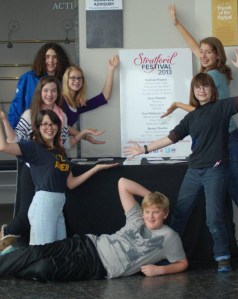
KCS Students Perform at Studio TheatreAs many of you know, on a Friday back in November Ms. Biljetina and I took a group of eight Grade 8 KCS students to Stratford, Ontario to take part in the Student Players Festival: the fourth and final stage of Stratford’s incredible Teaching Shakespeare program. Our students performed a 10 minute scene from Romeo and Juliet on the legendary Studio Theatre stage in front of peers, parents and professional adjudicators from the Stratford Festival.

Since the students had also been studying S.E. Hinton’s novel The Outsiders, we decided to set our scene in the 1960s – the Capulets became Soc’s and the Montagues turned into Greasers. What happened on that stage was truly magical. Working with a professional stage crew, the kids learned about blocking, sets, timing, and all the other behind-the-scenes machinations that go into a professional stage production. But what they really learned went so far beyond that. Call it The Seven Habits of Highly Effective Thespians:

  1. Take responsible risks: Putting themselves out on the stage to be adjudicated was a huge risk – not only for the kids, but for us directors!
  2. Seek collaboration: The students not only had to work with each other and their teachers to plan the scene, a professional actor from Stratford also stepped in to offer advice and direction.
  3. Think creatively: Benvolio wearing hair gel and a leather jacket? The kids truly had to open their minds to combine these two works of literature.
  4. Find humour: A bumbling police officer introduced the two warring houses of Verona. Hilarious.
  5. Strive for accuracy: The students choreographed a stage combat scene that required precision and planning to ensure that it looked realistic and no one got hurt.
  6. Persist: Memorizing 10 minutes of Shakespearean dialogue. Need I say more?
  7. Adapt: Two minutes before we were about to perform, we discovered one of our props was missing. The students improvised and adapted like pros.

I could not have been more proud of our students, and the way they rose to the challenge. In the words of Bette Davis, “Without wonder and insight, acting is just a business. With it, it becomes creation.” That day on the stage of the Studio Theatre, those eight students learned lessons that were wonderful, insightful and deeply creative, and I was so privileged to have been able to share the experience with them.

Teresa Pollett-Boyle
Drama teacher, Arts Coordinator

Christmas Came Early

A joint post by Derek Logan and Andrea Fanjoy

Over the last few nights, both KCS and St. George’s on-the-Hill Nursery School held their Annual General Meetings. Voting on the amalgamation of the two schools was held, and we are excited to announce that the amalgamation has been wholly supported by the parent communities of both schools. As a result, the next few months will be full of new opportunities as we come together and go about the business of aligning our programs.

Those of you who know KCS know that there is something special about this place. To work here is to experience the proverbial 1 + 1 = 3. We all love what we do. We gratefully learn from and collaborate with each other, day in and day out. We’re frank about the challenges we face. And we’re determined to do our absolute best, pushing our boundaries so our best keeps getting better.

With the amalgamation of St. Georges and KCS, we will all have new colleagues. Faculty and staff from both schools are keen to meet, learn from each other and collaborate. Each of us bring experience and perspective that the other may not have, and that will make our best better.

GiftAs we head into the holidays, as adults, we can reflect how Christmas has changed for us since we were children. We now tend to experience the joys of the season through the eyes of little ones while we reflect on the year past and the year to come. However, the excitement of new experiences and the things we appreciate hasn’t changed – the appreciation of a meaningful gift hasn’t changed either. In the staff room the other day, chatting with our new colleagues from St. Georges Nursery School, it became apparent that Christmas had come early for us grown-ups as we received the gift of new opportunity.
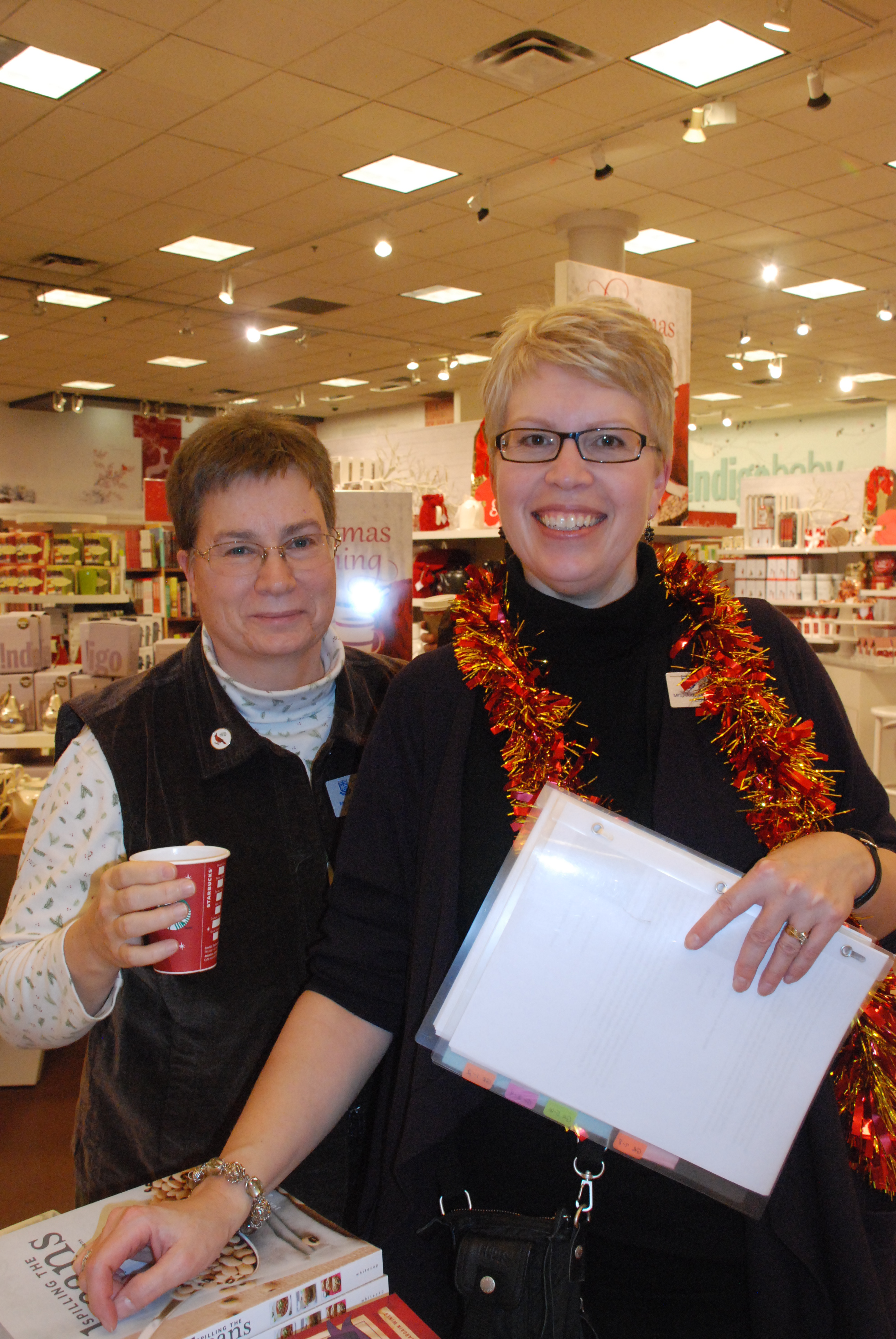
We look forward to a big new year. And we look forward to all the time we’ll spend getting better, together.

Derek Logan
Head of School

Andrea Fanjoy,
Assistant Head, Academics
You can follow Andrea on Twitter @afanjoy.

Testing What Matters in Life

How did you do on your last test?

If you’re not a student you probably can’t remember. Tests are for students, right?

Formal education has a long history of testing. Spelling, math, science, history – no other institution tests more than schools. Obviously.

KCS CaresWhat’s not as top of mind, however, are the tests that we face minute-by-minute, wherever we are, whomever we’re with and whatever we’re doing. These are the tests of character that appear in our interactions with others, choices of how to spend our time, how we work, how we play, and how we respond to the challenges thrown our way. And if you’re following what most experts are saying, it is character, and specifically traits such as initiative, curiosity, grit, creativity, and adaptability, that will best determine our success in life.

Educators and parents alike spend a lot of time thinking about tests, whether designing, marking or preparing children to do their best with them. Tests help us monitor growth in students and effectiveness of teaching. They have value. But most of these tests don’t measure what matters most. They aren’t designed to.

So, what would a test of character look like? Simple. Watch what others do, of their own volition, and particularly when out of the gaze and direction of authority figures. Minute-by-minute.

And if you want to help prepare students to do well on these tests? Provide a school experience that not only teaches character but also includes the encouragement, time and support needed so students can practice the skills and traits that matter, and do so for their own purposes. Students of character need freedom to initiate, create, persist at solving real problems, make a difference and more, not for marks and not because they’re told to. They need a school that believes in the infinite potential of children, if we let it take shape, and a school which recognises that this means doing a number of things differently.

Educators, watch what your students do with free time. That’s testing what matters. And give them a school experience that lets them develop the traits and skills that matter most. That’s preparing them to ace the test. You won’t be disappointed.

Andrea Fanjoy,
Assistant Head, Academics
You can follow Andrea on Twitter @afanjoy.

This article was first published in SNAP Etobicoke, December 2012.

Why KCS is the best

There are so many wonderful things about KCS! Let me tell you about a few things that make our school so special. First of all the teachers are so kind because they help you when you need it, they make you feel better when you’re sad, they have a great sense of humor and they will spend their time at recess to help you finish something. The students are also amazing because they are so enthusiastic to learn, they help other people, they are willing to spend their time at recess to finish up something or help someone else finish up something and they always follow the three school rules. The athletic programs at KCS are great because every single person always tries their best, shows good sportsmanship and they show their school spirit. The students are also very welcoming to visitors and if it is your first day they make you feel that you have been here for your whole life. That’s why KCS is the best school ever!

Kiana
Grade 5 student

Our People + Effort = Successful Change

Last week we announced our proposed amalgamation with St. George’s on-the-Hill Nursery School (SGNS).  The faculty and staff of both schools reacted to the announcement with a positive mixture of excitement and anticipation as we tackle our future together.  Both organizations understand the benefits of amalgamation.  I really didn’t expect anything less.  And here’s why.

I joined KCS back in September 1999 as the grade 8 homeform teacher.  At that time I taught history, Language Arts and geography to our grade 7 and 8 students.  In 1999, KCS had one class in each grade, and we had approximately 150 students in the school.  Our  staff was about 25 people, a number of whom still teach at KCS today.  Halfway through my first year, I was happy with my decision to join the KCS team.  Even then, I knew this was a great school.

Over the past fourteen years, KCS has grown to 317 students and 46 faculty and staff.  The school has faced many opportunities and challenges along the way – some planned for, others unanticipated.  We’ve opened two additions to the school, one in March 2003, and one in December 2009.  Those of you who have lived through a renovation know the inconveniences you have to live with during construction. We have managed our school through an economic recession and a flood in February 2010 that closed six of our classrooms for an extended period of time.  Through each opportunity or challenge, I’ve watched the people at KCS listen, ask questions and propose solutions, and then get to work to make sure KCS comes out the other side a better school.  And importantly because of that can-do, positive attitude, we’ve created many memories and had many laughs along the way.  I know that the people at SGNS have had to face similar opportunities and challenges over that same time period that they have successfully dealt with.

Change either succeeds or fails due to the efforts of the people involved.  Based on past experience at KCS, I am confident that the people at SGNS and KCS will all grow and learn together as we amalgamate the two schools at this exciting time.  We have responded successfully to opportunities in the past, and I feel the future will be no different.  In fact, with such a positive outlook with the faculty and staff of both schools, I am certain we will be better together.   We are excited for the outcome of the vote at both upcoming AGMs, which will put a stamp of approval on this project and enable us to move forward.

Derek Logan
Head of School

Traditions

“If history were taught in the form of stories, it would never be forgotten.”
-Rudyard Kipling

We have a saying at KCS. As soon as we try something new and all goes well, it immediately becomes known as a tradition.

Part of the beauty of traditions is that with each occasion, the story of that tradition grows. Christmas is a story with a chapter for every December. Remembrance Day is a tradition with a chapter for every service.

And last Thursday was the celebration of another special tradition – Chapter’s Night. Of course, it also comes with… ahem… chapters.

I remember the second Chapter’s Night. It took place a long time ago when we used to have winter. It was a dark and stormy night and the elements proved a formidable foe, antagonist if you will, to all who eagerly tried to attend. I was teaching French that year and had offered to have my grade 6 students perform a French play.

Luckily, my car made it through the snow. Many of my students and their parents weren’t as lucky. We delayed the performance and rounded up any present and willing classmates. Excitement and angst at the imperfection of the situation filled our veins.

In the end, like all good stories, we persevered and the students performed undaunted for the crowd. And like all good stories, I recall that it was a magnificent performance. The story ended Hollywood-style.

Last week was a wonderful new chapter in our Chapter’s Night tradition. The weather has clearly learned it will not deter us and has moved on to challenge others elsewhere. KCS parents, students and staff came out in huge numbers to mix, mingle, shop and enjoy wonderful performances. And KCS is a richer story as a result.

Thank you most sincerely to everyone who worked to keep the story growing. It’s unforgettable.

Andrea Fanjoy,
Assistant Head, Academics
You can follow Andrea on Twitter @afanjoy.

The Week of Thinking Flexibly

It became abundantly apparent to me how little we talk of it.

I was covering a grade 3 library class, and I started by saying the lesson was about my favourite habit. Hands shot up and student after student took a stab at claiming what it was sure to be. With nary a second in between, ‘show self-control’, ‘create’, ‘act with empathy’, ‘persist’, ‘think creatively’, ‘do what is right’ were offered up with conviction. Goodness, these kids know what matters in life. And to be honest, I certainly am fond of every habit they offered. They aren’t my favourites, though.

The lesson was about thinking flexibly. It’s a habit that reminds me of my most special stories. It takes me way back to the year I lived in and backpacked throughout Europe. It takes me back to the years I lived in Japan. It reminds me of the many years I spent learning French and then Japanese. It reminds me of the most special books and inspiring courses in my life. It also reminds me of why I love what I do. Not a day goes by that I’m not challenged to think flexibly, considering an opportunity or addressing a concern that just the day before may not have even entered my consciousness.

Last week, in particular, was a week of thinking flexibly. It included a wonderful collection of emails and conversations with a parent who equally enjoys thinking flexibly on the topic of education. It included the lesson in thinking flexibly for the grade threes. It included a deeply moving Remembrance Day ceremony that, once again, took me briefly away from the charmed life we enjoy and into the tragedy and sacrifice faced by soldiers both living and gone.

Then, just before the end of this short week, the grade 8 teachers, Mr. Logan and I received an email from a student who believes a change in part of our homework practice is in order.

And so, I look forward to my meeting with her, and indulging once again in my favorite habit.

What’s your favourite habit? Please also tell us why it’s special to you, either by adding a comment, sending an email or tweeting me @afanjoy. Stories have a way of sticking. And the habits are worth sticking to.

Andrea Fanjoy,
Assistant Head, Academics
You can follow Andrea on Twitter @afanjoy.

Type, Click, …Swipe

typewriterThis past weekend, I took my kids to a museum in St. Jacobs, Ontario. They were fascinated by the antiques called typewriters – especially when the metal bar for each letter lifted to strike the inserted paper. Wow!

It is incredible how far along technology has progressed. Typewriters will always fascinate our children but there still was a learning curve with its use. The arrival of computers grabbed the world’s attention but there still is a learning curve with ‘mouse’ control. In the past few years, the arrival of personal, mobile touchscreen devices (iPads, Playbook, smartphones, etc.) garnered the widest audience.

Just last week, I attended the ECOO Conference (Educational Computing Organization of Ontario) where hundreds of teachers from across Ontario convened to share ideas and experiences. During the many sessions over two days, there was a sea of tablets (iPad, Galaxy Tab2, etc.) being utilized to take notes, participate using the Twitter backchannel or download the presenter’s files. Educators of all ages were actively engaged with these touchscreen computers.

What is the learning curve with these mobile devices? Just ask a toddler. Children as young as 2 or 3 years easily manipulate these touchscreens as there are no longer ‘big keys’ to press down, no ‘mouse’ to control – just a screen where you can tap, swipe and even pinch.

How easy is that?

Stacy Marcynuk
Director of IT, Curriculum
Kingsway College School