Tough Stuff

“At first we argued consistently about what had to be done. Now we don’t argue and we compromise.”
–        A student in the Lego Robotics elective

TeamworkBeing Active is how some people relax. Acting with empathy is second nature for others. We universally enjoy those adept at finding humour. And we all know people for whom share what you know is a lopsided strength…

The KCS Habits are everywhere. Even a cursory read of the daily paper is an immersion in the Habits, whether by their presence or oh-so-unfortunate absence in world events. The challenge we’ve undertaken at KCS is for every person to have all of the Habits. Every one. At once. While it may be asking too much to say that all of our young graduates will have every Habit firmly and forever established, we do believe they’re old enough to be aware of the Habits that matter in life, and to reflect on where they’re strong and where growth is needed.

A recent assignment asked our electives students to reflect on their growth in some key Habits. Our songwriting, Renaissance Art and theatre students are clearly growing in their ability to create. Our Lego robotics students are doing an impressive job persisting in building and programming their robots. And the baseball students will all be sharing what they know when they instruct and coach the grade three students in the upcoming Baseball Classic.

What Habit do the students find toughest? According to the reflections, the one most students seem to struggle with is seeking collaboration.

What’s one of the most important attributes for success in one’s career? The ability to collaborate.

Good thing our students are working on it, and realizing the need to do so.

Andrea Fanjoy,
Assistant Head, Academics
You can follow Andrea on Twitter @afanjoy.

Student Leadership, Gone Viral

The following was first written for our community two years ago. Leadership projects are as viral as ever at KCS. Students clearly have great potential to make the world a better place. Please pass this on so more schools can help unleash that potential.

A small selection of photos from student leadership initiatives.

This slideshow requires JavaScript.


Student Leadership, Gone Viral

My day began by walking past a multicultural food drive organized by five boys in grade 6. Not much later, a student in grade 1 announced to me that he is saving his allowance to buy food for charity. Shortly after, a girl in grade 5 emailed to let me know she is helping a group of grade 3 students organize a talent show. I popped into a grade 5 class and witnessed a group starting to organize a poster contest. That afternoon, a different student in grade 5 came by to ask if he can start a student newspaper, similar to the one the grade 8s established a couple years ago. On my way out at the end of the day, I learned from a grade 4 student that he made a colouring and activity book for the grade 3 classes as a supplement to their unit on the rainforest. This, in addition to the dozens of leadership, community service and service learning projects I know our older students are working on. All in one day.

That is when it became clear student leadership was going viral.

The 21st century is for people who can make success happen. It is a century where leadership skills aren’t just helpful for the few, but required by all. At Kingsway College School, student leadership is a major pillar in our effort to prepare students for the 21st century. While not every day is punctuated by this number and breadth of student-initiated leadership projects, it happens often enough. If you long for a day like I had, the following are some steps that helped get us here:

1. Make time for it. Leadership is a timetabled subject in grades 6 to 8. Students learn about the important aspects of leadership, such as initiative, persistence, active listening, participation and flexible thinking. They use these periods to come up with their own leadership projects. They research, prepare their proposal, work out the logistics and deliver on their project. Awareness campaigns, charity drives, fundraisers and school and community events are some of the more popular projects, though the possibilities are endless. Reflection on the project and self-assessment of their growth is also a valuable part of the experience, and set the students up to be self-aware leaders throughout life.

2. Make leadership for all. Leadership is an egalitarian, unelected pursuit at KCS. It is open to anyone who wishes to initiate it and follow through. In fact, in the older grades, all students are required to learn about and experiment with leadership in their leadership classes. We don’t give students the choice of learning to read, and we believe we shouldn’t give them the choice of learning to be leaders. If it matters, everyone needs to start the journey.

3. Make it personal. Leadership can manifest itself in infinite ways, with the most powerful leadership being rooted in personal interests. Helping children find and leverage their passions to make a difference is an appropriate, though overlooked, role for education. At our school, one boy who loves to read committed himself to writing book reviews for the library. A group of girls who love to dance came up with a “Get Out of your Comfort Zone” Challenge, encouraging students and teachers to perform in assembly. Another boy and his friend prepared and delivered an unforgettable presentation on Down’s Syndrome, breaking myths surrounding that condition. There are dozens of different projects underway, each adding dimensions to everyone’s school experience that the faculty alone could never provide.

4. Let them lead, with guidance only. Many students are naturals at leadership. If invited, they will organize a group to deliver on a significant community project, regardless of age. Some students don’t find it quite as easy. They will need guidance. Give it to them. Also, give the students lots of freedom to change or drop their ideas, and even to follow through with unsuccessful projects, without penalty. Let this be a realm where they can learn to lead the way they learned to walk, being allowed to fall, and then cheered when they get back up and try again.

5. Let them be small. Very rarely are students solely responsible for huge leadership projects. Craig Kielburger, founder of Free the Children, is an inspiration but most children and youths, if really in charge, will come up with smaller ideas. Adults should resist the temptation to jump in and take the lead. It may end up big and polished, and it may even make a truly significant difference to the community or charity of choice, but it isn’t developing the students into leaders. When we step in, it’s the adults’ leadership skills that get honed, not the students. In fact, when faced with the large quantity of projects that need to be coordinated, small is generally the wiser choice for all.

6. Have a variety of opportunities. Leadership experiences at KCS take many forms: earning a brick on our Wall of Service in return for initiating an act of service; lunch supervision roles, where students assist supervising teachers; assisting with clubs and teams; House Captains; peer tutoring; leading assemblies; as well as all the opportunities to come up with one’s own project. We also point out to students the many unplanned opportunities for leadership during class, at recess and outside of school through setting a positive example, resolving conflicts or initiating an activity. The variety ensures there are many opportunities for everyone, at every stage of their leadership journey.

7. Have them share what they know. The presentation of leadership projects is at the heart of making them go viral. The school-wide presentations of our older students inspired the younger students to follow their lead. The result is an ever-increasing number of projects. Let the presentations keep happening. Visibility and quantity matter when creating a culture of leadership.

A word of warning. If you embark on establishing student leadership throughout the school, be prepared for an onslaught of students stepping up. Leadership potential is lying dormant, but will potentially overwhelm you if awoken. Larry Rosenstock, founder of San Diego’s High Tech High, has said a critical attribute for success in the 21st century is a tolerance for ambiguity. For a profession that is more comfortable with prudent adult planning, unleashing school-wide student leadership will rock your world.

Relax. It’s worth the ride.

Andrea Fanjoy,
Assistant Head, Academics
You can follow Andrea on Twitter @afanjoy.

A Beautiful Thing

It’s not easy being a teen. It’s not always easy being a young child either. Bring the two together to play, however, and life doesn’t get much better.

Grade 8, being our graduating year, brings a number of special responsibilities. Among these is the grade 8 – primary buddy program. In early October, each grade 8 student is assigned to be a buddy for a new student in grade 1 or 2. Their challenge? Get to know their young buddy, find out what they enjoy doing, and then do it with them over the course of the year.

Collectively they’ve had tea parties, picnics, dodge ball games, and Wii Dance recesses. They’ve played soccer outside, built Lego in my office and read together in the library. One group of buddies made a picture book together. Another particularly hard-working group organized a school-wide scavenger hunt. High fives and hugs are the signature greeting when they pass each other in the hall.

The joy and reverence on the youngest faces is tonic for troubled teens. The attention of the oldest, biggest and most respected students of the school immediately overrides any frustrations of being five, six or seven. Any students and teachers walking by can’t help but stop, smile and watch them play.

Life isn’t always easy or beautiful. Grade 8s making these occasions happen for their young buddies is undeniably beautiful. Make the world better is one of our KCS Habits. Thank you, grade 8s, for making our little piece of the world much better.

Andrea Fanjoy,
Assistant Head, Academics
You can follow Andrea on Twitter @afanjoy.

Teacher, Meet Brain.

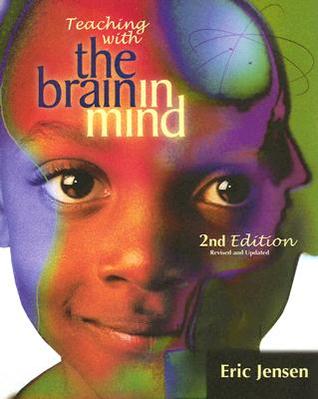
Teaching with the Brain in MindThat’s how it felt to read Teaching with the Brain in Mind by Eric Jenkins. While the bond between the brain and learning has been known for centuries, the two have been notably coy. It is only recent research which has started sharing and subsequently sparking the intimate side of this complex relationship. And like the rush of first love, it will blow your mind.

My measure of a great book on education is the degree to which it ends up highlighted. Barely a page of Jenkins’ book escaped my yellow swipe. Starting with Neuroscience 101, Jenkins addresses many of the major areas related to learning and highlights the research and implications it has for teaching. From birth and beyond, he looks at preparing the brain for school; the connections between movement, emotions, and one’s physical environment with learning; managing the social brain; and optimizing motivation, engagement, critical thinking, memory and recall. Clearly affecting a significant chunk of the school experience, Jenkins is devoting his career to having teachers ‘teach with the brain in mind’.

Some insights include:

  1. The brain changes and can even grow new neurons throughout life. Nature and nurture both clearly play a role in defining who we are, with growing evidence revealing that nurture can override some nature, even to the degree of changing the impact of our genes.
  2. Exercise offers much more than just physical health. If you desire a denser and better brain, make regular exercise a lifelong habit.
  3. Much of what distinguishes teenage behaviour is rooted in the enormous changes taking place in their brains. Teens even temporarily regress in a number of abilities, such as their ability to recognize emotions in others.
  4. While collaborative learning gets most professional press these days, brain research supports the integration of group activities with traditional learning tasks for optimal learning.
  5. Emotions play a central role in learning and can hinder as much as enhance the brain’s ability to remember. Teachers would benefit from mindfully leveraging them.
  6. Frequent opportunities for movement, and breaks where no new learning happens, are important for long-term storage of learning.

Teachers, indulge in the intimate details of the learner-brain relationship. Meddle even. This is one couple that needs you in the middle.

Andrea Fanjoy,
Assistant Head, Academics
You can follow Andrea on Twitter @afanjoy.

This article was first published in SNAP Etobicoke, May 2013.

Habits Worth Having

What Are The Habits of Mind, Body and Action?Our students have lots of habits. Rather than trying to break them, we’re shamelessly celebrating them in our just-released school videos on how we develop lifelong learners at KCS.

If your habits need a little tweaking, you might be inspired by some of our students and the habits they’ve already embraced in their lives:

  • A student in grade 4 whose favourite habit is to take responsible risks, because it reminds her to try something new
  • A student in grade 7 whose favourite is to persist, because it’s what he knows he most needs to do
  • A student in grade 6 whose favourite is to share what you know, because if everyone did so we would all be smarter. Besides, collaborating is fun.

Check out our KCS Habits of Mind, Body and Action and think about which is your favorite? Why? Then share it with others, and do a little inspiring of your own.

You Never Know Where Things Go… When You Share What You Know

Stack of colorful books tied up with ribbonGreat things can start really small. When small, of course, they appear insignificant and usually go unnoticed. Small things start becoming great when they’re shared.

Here’s how this happened recently at KCS.

About a year ago, a student in grade 5 thought of a story. It could have stayed in her head, like the many stories people think up. Instead, whenever she found the spare time to do so, she started writing it out on her school computer. It turned out that the story was pretty lengthy, so she kept on writing. As it grew, her friends and teacher started to notice. It kept growing and soon I noticed.

When a student ends up writing a 76-page story, just because, it’s already clear that something great is going on. But the sharing didn’t stop there. Ms. Hoggarth, our librarian, and I started talking about what to do with a story like this. After much discussion (sharing what we knew), we came up with a new offering at KCS that has us both pretty excited. Young Authors of KCS (YAKCS) is a program designed to inspire, support and ultimately publish the work of any students in grades 4 to 8 who independently persist in writing a book. Participating students will receive expert guidance from a published author, with the exceptional opportunity to receive direct feedback from the author when manuscripts are written. Published books will be honoured with a KCS book launch, housed in our library, and copies given to the student. Books will also be given an ISBN and be registered in the National Library of Canada and the National Archives. Aspiring artists will also join this group if chosen to be illustrators.

When first announced at assembly, fifty students rushed to the library to pick up information on how to participate.

The story in the head of our original aspiring author, when unshared, was unnoticed. Because it was shared, and because it inspired subsequent sharing, her story is not only on its way to being published, but was also the catalyst for what may end up as countless more books and inspired future authors.

Share what you know. You never know where it’ll go.

Andrea Fanjoy,
Assistant Head, Academics
You can follow Andrea on Twitter @afanjoy.

Learning for the Love of It

Paddle Tennis KCS Elective 2013

Paddle Tennis Elective
photo credit: Mary Gaudet/Etobicoke Guardian

I can remember the day I found my passion. To the extent that we can help spark it, we want our students to find theirs.

Third term clubs and teams have started – twenty-nine opportunities in the areas of academics, arts, athletics and citizenship. Scheduled so students can do as much as their hearts desire, our keenest students pursue up to ten offerings each term in each of our Four Doors to Learning.

Many dozens of ‘Brainiacs’ (independent student-initiated projects) plus leadership and service projects are in full swing. Feel like creating a whole new language, or creating a comic that spoofs James Bond? That’s what a group of boys in grade 4 have shown they’re inclined to do. How about organizing a food drive, like a group of girls in grade 2? A boy in grade 5 is creating a video game that the class can use in its upcoming unit on the human body. And compelled by the desire to make a difference, a group of grade 7 students is organising KCS’ participation in a global Vow of Silence, an awareness-raising effort that allows children to ‘speak’ on behalf of those silenced by unacceptable circumstance. Giving time, encouragement and guidance so students can pursue what moves them has created a virtual deluge of learning

Third term also marks the start of our much-anticipated electives program for students in grades 6 to 8. Every Wednesday these students break out of the routine, learning just for the love of it. Joining an elective of their choosing, here is what these disparate delighted groups are up to:

  1. Receiving instruction in and cooking meals for a local youth shelter
  2. Creating a dramatic presentation from beginning to end
  3. Learning, playing and spreading the word about paddle tennis
  4. Geocaching (www.geocaching.com) and putting KCS on the international geocaching map
  5. Composing a school song
  6. Composing songs to promote social justice
  7. Receiving expert coaching in baseball, then providing that instruction to young KCS students
  8. Creating Renaissance art
  9. Building and programming robots to face challenges

And because we’re pretty tireless, a brand new opportunity for students in grades 4 to 8 with a special kind of passion is being revealed this Friday…

The day I found my passion was the day my life became defined by commitment to lifelong learning. This is our wish for our students. Let the sparks fly.

Andrea Fanjoy,
Assistant Head, Academics
You can follow Andrea on Twitter @afanjoy.

If It Feels You’ve Gone Through the Looking Glass…

“It would be so nice if something made sense for a change.”
-Lewis Carroll in Alice in Wonderland

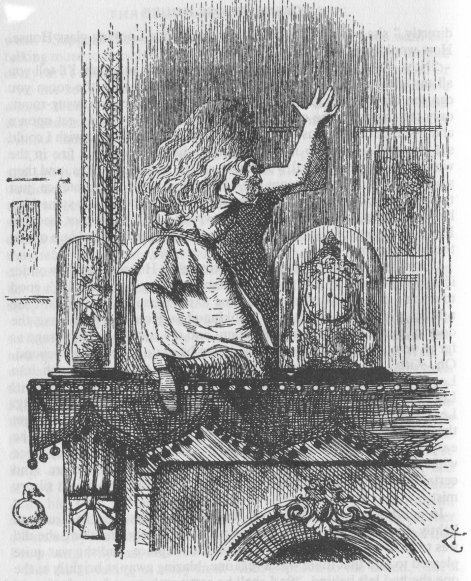
Into the looking glassParenting has these moments. Teaching has them too.

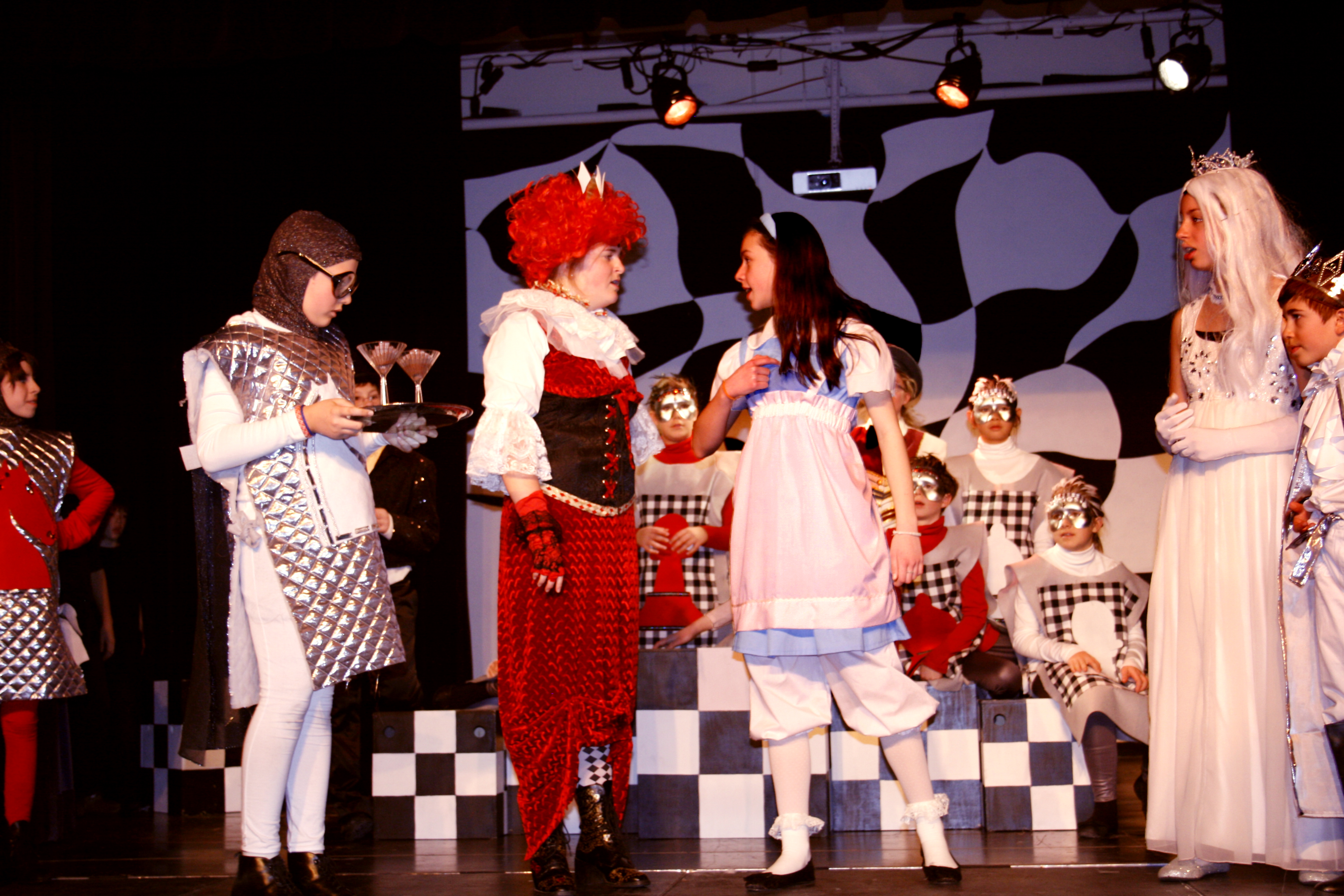
Our school musical this year was Wonderland!, a spin-off of Lewis Carroll’s classic Alice in Wonderland. As a child, I wouldn’t have noticed the dimension of the story that became evident the other night, when Alice stepped through the Looking Glass and everything turned backwards. To a child, this story is a feat of imagination, a delightful trek into a world that doesn’t exist.

As a parent and educator, it connected with something a little less fictional. It reminded me of the times where my children have come home and bemoaned things that didn’t make sense. It reminded me of times when students complain of an egregious injustice at recess, only to learn that what really happened was a little more complex and nuanced. And it reminded me of some discussions with concerned parents, who recounted what their child told them, and I had the opportunity to share some other relevant details that brought sense to a story in need.

Children aren’t cognitively and emotionally ready to fully understand their world. The perspectives and messages of others, body language, context and the implications of their own actions are often overlooked, not out of dishonesty but out of ordinary immaturity. Even adults struggle with this, and we are all vulnerable to using our imaginations, however unwittingly, to help explain a situation in a way that may please us, but is not a representation of all that really happened.

If your child comes home with a story that leaves you feeling as if you’ve gone through the Looking Glass, take heart. You needn’t go through the many adventures of Alice. Reach out to the adults who can add the facts needed to turn this backward world into one that makes sense. Doing so offers a delight that is preferable to the temporary treat of imagination. Even Alice came to realize it. “It was much pleasanter at home, when one wasn’t always growing larger or smaller.”

Andrea Fanjoy,
Assistant Head, Academics
You can follow Andrea on Twitter @afanjoy.

This article was first published in SNAP Etobicoke, April 2013.

Some Old School is Good School

Learning & Teaching MethodsI confess. At my school, we do some things that are very old school.

I follow what’s happening in the profession very closely. I read with interest what educators around the world are doing. I note that old-school approaches are often assumed wrong, not by research but by opinion.

These are exciting times in education, and there is a lot of room for new tools and strategies. Technology has made much that was impossible possible. Project-based learning, flat classroom projects that connect students around the world, and emphasis on 21st century stills like collaboration and inquiry are welcome progress. I love reading about how educators around the world are using these new approaches, and love bringing much of what is new to our school.

I’m also compelled to be a voice that says there is value in some of what schools used to do. The evidence is in the students, and the fact that a restricted array of approaches will never be sufficient for all. Schools must include all that has recently shown promise, plus remember all that used to have value, and then apply them all according to the needs of each student. So, in addition to all the current practices at our school, what old-school ones have we found also meet student needs?   We teach reading in many ways, but one way is through what’s called Direct Instruction, which is teacher-directed, and is the highly specific teaching of phonics, decoding and comprehension. We teach printing and cursive using a resource that is also specific to the skill, and we use it for six years in a row so that writing has a chance to develop alongside keyboarding skills. We teach math facts until students are fully fluent, allow minimal use of a calculator, and teach math concepts with clear step-by-step instruction. We have exams starting in grade 6, and put a significant effort in teaching students how to prepare for this significant challenge.

Teaching all students well requires open-mindedness to an unbounded array of tools and practices. It requires deep knowledge of each student, reflective practice, knowledge of quality research and the evidence of experience. That needs to be read more often. Whether old-school or new-school, if it helps students, it belongs.

Andrea Fanjoy,
Assistant Head, Academics
You can follow Andrea on Twitter @afanjoy.

Time for Awe and Appreciation (Tribute to Wonderland!)

Wonderland!Readers who saw this year’s musical Wonderland! know why it’s time.

Respond with awe and appreciation is one of the KCS Habits. Of course, the world has plenty of things that are awesome and worthy of our appreciation. Trouble is, most of us don’t stop and recognize them enough. Even at KCS, where wonderful things, big and small, happen quite regularly, it’s the other habits that tend to get the most air time.

Well, the musical put this habit front and centre. Awe is the absolute right word to describe this wonderful show. And appreciation to match is due.

The primary students sang with heart, confidence, and charm. It’s clear many of our youngest students are already destined for a future on stage. The dancers performed throughout with style, grace and polish. The chicken dance will be among the many unforgettable moments! The chorus and band immersed us in delightfully memorable songs. The performers amazed us with their evident talent and commitment to their roles. Their efforts have inspired performers-to-be. And then there’s the many people behind the scenes, from tech crew to the many teachers, parents and grandparents who invested hundreds of hours planning, directing, organizing, sketching, sewing, shopping, thinking creatively, problem solving and just generally making something huge happen.

It was awesome. Thank you.

Andrea Fanjoy,
Assistant Head, Academics
You can follow Andrea on Twitter @afanjoy.