How Technology Increases the Personal Touch in School

The notion shared in the title may not be obvious. Because the personal touch matters, it’s worth understanding and, for the benefit of students, acting upon.

Of course, technology isn’t a person. It won’t ever replace the power of a teacher who knows and cares for his or her students. It won’t bring the creativity and professional judgment the teacher applies daily in his or her class. So how could technology possibly increase the personal touch?

First, let’s take a hard look at the familiar. The traditional “sage-on-the-stage” approach to teaching unfolds at the pace decided by the teacher. It covers content decided by the teacher, and is delivered in a manner decided by the teacher. While appropriate at times, this approach is imperfect and, for many students, impersonal. These students require a different pace, be it faster or slower. They respond better to a different level of content, whether more simplified or complex, or would understand concepts better with different choices of content.

Technology personalizes school because it brings flexibility in pace, level and content like a teacher alone cannot. Here are some examples:

  • Instead of completing the same math fact sheet, students can use websites like www.thatquiz.org to practise the math facts they need to practise, at the right pace and level of challenge for them. Similar tools exist for all basic skill development.
  • Instead of learning through the lens of textbooks, students can use technology to roam the world for relevant content. Under teacher supervision, students can create their own multi-media “texts”, in the form of wikis, that they and their classmates can study from with pride.
  • Instead of sitting through a lesson that many students may not need (because they already know it) or not follow (because they’re lost), teachers are leveraging technology to personalise instruction. Technology can deliver introductory instruction at a pace controlled by each student (you can pause, rewind, rewatch at will). Students who need different levels of instruction can get that too. Watching instructional videos the night before class makes the in-class lesson more effective and efficient, and leaves more class time for real teacher-student interaction.

The personal touch matters and having a great teacher matters. Technology can help make the most of both.

Andrea Fanjoy,
Assistant Head, Academics
You can follow Andrea on Twitter @afanjoy.

This article was first published in SNAP Etobicoke, November 2012.


A Haunted House that Left Me Scared, and Bursting With Pride

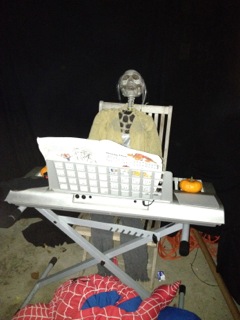
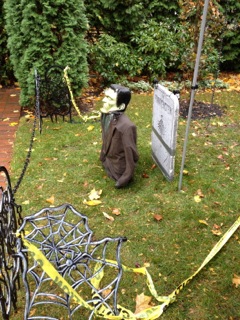
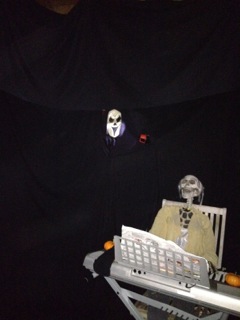
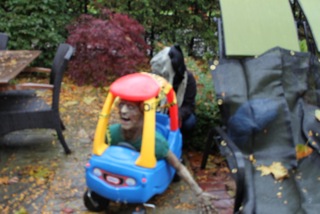
A preschool-aged sibling hid in his room. A writhing trapped rat greeted us at the door. A skeleton sang and swayed while playing the keyboard. A ghost fell on my head. The masterminds? Two boys in grade 4 and their trusty crew of friends, one sister and parents. The mission? To raise money for breast cancer research.

This story goes back to the first day of school. A boy in grade 4 approached me, clipboard in hand. He explained that he had started organizing a Haunted House fundraiser and wanted to meet to discuss it. He knew that’s all it took to launch a leadership project. “Drop by my office and we’ll talk. But remember that you must be willing to persist, and to think flexibly as we plan.” This wasn’t part of a club or program and would test his commitment from the start by making him take responsibility.

He had lots of ideas. He gathered a team. When they learned they couldn’t create a Haunted House at KCS, his friend suggested they could transform his garage. When this boy asked his parents if they could use the garage, his parents replied that they needed a written proposal. The proposal passed, posters were made, a Powerpoint presentation to their classmates was given and a note to their parents posted in the weekly newsletter. Throughout were lots of drafts, changes, challenges, and mistakes. They gave up their recesses, tracked me down a dozen times or more, and devoted two weekends to preparing the garage.

The boys and their siblings raised a significant amount for cancer research. Dozens of visitors experienced an unforgettable Haunted House. This group, through their efforts, made the world better in multiple ways.

And adults of the world are left with a lesson. Don’t ever assume children are too young to lead. Let them lead. We’ll all enjoy a world that’s much richer for it.

Andrea Fanjoy,
Assistant Head, Academics
You can follow Andrea on Twitter @afanjoy.

It All Started With Two Words

FootballI grew up a Notre Dame football fan.  My Uncle Bill was an usher on fall Saturdays at the stadium.  As a family we used to drive to go to the games in South Bend.  My son and I have continued to go to at least one game a year for the past four years.  To me, there’s no better way to spend a Saturday afternoon in the fall than at a college football game south of the border, especially when they are putting together a great season like this year.  So when I see somebody with an Irish shirt on, I will usually talk to them.

A couple of years ago the younger brother of one of our grade 2 students (at that time) walked by my office as I was on my way into a Finance Committee meeting.  He had a polo shirt on with an ND logo.  I said to him something like, “Nice shirt.”  He stopped, looked up at me, and said quite confidently for a four year old, “Do you like Notre Dame?”  We then spent the next five minutes talking about the team.  He quizzed me on my favourite players, etc.  Sadly, I missed the first five minutes of our Finance meeting and likely missed a discussion on something like “leading Indicator”, “long-run average total cost”, or “tactical asset allocation.”

I was so impressed with this young boy, that I emailed his father about my encounter.  Since then, all of our conversations, whether with the Dad or his son begin with our most recent observations on the football team.  Last year my son and I met up with this KCS family at the Air Force game in South Bend.

And here’s where the story gets even better.  Usually at the start of every school day, when Mme Giguère arrives at KCS and opens the French classroom across the hall from my office, she pops her head in and we talk about sports:  football, hockey, soccer, golf, etc.  (I will miss not only her talents in our primary French classes as she goes on maternity leave in February, but I will miss out on these conversations).  At some point during these informal meetings over the past couple of years, we discussed Notre Dame and the story above.  She has a cousin whose husband, Brad, played for the Irish at the turn of this century (no, not the 1900s!).  Mme Giguère let Brad know about our student.  He took the time to write an inspirational letter to him, which I understand is now proudly posted on the young boy’s bedroom wall.  And in return, his Dad was able to find a number of tapes he had recorded of games in late 1990s, made a copy of them on a DVD, and sent it back to Brad.  For the first time, he was able to sit down with his four children and have them watch him play in games at Notre Dame.  Small gestures, kindly done, lasting memories for many people.  Really, it doesn’t take much to make a difference in the lives of others.  I’m proud to be surrounded by people who do this daily in our community.

Derek Logan
Head of School

Perspective

The following commercial was shared with me earlier this week.  I’m sharing it not to promote the organization, but the message.  In the grand scheme of things, sometimes the “problems” that we think we have are really not problems.  I’m keeping this one in my back pocket to use with my kids the next time they complain about something inconsequential.


Derek Logan
Head of School

Leadership, Passion, Cootie Catchers and Flexible Thinking

What happens when those four collide? Thanks to two boys in grade three who approached me last Monday, I can now answer that.

It was recess and I was working at my desk. These two entered my office with something they clearly wanted to say. Trouble is, some things are hard to articulate, especially when you’re eight. Eventually deducing they wanted to do a leadership project, they hadn’t yet thought of what that project would look like. I encouraged them to start from a personal talent or passion, and out came this: “You know”, said one, “I’m really good at making Cootie Catchers. I’m probably the best in the school. I make the biggest in the school, that’s for sure.”

This slideshow requires JavaScript.

Now, you are asking, “What does making Cootie Catchers have to do with leadership?” “How could they make a difference in the world?”

That’s where flexible thinking came in.

We struggled for a bit. It was clearly a new conundrum for all three of us. Where could these popular little games help? Well, they clearly help develop fine motor skill and strength – that’s important in grade one. Maybe they could be made to help practise basic academic skills too? Some trial and error later, we had defined a leadership project that has real value and that the boys have embraced with zeal. Dozens of different Cootie Catchers are being created to practise basic addition in grade one. Students will be given questions, the answer will be found, and the reward, a selection of smelly stickers, will be hidden in the heart of the Cootie Catcher.

I’ve no doubt this will be a hit with the grade ones. The beauty of these projects, however, is what they do for the budding leaders. The boys may not choose to stick with Cootie Catchers as their main contribution to the world. However, they have started a path with leadership, passion and flexible thinking that they would do well to continue on throughout life.

And who knows, maybe the humble Cootie Catcher should have a big future. It’s at least good to know that these boys will leave no stone unturned in their pursuit of ways to make a difference.

Andrea Fanjoy,
Assistant Head, Academics
You can follow Andrea on Twitter @afanjoy.

Blurring the Online Boundary

Parenting and online safetyIf you’ve heard of the ‘information highway’ you’ll know that social media is taking over much of this traffic. If you’ve heard of ‘surfing the web’, you’ve just dated yourself. Students just refer to the web as ‘being online’.

As students begin joining social media at a younger age, the online boundary shifts just a little more. When does it stop? What can we do? Does it need to stop?

Social media is ubiquitous in today’s society and can play a fantastic role in a child’s development. Be an active part of this and let your child share with you what is happening on Facebook or Club Penguin. Have frequent open discussions about the various types of comments posted by users on Grooveshark or YouTube. These are but a few popular social media apps that our children frequently visit. Share your favourite social media apps, comments, tweets or conundrums. It’s okay to let our kids know that we’re fallible and that we also enjoy social media, albeit different social media apps. And of course, within these wonderful conversations, build in talks about privacy settings, risks, consequences and ‘your rules’.  Be strong, yet gentle.

As your child grows older, the boundary will blur and morph. Let it be a natural, agreeable transition. Good luck!

Stacy Marcynuk
Director of IT, Curriculum
Kingsway College School

Some great online safety resources:

Making a Difference, Thanks to Parents

I knew it as soon as I heard them.

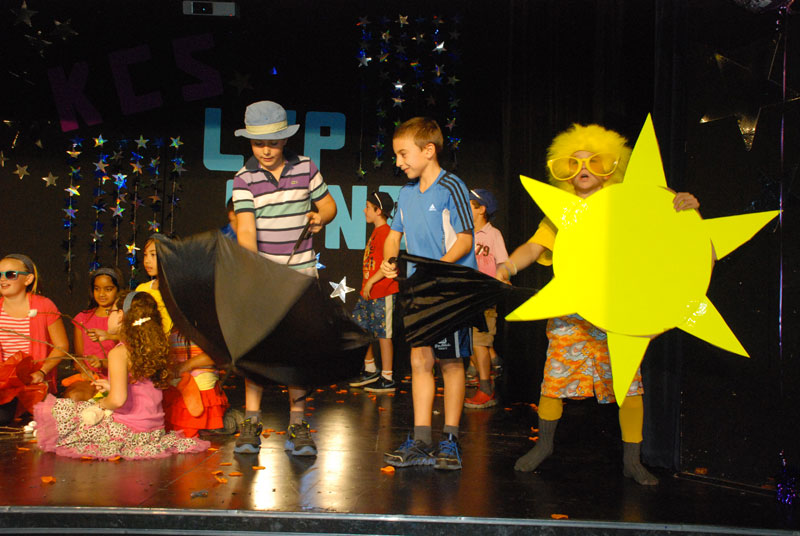
Two Moms, climbing the stairs near the Multi-Purpose Room, heaved a huge sigh.  This was the week of the annual KCS Lip Sync and these intrepid volunteers had just led a dance rehearsal with their children’s class. We crossed paths in the stairwell, we chuckled over the challenge, and off they went.

KCS Lip Sync 2012This is to thank all the parents who devote their time to helping make KCS the special place that it is. We have parents who volunteered through the summer to mentor new families. We have parents who have worked endless hours in the store. We have parents who commit their days and evenings to committee and board meetings as well as in the role of class parents. We have parents who organized an outstanding Welcome Back BBQ! We have parents preparing for our upcoming Special Lunch, parents helping in the library, parents hosting grade parties and parents who have helped supervise field trips.

And those of you who attended last week’s Lip Sync for grades 1 to 4 know that we also have a very special group of parents who are willing to do what for most is unthinkable: choreographing and teaching dance to our youngest and least focused, even dancing alone as the children’s example, in front of a Canada Hall full of spectators. What a terrific show of spirit, confidence and the joy of dance to start the school year.

Thank you to all who have already made a difference at KCS and thank you in advance for making a difference in ways to come. We’ll keep teaching your children to lead and make a difference. And we’ll point to you as examples to follow.

Andrea Fanjoy,
Assistant Head, Academics
You can follow Andrea on Twitter @afanjoy.

Our mission, should we choose to accept it

The KCS mission is “To be the defining force in developing lifelong learners by stewarding an environment that prepares us for the next challenge.”

QuestioningAt our first class meeting of the school year, the grade 7s looked at some pretty interesting and mindboggling questions. Was it algebra? Physics? No, they were questions about themselves, like the following:

  1. Five years from now, your local paper does a story about you and they want to interview three people about you. What would you want them to say about you?
  2. If you could spend an hour with any person who ever lived, who would it be? Why? What would you ask?
  3. Describe a time when you were deeply inspired.

These questions come from an activity called The Great Discovery, from The 7 Habits of Highly Effective Teens by Sean Covey. You can read them (and try to answer them!) for yourself here: http://www.emporia.edu/dotAsset/f1d87806-07e0-48e8-919d-92637f6e028e.pdf

As a teacher, I was taking a responsible risk. I didn’t know if my students were ready to tackle these questions. They really impressed me with their thoughtful answers. Thanks to all the wonderful teachers they’ve had at KCS, they were prepared and they were able to take on the challenge.

After considering the questions, we came up with personal mission statements. I know, 12 year olds making mission statements sounds like a stretch! It turns out they have a wonderful grasp of what they would like to get out of life.

  • To make a difference in the world
  • To always be a good sport and to work hard
  • To be a leader and excel at my job and hobbies
  • Be positive and do not worry
  • Never give up no matter what tries to stop you
  • Live life to the fullest
  • To challenge myself to do new and harder things
  • Don’t give up. Keep trying
  • Have fun and work hard
  • Always strive for perfection
  • You can’t like it if you don’t try it
  • Always be happy and positive
  • Always try and never give up until you achieve your goals in life
  • To make a positive difference in the world
  • Don’t give up
  • You only live once
  • When you’re down, get back up
  • Be a good sport, it’s just a game
  • Your past decides your future
  • Be happy and positive
  • To be a leader in the world

The mission statements are displayed in our classroom for the year so that we remember our missions. We’ve chosen our missions. What’s yours?

Ms. Gaudet
Citizenship Coordinator, Grade 7 History & Geography

School and Other Things that Scare Us

Some lessons need to come from afar to be noticed.

Maasai Warriors visit KCSTwo special guests visited KCS last Friday. Jackson and Wilson, young Maasai warriors from Kenya, came as ambassadors for Free the Children. Draped in their traditional regalia, they told stories of growing up in their mid-African country, fleeing drought, herding cattle and collecting beaded bracelets from their “mammas” when they did good deeds, bracelets which they still wear with pride today.

Mindful of the young audience, they only shared one scary story. It was the story of how schools came to the Maasai. This was a terrifying development for parents, and their terror was passed down to their children. Moms and Dads told their offspring to never go near “school”, as it was a place that took children away from their parents and stole from them their culture and traditions. If policemen tried to force them to go, children were told to run.

Sure enough, the policemen came and children ran. In Wilson’s case, a police officer caught up and threw the young boy over his shoulder. He offered Wilson a candy and explained that school was just as sweet. The officer carried Wilson back to his parents, and, according to Wilson’s recollection, school was similarly explained to them. Wilson and Jackson not only ended up going to school but also became the first in their community to earn university degrees.

In my experience, the value of what is learned from cross-cultural exchanges is beyond measure.  The novelty in their details makes the universal lesson in the story that much more evident and memorable. One lesson from our Friday visit is that change can be both scary and wise. Though our community of Etobicoke and the entire developed world is long past any fear of schooling, we are not done changing and not beyond being fearful of change, even if it is right and positive. A daily read of the newspaper is full of such stories.

Jackson and Wilson are testaments to what can happen when positive change is embraced. Their experience with schooling, despite the rocky start, is a story of thinking flexibly, questioning, being curious, embracing learning (including that which challenged their assumptions) and ultimately, taking responsible risks.

Great lesson. Thanks, Wilson and Jackson, for coming from Kenya to our little corner of Etobicoke so we can learn from it.

Andrea Fanjoy,
Assistant Head, Academics
You can follow Andrea on Twitter @afanjoy.

Happy Thanksgiving

Life is complex, so on my desk I have purposefully put a sign:  Keep It Simple.  I read it dozens of times a day when I’m at school.

I know we all have various things going on in our lives that can make each day challenging, and that we are all juggling commitments with our family, our jobs, our friends, etc.  This Thanksgiving weekend, my wish is that all of you step back, realize the many things we have to be thankful for in our lives.  Sometimes we let our hectic lives get in the way of remembering to be thankful for what we already have.

Derek Logan
Head of School