Everything a School Should Be – Part 2

Teachers join the profession to do their best for students. Doing one’s best includes a vast array of efforts, a sample of which were shared in Part 1 of this post.

Doing one’s best also means a determined, responsible commitment to constant improvement, wherever merited and as manageable.

At KCS, we’re constantly looking at what we do, identifying where we wish to grow, and taking measured steps forward from year-to-year. Many steps are identified by individual teachers, or grade partners, or divisions of teachers. Some steps are school-wide. Some are new initiatives; while others are ongoing efforts that began in previous years and continue to be an area of focus.

Here is some of what we’re focusing on this year:

  1. Living the Mission – Always our #1 focus, our mission is to be the defining force in developing lifelong learners. Currently, this effort includes Project-Based Learning; direct efforts to teach questioning skills; the growth of KCS as a Makerspace, with our new Innovation Lab and increased “making” throughout the school; the use of design thinking for deeper thinking, learning and problem-solving; and the launch of a new program called “High Resolves” in our senior grades as part of our global education efforts.
  2. Assessment – This is a multi-year area of focus. We launched a new report card last year and some adjustments will be made this year. We also launched our new secure electronic portfolio, Sesame, and we continue our roll-out to include all students from PK to grade 3. A blog will soon follow to explain why this is an exciting addition to KCS!
  3. Movement Project – This is also an ongoing area of focus under the leadership of our Director of Student Life, Tamara Drummond. Standing desks, chairs that allow for movement, fidget toys, and new practices that invite more frequent movement in the school day are becoming increasingly widespread throughout the school.
  4. Reading Evolution – A number of years ago we introduced a reading program that helped many of our students better consolidate the fundamentals of reading. The cumulative effect of this program is now a very noticeable increase in the reading skills of all of our students. Driven by internal data, reading instruction is evolving to meet the growing readiness for greater challenge.
  5. ELP and Reggio-inspired programming – Following widespread professional development, visits to other schools, and engagement of a consultant, the PK, JK and SK faculty have enthusiastically embraced Reggio-inspired programming as a strong complement to the Ministry of Education curriculum. While direct instruction on core skills will continue, students will also be given more time to practise being deep thinkers and learners through self-directed inquiry.
  6. Professional Development – PD has always been a regular feature of employment at KCS. All teachers have a generous budget for PD and they pursue various opportunities of relevance to their role. This year we launched a new means of sharing PD that allows all staff to see what others have done, and get a glimpse into what they learned. This is an efficient and effective new way to share professional learning and encourage greater awareness of the various PD offerings available to all.
  7. Canadian Accredited Independent Schools (CAIS preparation) – This merits a blog of its own, and one will follow later in the year. CAIS oversees a comprehensive accreditation process for independent schools that aspire to excellence. KCS is CAIS-accredited, and all staff will be working this year on an internal review in preparation for our upcoming accreditation review in November of 2017.

At KCS we’re constantly learning so that we can keep improving in all ways that matter, each and every year. Creative thinking is inspired when multiple challenges synergize into innovative solutions. Progressing thoughtfully and responsibly, changes aren’t always immediate. They’re discussed, and if considered worthy they’re piloted. If successful, they spread. When imperfect, they’re tweaked. And they’re not limited by the notion that we can only focus on a few areas. Collectively, there are positive changes happening throughout the school, based on what teachers feel needs improvement, and what they can manage well. Being everything a school should be includes constantly trying to do better. Doing our best means we won’t accept anything less.

Everything a School Should Be (Part 1)

Let’s take a moment and think about everything a great school should be doing for students. There’s the curriculum – collectively many hundreds of pages of content and skills, wrapped up in subjects, that schools need to make sure all students learn. Then there’s tailoring the curriculum, because ensuring all students learn requires adjustments for each and every one. On top of that there’s enrichment programming, character education, learning skills, collaboration skills, critical and creative thinking, leadership and citizenship, appreciation of nature and the arts, and so much more. Schools need to engage minds, inspire physical health and activity, develop resilience, and nurture the artistic spirit. Direct instruction matters. Project-based learning matters. Clubs, teams, field trips, inspiring speakers, cross-grade integration activities, and spirit-raising events matter. Throughout the delivery of all of the above, a school needs to help students with the inevitable bumps – social, emotional, mental, academic, physical – that happen and directly interfere with everything else if not well addressed. And all of this, and more, needs to happen in an aligned, whole-system manner so it’s optimal both in how it’s experienced and in the difference it makes. Without a doubt, a great school must do many things exceptionally well.

Yet to follow the dialogue, one might think it’s otherwise.

We hear boasts of schools that are outstanding on singular measures, but left wondering how these feats are achieved without sacrifice in other areas of the school. We read that schools should focus improvement efforts on only a small number of areas at once, as if all other important things can wait, for years. We learn of exciting new programs that have great appeal, but represent just a tiny fraction of what’s needed for deep, longstanding impact. This is fine reading, but none are the story that students most need. None are the story we should want for our children.

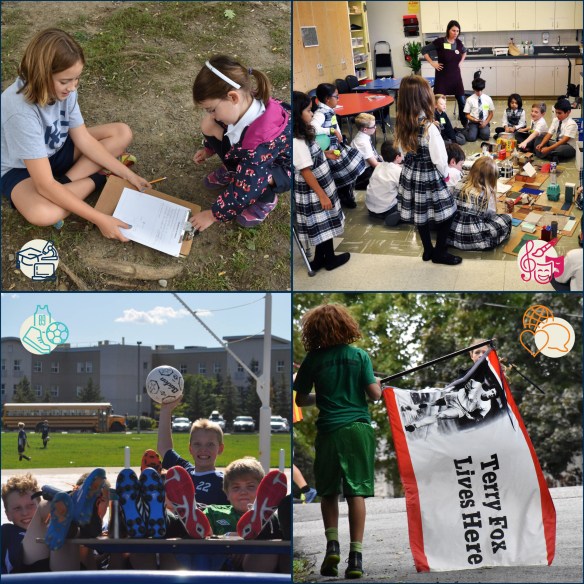
At KCS, we’re transparent in our unrelenting commitment to being everything a school should be. Our Four Doors to Learning program in academics, arts, athletics and citizenship reflects years’ worth of creative, collaborative effort so that our story is the full story students need. Our faculty are constantly adding new professional learning so that this effort reflects the wisest judgment we can muster. And we’re constantly striving to improve in as many ways we can, and in all ways that matter.

KCS is committed to being everything a school should be. If there’s anything singular about where we strive to be outstanding, that’s it. We know that other schools strive for this as well, but it’s a story we don’t hear often enough. It makes for a long story, with many lengthy chapters. In a busy world and crowded social media space, it’s a story that takes time to tell and time to hear.

That’s okay. Children love long stories. So should we.

Part 2 of this post, to be published shortly, will share the story of how KCS is constantly striving to improve in its effort to be everything a school should be.

Four Doors Collage.jpg

Best Ever Teaching and Learning

“During my Driver’s Ed, I was so nervous the instructor had me drive to Tim’s. I learned how to go through the drive-through and ordered a jelly donut.”

“My grade 9 history teacher claimed he had many past lives and would tell the stories of those lives for the period we were studying. It ignited my passion for history.”

August may seem like a long time ago for many. As for me, one memory from August continues to warm my soul.

The last week of August, all faculty returned to school, joining the non-teaching staff who remained busy over the summer preparing for September. It’s a huge week of learning, meeting, and planning. This year, it was also the week that all faculty and non-teaching staff engaged in an exercise to define excellence in teaching and learning. It started with a partner activity to share our personal answers to the following:

  1. What is the best learning experience you’ve ever had at school?
  2. What is the best learning experience you’ve ever had outside of school?

Take a moment. What would your answers be? We all have them, and would do well to remember.

With these personal stories captured on post-it notes, larger groups assembled and identified the features of these experiences that made the cut. All features were then shared with all staff. Of the 39 different features, all staff then identified their top six. Collectively, here are some of the features that were most chosen by all staff:

  • “Out of our comfort zone”
  • Hands-on
  • Inspiring
  • Meaningful
  • Challenging
  • Involved responsible risks
  • Real-life experience
  • Collaborative
  • Fun, Humourous
  • Passion-driven
  • Creative
  • Empowering

There are many ways to learn, and while not all are exciting enough to be remembered as “best learning ever,” they all add up to making a difference. However, learning that is so special that it remains a powerful memory years later is learning that clearly matters. This exercise was a great kick-off to a new year meant to inspire unforgettable learning.

May the learning in your lives be full of what we aim to bring to your children.

The Numbers Have It

mathAs classrooms across Ontario echo with the sounds of excited students, the hot topic making waves in Ontario has been math scores. The news for many, unfortunately, has not been as sunny as our summer weather.

At Kingsway College School, our approach to math (and everything else) is proactive, based on proven practice, tailored to our students, and built through teamwork.  For example, in our first week of school, I observed a few of our grade 3 and 4 students completing a math placement activity with one of our specialist teachers, Mr. Graham Marshall.  Working in small groups, the students tackled a range of challenging questions.  Once evaluated, these assessment results will be used by both Mr. Marshall and his Primary and Junior colleagues to support differentiated instruction and a tailored curricular course for these students.

Math doesn’t come easily to some. And it comes very easily to others. A school’s job is to make sure all these students learn. KCS continuously strives to uncover the most effective strategies to support and if need be, accelerate students as they all navigate the ins and outs of the math curriculum.  Standardized test results make clear that we’re doing our job. Though fall will soon be here, we’re delighted that the KCS math story is the sunny one that all students deserve.

The Call to Be a Defining Force

Goodness, these are unusual times. Anyone following world news, regardless of political leanings, knows that remarkable things are happening. For years now, it’s been said that the future will be increasingly unpredictable; that global interdependence will be increasingly entrenched and often uncomfortable; and that the challenges we’ll all have to face will be increasingly complex. It’s looking like the future is here.

That’s why we all, increasingly, need to step in.

Eight years ago, KCS made its intentions clear. Our vision and mission statement, adopted then, captured our aspirations:

To be a defining force in developing lifelong learners
By stewarding a learning environment that inspires us to reach our ultimate potential.

This statement is rooted in our longstanding determination to do our best for our students. It’s equally rooted in something else, something that many of our families may not have thought much about, and something worth pointing out.

Teachers join the profession to do their best for students. All KCS staff share that dedication to the children and families we serve. Doing our best means we also need to help realize the potential in education as a whole. There is a tremendous effort that goes into the education of every child. And while there is much that is sound and good in the profession, there has always been significant room for growth. As the world becomes increasingly complex to navigate, the room for growth expands. KCS is not a school that simply strives to offer what other schools, even great schools, offer. We’re a school prepared to push the boundaries of the profession, in ways that are balanced, impactful, and progressive. KCS is a school prepared to wrestle with challenges, be patient when the time for change isn’t right, and to act when creative, valuable ideas are ready. We are willing and able to be a defining force in developing lifelong learners.

Over the past eight years (and more, to be honest), KCS faculty have introduced many new practices that, to our knowledge, were either unique or rare in the profession. The small-group instruction in our Super Skills and Workshop classes; our Wall of Service; our Habits of Mind, Body and Action; our Young Authors of KCS program; our multiple approaches to Student Leadership and service; Wake Up with the Arts; our use of design thinking for innovative learning and student-staff collaboration; and more came to be because our faculty wanted to go further. Pushed by pioneers in the field, remixing promising practice, and following the inspiration from others to create brand new solutions, we keep pressing forward.

Students have always deserved the best education. What’s best is changing and the need for growth is imperative. And it’s not about one school. Our vision statement “To be a defining force in developing lifelong learners” makes clear that it’s not about KCS being ‘the’ defining force. Frankly, such a limited vision would underserve students. Our wish is that all educators work together to make education the best it can be for now and for this increasingly unforeseeable future. We’ll keep doing our part. And we look forward to another year of learning and inspiration from all others who heed the call.

Who We Become

“The quietest people have the loudest minds.”…This is exactly how I would describe myself. It’s like it was written for me. But KCS has helped me express all that creative energy swirling through my mind by teaching me about the importance of communication, the importance of patience, and most of all, the importance of being yourself.” — A grade 6 student

LearningEach May, our grade 6 students write a final five-paragraph essay describing the most important ways in which they’ve grown over the course of the year. The three paragraphs that followed the one above described in detail how the myriad of lessons, projects, opportunities and personal choices throughout the year led to this student’s self-assessment. It’s all part of how this one student came to know more about what matters in life. All of our students have their own story of growth.

That’s half of what I love about KCS. Each day we’re surrounded by students growing, whether in reading, writing, math, research, public-speaking, confidence, leadership, service, performance, creativity, empathy and every other possible way that matters.

The other half of what I love about KCS is how, as a member of staff, we also get to grow. While we collectively bring many strengths to our jobs, and we gladly share them with our students, we’re all also constantly growing, whether through curriculum reviews, workshops, returning to university, endless online courses, professional learning networks, professional reading, and frequent meetings, formal and informal, to address challenges, seize opportunities, and just become better every day.

This summer had me learning about design thinking, electronics with Littlebits and programming with Arduino. Three years ago, I never would have imagined I’d be learning those things! I’ve also been learning a lot about all the creative energy that can be expressed with these in the KCS tool kit, and I look forward to sharing more about how this will increasingly happen at KCS in upcoming blogs.

There’s actually a lot more I love about KCS, but watching students grow, and having the opportunity to grow alongside them, is what I anticipate most as the new school year is set to begin. KCS students can look forward to a great year of learning ahead. KCS staff look forward to the same.

Andrea Fanjoy,
Assistant Head, Academics
You can follow Andrea on Twitter @afanjoy

Me and My MOOC

MOOC(MOOC rhymes with Luke)

Attending a graduate course at Berkeley isn’t easy to make happen at the moment. Nor is it very feasible for me to visit one of the most compelling schools in the world, High Tech High in San Diego, despite my desire. Life has me fully occupied in Etobicoke right now.

No problem. I have my MOOC.

MOOC stands for Massive Open Online Courses, and they’re playing a transformational role in education. They’re offered by renowned universities around the world, delivered by their esteemed professors, and they’re free to anyone who can access the internet. There’s either no or minimal assessment (only completed if desired), which many would agree is a plus. And there’s no credit at the end. For your time, you just get to learn.

The MOOC I’m following is a joint project between the Berkeley Graduate School of Education and the celebrity educator and founder of High Tech High Schools, Larry Rosenstock. The topic: New School Creation – timely, given our exciting work around the KCS Senior Campus. But that’s just my MOOC.

Millions of lifelong learners from all walks of life and corners of the world are signing up for MOOCs that meet their needs and interests. MIT, Stanford, and Harvard are among the many that offer dozens of courses in all of their faculties, all for no cost and no troublesome admissions process. Art, architecture, chemistry, engineering, business, medicine…you name it, you can learn it. EdX, Coursera, MOOC List and Udacity are now popular go-to sites where you can browse for the university instruction of your dreams.

Formal education has evolved into a pretty complex enterprise.  MOOCs, for all their reliance on technology, bring education back to its roots. Willing learners, learning.

If going back to university, for free, at your convenience, and without concern over prerequisites and grades is a way you’d like to be a lifelong learner, rejoice, and get online. I found the perfect MOOC for me. Yours waits for you.

Andrea Fanjoy,
Assistant Head, Academics
You can follow Andrea on Twitter @afanjoy.

Embracing Learning

As expected, lots of learning is underway at KCS.

What you might find interesting is to learn about what our teachers are learning.

Every year includes ongoing professional growth for faculty. Much of the learning is individual in nature, as all faculty are encouraged to identify areas in which they feel they want or need to grow, and then to pursue that learning. Some learning is common to groups of faculty, such as when we collaboratively address a challenge or pilot a new initiative. On top of all this activity, each year has school-wide areas of learning.

So, what faculty learning is taking place this year?

  • Many are receiving formal training in teaching Reading Mastery, a Direct Instruction program that has proven very effective since our pilot the year before last.
  • Among those who are proficient in teaching Reading Mastery, two are now working on becoming certified trainers in Direct Instruction programs.
  • We have teachers taking additional Faculty of Education courses in areas such as math and special education.
  • One teacher is working on her PhD.
  • Many of us have attended conferences and workshops on best-practices in kindergarten.
  • Six are in the midst of a ten-module Leadership Institute with CAIS (Canadian Accredited Independent Schools).
  • A number of teachers are currently receiving professional development in the area of mental health, and sharing what they learn with all faculty.  In addition, we are developing our own professional development in this area for all our staff which will begin early in 2014.
  • All teachers are learning about new applications in technology, from self-study, in-house training and by attending conferences.
  • Many teachers are learning from global professional networks on Twitter and Pinterest; an increasing number of teachers are learning to use these tools so they can develop their own network; a few teachers are learning how to leverage Twitter as a classroom tool.
  • Many teachers have signed up for external workshops specific to their subjects.
  • All are advancing their abilities to offer Project-Based Learning (PBL) opportunities in their classes, using the books PBL Starter Kit and PBL in the Elementary Grades that we all read over the summer as a common planning tool.
  • All are growing as a result of the collaborative planning and problem-solving inherent in making the most of every student’s day.

Our students have days full of learning. Our teachers do too.  Developing lifelong learners is what we do at KCS. Whether young or old(er), embracing learning is a Habit that applies to us all.

Andrea Fanjoy,
Assistant Head, Academics
You can follow Andrea on Twitter @afanjoy.

Toronto TEDx Talks

TEDx TorontoOn Thursday, September 26th I spent the day attending the Toronto TEDx Talks at the Royal Conservatory of Music downtown.  Many of you have watched these Talks online, but it was quite an experience to see them live.  The theme of the talks this year was “The Choices We Make.”

The speakers for the day included:

  • Ti-Anna Wang, Advocate for Chinese Dissident Families
  • Michael Stone, Director, Centre of Gravity
  • Rodolphe el-Khoury, University of Toronto and Parnter in Khoury Levit Fong
  • Darrell Bricker, CEO, Ipsos Global Public Affairs
  • Joel MacCharles, Co-Founder WellPreserved.ca, Writer, Cook
  • Steve Mann, University of Toronto
  • Gabrielle Scrimshaw, President, Aboriginal Professional Association of Canada
  • Steph Guthrie, Feminist Advocate and Community Manager
  • Mark Henick, Case Manager, Canadian Mental Health Association
  • Dr. Ivar Mendez, University of Saskatchewan
  • Brendan Frey, University of Toronto
  • Debbie Berlin-Romalis, Clinical Social Worker, SickKids
  • Mark Bowden, President, TRUTHPLANE

The organizers are beginning to post the talks from Toronto online, and most of them will be available later this month.  You can find out more by going to: www.TEDxToronto.com.  If you have ever considered attending a TED conference, I would encourage you to apply to be a delegate next year.  September 26th was certainly a day full of thoughtful, inspiring and insightful ideas.

Derek Logan
Head of School

Wonderful Wondering

WonderingAre you wondering enough?

It’s widely regarded that we all start out as wonderers, asking endless questions as soon as we have the words to do so. As we get older, and more concerned with appearing all-knowing, wondering winds down.

That’s a loss for us all. The world is made a better place thanks to wondering. The global challenges we face need exponentially more wondering, not less.

That’s why I’m so excited about how our grade 6 students are practicing their wondering skills. Their teachers have led them in creating ‘I Wonder Wikis’. The students will add to them throughout the year, documenting what they wonder about, and including the multimedia fruits of their efforts to pursue this question of interest. The wikis will be shared with their classmates and all will have the opportunity to comment and contribute (such is the wonder of wikis). Wondering turns into learning about an unlimited array of topics.

What do they wonder about? Here’s a sample of what they’ve started with:

  • How was bubble gum invented?
  • How do you help stray dogs?
  • What are the origins of Halloween?
  • How do robots work?
  • How does a computer work?
  • How was the baseball formed?
  • How does a stereo read a CD?
  • What would happen if I swam to the bottom of the ocean?
  • Why are pitbulls discriminated against in Canada?
  • How do birds fly?
  • How do clouds float?
  • Why is a cloud white?
  • What is the atmosphere in Mercury like?
  • Why do you need to cook raw meat?
  • How does wireless work?

Have no fear. Most of their day is still spent learning within the regular curriculum. However, question and be curious is a habit we’re working to establish at KCS. It’s a habit that leads to lifelong learning. And it’s a habit that may lead to questions that will transform the world for the better.

Wonderful.

Andrea Fanjoy,
Assistant Head, Academics
You can follow Andrea on Twitter @afanjoy.