Learning from Paddle Tennis

Starting in April, twenty lucky grade 7 and 8 students joined a Paddle Tennis elective at Kingsway Platform Tennis Club. We’ve enjoyed the elective and have learned many new skills. We wanted to share some of the Habits of Mind, Body and Action we’ve learned during our time playing Paddle Tennis.


Persist

During Paddle Tennis, all of the students had to persist. Whether we were new to the sport, or had played many times before, we all had to persist to play Paddle Tennis. If you were new to the sport you had to persist during drills and rallies to keep up to more advanced players. If you already knew the sport you had to persist by being patient and encouraging to new players.

Share what you know

During Paddle Tennis, we also had to share what we knew about the sport. All of the students had different things they were great at and things they could improve. Drills helped improve things we didn’t know and when we had already mastered something, we would help students who were still having trouble. Rallying with players at all levels taught us different techniques and strategies. More advanced students were a great help during games.

Overall, Paddle Tennis has been a great experience for everybody and wouldn’t be the same without our amazing teachers and instructors: Ms. Marcynuk, Ms. Silverberg, Ms. Gibson, and Mr. Rogers. We hope to continue Paddle Tennis in the future at KCS. We have made memories and learned things we will never forget. We can’t wait to return to Kingsway Platform Tennis Club to grow on our knowledge of the sport. See you on the courts!

A Beautiful Thing

It’s not easy being a teen. It’s not always easy being a young child either. Bring the two together to play, however, and life doesn’t get much better.

Grade 8, being our graduating year, brings a number of special responsibilities. Among these is the grade 8 – primary buddy program. In early October, each grade 8 student is assigned to be a buddy for a new student in grade 1 or 2. Their challenge? Get to know their young buddy, find out what they enjoy doing, and then do it with them over the course of the year.

Collectively they’ve had tea parties, picnics, dodge ball games, and Wii Dance recesses. They’ve played soccer outside, built Lego in my office and read together in the library. One group of buddies made a picture book together. Another particularly hard-working group organized a school-wide scavenger hunt. High fives and hugs are the signature greeting when they pass each other in the hall.

The joy and reverence on the youngest faces is tonic for troubled teens. The attention of the oldest, biggest and most respected students of the school immediately overrides any frustrations of being five, six or seven. Any students and teachers walking by can’t help but stop, smile and watch them play.

Life isn’t always easy or beautiful. Grade 8s making these occasions happen for their young buddies is undeniably beautiful. Make the world better is one of our KCS Habits. Thank you, grade 8s, for making our little piece of the world much better.

Andrea Fanjoy,
Assistant Head, Academics
You can follow Andrea on Twitter @afanjoy.

Hope for Habits for Today and for the Future

Love the EarthThis past week was National Volunteer Week and Earth Week. The thing about celebrating weeks like this is that we hope that we raise awareness of important ideas. What we really hope will happen is that those ideas spread!

We have Earth Week activities at KCS:

  • Meatless Monday
  • Trashless Tuesday
  • Walk to School Wednesday
  • Turn off the Lights Thursday
  • Fill your Water Bottle Friday
  • Grade 7 service learning students reminded classes about energy conservation, water conservation, recycling, rain forest preservation, and more.
  • Grade 1 students participated in workshops presented by older students about water conservation and recycling.
  • Grade 2 students read books, wrote poems, and made posters about helping the planet.
  • Grade 3 students planted seeds and prepared soil experiments.
  • Grade 4 and 6 students cleaned up the school grounds and surrounding areas.
  • Grade 5 students will be calculating their eco-footprint using a carbon footprint calculator online.
  • Grade 7 students did a creative assignment about sustainable happiness. Sustainable happiness is ‘happiness that contributes to individual, community and/or global wellbeing and does not exploit other people, the environment, or future generations.’ (C. O’Brien)
  • Grade 8 students viewed Sharkwater, a film about sharks, their habitat, and the effects of humans on their ecosystem.

What we hope will happen is that our community learns about being friendly to the environment. We hope that they incorporate green habits that they will have for their whole lives, not just during Earth Week. We show this by having green habits integrated into our daily lives at KCS.

Similarly, we love and appreciate our volunteers at KCS! We don’t wait until volunteer week to thank them! Increasingly, our students are volunteering in our school and in the surrounding community. Once one person tells others how they volunteered to help, many of their peers are willing to join in the joy that comes from helping others. We are grateful to them and proud that they are making a difference.

Here are some of the many ways that students are volunteering:

  • Mentoring younger students
  • Providing lunch leadership to younger students
  • Leading chapels and assemblies
  • Conducting tours of our school to guests
  • Making gift baskets for local women’s shelters
  • Helping at a local church fundraiser
  • Refereeing basketball games for Special Olympics Ontario
  • Teaching younger students at figure skating
  • Caring for neighbours when they are sick
  • Sorting food at a food bank
  • Helping seniors at a retirement home

We hope that students see volunteering as one of the habits that they continue to do well after they have left KCS. We don’t have green habits only during Earth Week. And we don’t just volunteer or thank our volunteers during National Volunteer Week. But here’s to the happy future that comes from the habits learned at KCS!

Ms. Gaudet
Citizenship Coordinator

Habits Worth Having

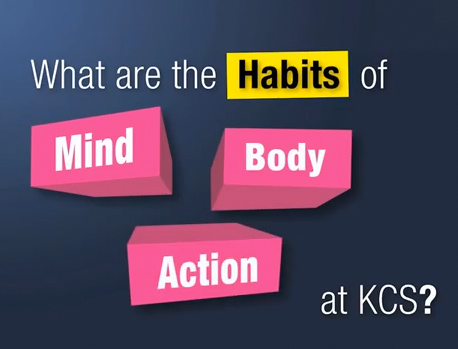
What Are The Habits of Mind, Body and Action?Our students have lots of habits. Rather than trying to break them, we’re shamelessly celebrating them in our just-released school videos on how we develop lifelong learners at KCS.

If your habits need a little tweaking, you might be inspired by some of our students and the habits they’ve already embraced in their lives:

  • A student in grade 4 whose favourite habit is to take responsible risks, because it reminds her to try something new
  • A student in grade 7 whose favourite is to persist, because it’s what he knows he most needs to do
  • A student in grade 6 whose favourite is to share what you know, because if everyone did so we would all be smarter. Besides, collaborating is fun.

Check out our KCS Habits of Mind, Body and Action and think about which is your favorite? Why? Then share it with others, and do a little inspiring of your own.

You Never Know Where Things Go… When You Share What You Know

Stack of colorful books tied up with ribbonGreat things can start really small. When small, of course, they appear insignificant and usually go unnoticed. Small things start becoming great when they’re shared.

Here’s how this happened recently at KCS.

About a year ago, a student in grade 5 thought of a story. It could have stayed in her head, like the many stories people think up. Instead, whenever she found the spare time to do so, she started writing it out on her school computer. It turned out that the story was pretty lengthy, so she kept on writing. As it grew, her friends and teacher started to notice. It kept growing and soon I noticed.

When a student ends up writing a 76-page story, just because, it’s already clear that something great is going on. But the sharing didn’t stop there. Ms. Hoggarth, our librarian, and I started talking about what to do with a story like this. After much discussion (sharing what we knew), we came up with a new offering at KCS that has us both pretty excited. Young Authors of KCS (YAKCS) is a program designed to inspire, support and ultimately publish the work of any students in grades 4 to 8 who independently persist in writing a book. Participating students will receive expert guidance from a published author, with the exceptional opportunity to receive direct feedback from the author when manuscripts are written. Published books will be honoured with a KCS book launch, housed in our library, and copies given to the student. Books will also be given an ISBN and be registered in the National Library of Canada and the National Archives. Aspiring artists will also join this group if chosen to be illustrators.

When first announced at assembly, fifty students rushed to the library to pick up information on how to participate.

The story in the head of our original aspiring author, when unshared, was unnoticed. Because it was shared, and because it inspired subsequent sharing, her story is not only on its way to being published, but was also the catalyst for what may end up as countless more books and inspired future authors.

Share what you know. You never know where it’ll go.

Andrea Fanjoy,
Assistant Head, Academics
You can follow Andrea on Twitter @afanjoy.

Time for Awe and Appreciation (Tribute to Wonderland!)

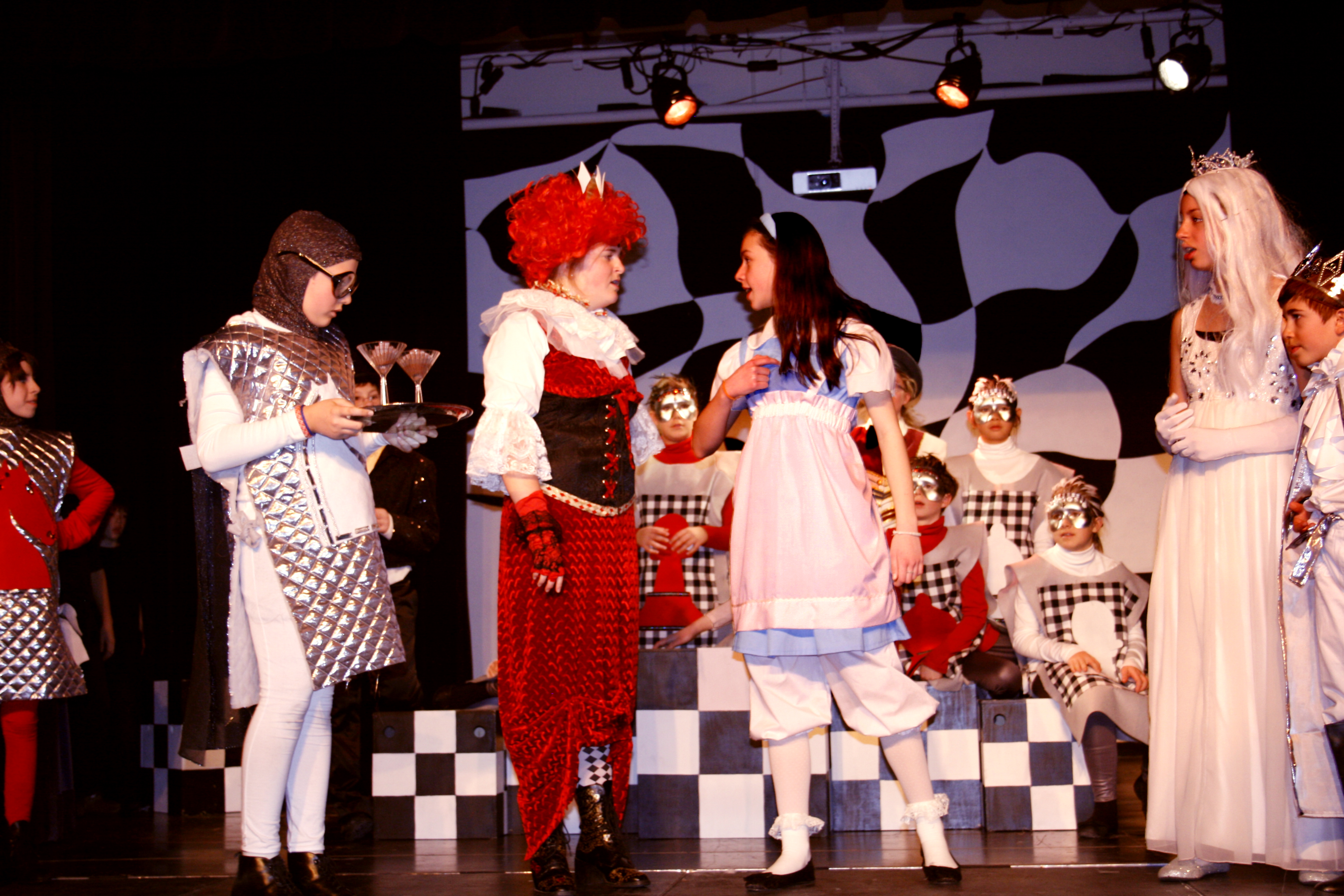
Wonderland!Readers who saw this year’s musical Wonderland! know why it’s time.

Respond with awe and appreciation is one of the KCS Habits. Of course, the world has plenty of things that are awesome and worthy of our appreciation. Trouble is, most of us don’t stop and recognize them enough. Even at KCS, where wonderful things, big and small, happen quite regularly, it’s the other habits that tend to get the most air time.

Well, the musical put this habit front and centre. Awe is the absolute right word to describe this wonderful show. And appreciation to match is due.

The primary students sang with heart, confidence, and charm. It’s clear many of our youngest students are already destined for a future on stage. The dancers performed throughout with style, grace and polish. The chicken dance will be among the many unforgettable moments! The chorus and band immersed us in delightfully memorable songs. The performers amazed us with their evident talent and commitment to their roles. Their efforts have inspired performers-to-be. And then there’s the many people behind the scenes, from tech crew to the many teachers, parents and grandparents who invested hundreds of hours planning, directing, organizing, sketching, sewing, shopping, thinking creatively, problem solving and just generally making something huge happen.

It was awesome. Thank you.

Andrea Fanjoy,
Assistant Head, Academics
You can follow Andrea on Twitter @afanjoy.

Learning What We Don’t Want to Learn

Habits of Mind, Body and ActionThe first Habit on our poster is ‘Embrace Learning’. Don’t let the soothing tone of the word ‘embrace’ deceive you. We could have just as easily described it as ‘Learn whether you like it or not’.

Learning can be like that. Thankfully, most of the time, and certainly at KCS, learning does feel like a warm embrace. It’s delivered by teachers who evidently care about their students and about making learning as positive as possible. And so it should be.

I’ve been reminded recently, however, about the underbelly of ‘embrace learning’, a side that was always intentionally part of that Habit, but that may have gone unnoticed, hidden in the shadows of the ever-more pleasant type of learning that is more the norm here. I’m talking about those important lessons in life that we resist, the lessons we’d prefer not to learn, but learn we should. They may challenge our character, or reveal a sandy foundation upon which we had built mighty assumptions. These lessons may arise when exams yield lower marks than expected; sometimes they arise when we’ve done something we’re later ashamed of; sometimes they will trip up students who otherwise find learning very easy, but then are faced with a topic that is annoyingly difficult to understand. Though these examples focus on the young, we’re never too old for these lessons. And while these examples focus on others, I don’t pretend to be immune.

Humans are generally a comfort-seeking lot. Daniel Willingham, cognitive scientist and author of Why Students Don’t Like School, argues that the brain strives to be as efficient as possible, lazy even, preferring to do as it wishes and not as it is forced to do. Add a dash of limited understanding, bias, immaturity, emotion, or over-confidence, and you have someone ready for one of these most humbling lessons. If they embrace it.

Most learning should feel like a warm embrace. But growing up and being our best self will include these more challenging lessons too. While decidedly uncomfortable, the reward for their steep price is broader understanding, growing maturity, more rational thought and healthy humility. Resilience, thinking flexibly and the ability to persist, three other noteworthy habits, also grow as a result.

That’s learning worth embracing.

Andrea Fanjoy,
Assistant Head, Academics
You can follow Andrea on Twitter @afanjoy.

Practising Leadership

Imagine Create InspireEvery Friday we have a school-wide assembly. Here’s how a recent one unfolded:

  1. Three grade 8s presented their regular ‘Save that Species’ game show/skit to promote awareness of endangered species.
  2. Three other grade 8s announced the conclusion of their successful Winter Coat Drive, thanking the KCS community for donating 101 coats to families in need.
  3. Another five grade 8s came to lead our weekly ‘Compliment Friday’, inviting students in grades 1-4 to come up and give a public compliment to anyone they felt made a difference over the holidays.
  4. Four girls in grade 6 reminded the community of their Poster-to-Canvas contest, with submissions due early February.
  5. A group of House Captains from grades 7 and 8 announced the upcoming House lunches.
  6. About thirty students from grades 1-8 came forward to present the ‘brick’ they earned for our Wall of Service. Each brick represents an initiative that makes a positive difference, and included acts such as running in marathons for charity, donating birthday money, distributing food to families in need over the holidays and many, many more.

And these represent a mere fraction of the leadership projects that are currently underway.

Practice makes perfect. The world could use more perfect leaders, or at least great ones, so KCS is working on it.

How do we do it?

First, we’ve taken the mystery out of great leadership. Every student at KCS knows the traits that lead to not only personal success but also a meaningful life that makes a positive difference. The KCS Habits of Mind, Body and Action are the undeniable, timeless attributes that make one a leader in all aspects of life.

Second, we’ve made leadership accessible to all. Leadership isn’t reserved for our oldest students, nor to students winning elections, or to students arbitrarily chosen by others. Leadership opportunities are as infinite as the imaginations of each student. If they can dream it, and we can help them make it happen, it can be pursued. We also make it clear that leadership is not always a big and bold undertaking – it can be as small and impactful as facing a daunting personal challenge, standing up to others doing something wrong or helping someone when they’re hurt.

Third, we’ve made it imperative. We don’t see leadership as optional in life – it’s as important as the academic skills that underlie any undertaking. Leadership is practiced in smaller ways among our youngest students, unless individuals choose to pursue a more substantial leadership project. By grade 6 it’s a timetabled subject and all students are given the time and guidance to imagine and deliver on an idea that makes a difference. Many choose to support groups in need, others choose to provide exciting new offerings to their schoolmates, such as contests and talent shows.

Our students have unparalleled opportunities to practice leadership. We know that the world would be a better place if all children went to a school that unleashed the leadership within, and we hope that one day this will come to be. In that way, KCS is practising leadership too. After all, it’s true what they say, practice does make perfect.

Andrea Fanjoy,
Assistant Head, Academics
You can follow Andrea on Twitter @afanjoy.

Exams Got You Down? Just PAUSS

The following blog first appeared one year ago. It’s as relevant now as it was then. We all face challenges from time to time, and how we face them makes all the difference. That’s where the KCS Habits come in.

At KCS, it’s our mission to develop lifelong learners with the habits to face and embrace life’s challenges. Many of our students and parents have an extra one of those challenges on their plate right now.

Exams.

Students in grades 6-8 write exams starting January 28th. Love them or dislike them (yes, we’ve had students say they love them!), learning to prepare for and take exams is a challenge we all have to face at some point. Starting them in grade six, with ample guidance and time learning how to prepare, is the best way to start. Though a big deal, exams at KCS are also a safe opportunity to face this challenge, ‘try your best’, and learn from mistakes.

Looking at our Habits poster in my office Friday morning, I wondered which of the habits students should focus on to be successful preparing for exams. Five stood out. When written down, it became clear they made for a nice little acronym – a beacon for calm in the storm of stress that often surrounds the ‘e’ word. The acronym is PAUSS. The habits are:

Persist – this is a marathon, not a sprint

Adapt – old patterns of studying and time management likely need to change

Use past learning – use notes and old tests; use strategies that you already know to work, and avoid those that you know don’t

Show self-control – stick to the study plan; focus on the task; remember to also rest, eat well and get exercise

Strive for accuracy – follow the study keys, test yourself, aim to understand any errors

Exams inherently stir up anxiety. PAUSS, happily, does not.

If your child is writing exams, encourage them to PAUSS. And watch with pride as your child develops habits that matter. Take heart. Dread will soon be replaced with delight, and doubt will be replaced by well-earned confidence. And the unknown challenges to come will face a tougher foe.

The Seven Habits of Highly Effective Thespians

KCS Students Perform at Studio TheatreAs many of you know, on a Friday back in November Ms. Biljetina and I took a group of eight Grade 8 KCS students to Stratford, Ontario to take part in the Student Players Festival: the fourth and final stage of Stratford’s incredible Teaching Shakespeare program. Our students performed a 10 minute scene from Romeo and Juliet on the legendary Studio Theatre stage in front of peers, parents and professional adjudicators from the Stratford Festival.

Since the students had also been studying S.E. Hinton’s novel The Outsiders, we decided to set our scene in the 1960s – the Capulets became Soc’s and the Montagues turned into Greasers. What happened on that stage was truly magical. Working with a professional stage crew, the kids learned about blocking, sets, timing, and all the other behind-the-scenes machinations that go into a professional stage production. But what they really learned went so far beyond that. Call it The Seven Habits of Highly Effective Thespians:

  1. Take responsible risks: Putting themselves out on the stage to be adjudicated was a huge risk – not only for the kids, but for us directors!
  2. Seek collaboration: The students not only had to work with each other and their teachers to plan the scene, a professional actor from Stratford also stepped in to offer advice and direction.
  3. Think creatively: Benvolio wearing hair gel and a leather jacket? The kids truly had to open their minds to combine these two works of literature.
  4. Find humour: A bumbling police officer introduced the two warring houses of Verona. Hilarious.
  5. Strive for accuracy: The students choreographed a stage combat scene that required precision and planning to ensure that it looked realistic and no one got hurt.
  6. Persist: Memorizing 10 minutes of Shakespearean dialogue. Need I say more?
  7. Adapt: Two minutes before we were about to perform, we discovered one of our props was missing. The students improvised and adapted like pros.

I could not have been more proud of our students, and the way they rose to the challenge. In the words of Bette Davis, “Without wonder and insight, acting is just a business. With it, it becomes creation.” That day on the stage of the Studio Theatre, those eight students learned lessons that were wonderful, insightful and deeply creative, and I was so privileged to have been able to share the experience with them.

Teresa Pollett-Boyle
Drama teacher, Arts Coordinator