Could-Be Blogs

TenEach weekend, I carve out time to sit down, reflect on the week, and decide what to write about for the blog. Each weekend, I struggle with the fact that for every blog that’s written, there are easily ten that could be.

This weekend, I chose not to struggle. Here are ten events that I had the pleasure of witnessing and could have easily written more about, but won’t this time.

  1. Our first Primary Awards Day for 2013-2014, where individual students were recognized for exceptional demonstration of our habits. It’s pretty inspiring to see how hard these 5 to 7 year-olds are working at following the three school rules, taking responsible risks, acting with empathy, showing self-control and persisting at what’s tough.
  2. Hearing the story at a cross-country tournament this week of one of our fastest male runners, fighting for first, going neck-and-neck with a female from De La Salle, losing by a pace, but making a point of high-fiving and saying “Good race”.
  3. Watching dozens of our students participating for the first time in the Brock University Caribou math challenge http://www.brocku.ca/caribou/
  4. Seeing the return of the student leadership project ‘Save That Species’, an awareness-raising and highly entertaining game-show skit that informs us of endangered animals and what we can do to help them
  5. ‘Free-Hug-High-Five Friday’, another student initiative in its third year, where students, parents and teachers are greeted with a show of affection as they arrive for school.
  6. Following our SK students on Twitter (check out our Twitter feed @KCSMatters and look for their hashtag #KCS_SK)
  7. Learning of how hard the grade 8s are working to prepare for Remembrance Day, not because they’ve been told to but because they want to
  8. Finding out that one of our grade 6 boys entered a contest to create a new Pokémon character, and won!
  9. Joining our first Open House of the year and having the chance to meet and chat with parents and children keen to join KCS. I love sharing what happens here.
  10. Watching our older students get up and speak at assembly, marveling at how confident and skilled they’ve become at public speaking over their years at KCS.

Our first Pizza Lunch, ‘Compliment Friday’, class meetings, field trips, other stories from the cross-country tournament, our girls’ basketball team and many other topics could have easily been added to the list.

A school with 413 students has a lot going on each week. With our Four Doors to Learning program at KCS, what goes on is pretty great. I look forward to explaining more when I write next weekend.

Andrea Fanjoy,
Assistant Head, Academics
You can follow Andrea on Twitter @afanjoy.

Embracing Learning

As expected, lots of learning is underway at KCS.

What you might find interesting is to learn about what our teachers are learning.

Every year includes ongoing professional growth for faculty. Much of the learning is individual in nature, as all faculty are encouraged to identify areas in which they feel they want or need to grow, and then to pursue that learning. Some learning is common to groups of faculty, such as when we collaboratively address a challenge or pilot a new initiative. On top of all this activity, each year has school-wide areas of learning.

So, what faculty learning is taking place this year?

  • Many are receiving formal training in teaching Reading Mastery, a Direct Instruction program that has proven very effective since our pilot the year before last.
  • Among those who are proficient in teaching Reading Mastery, two are now working on becoming certified trainers in Direct Instruction programs.
  • We have teachers taking additional Faculty of Education courses in areas such as math and special education.
  • One teacher is working on her PhD.
  • Many of us have attended conferences and workshops on best-practices in kindergarten.
  • Six are in the midst of a ten-module Leadership Institute with CAIS (Canadian Accredited Independent Schools).
  • A number of teachers are currently receiving professional development in the area of mental health, and sharing what they learn with all faculty.  In addition, we are developing our own professional development in this area for all our staff which will begin early in 2014.
  • All teachers are learning about new applications in technology, from self-study, in-house training and by attending conferences.
  • Many teachers are learning from global professional networks on Twitter and Pinterest; an increasing number of teachers are learning to use these tools so they can develop their own network; a few teachers are learning how to leverage Twitter as a classroom tool.
  • Many teachers have signed up for external workshops specific to their subjects.
  • All are advancing their abilities to offer Project-Based Learning (PBL) opportunities in their classes, using the books PBL Starter Kit and PBL in the Elementary Grades that we all read over the summer as a common planning tool.
  • All are growing as a result of the collaborative planning and problem-solving inherent in making the most of every student’s day.

Our students have days full of learning. Our teachers do too.  Developing lifelong learners is what we do at KCS. Whether young or old(er), embracing learning is a Habit that applies to us all.

Andrea Fanjoy,
Assistant Head, Academics
You can follow Andrea on Twitter @afanjoy.

Wonderful Wondering

WonderingAre you wondering enough?

It’s widely regarded that we all start out as wonderers, asking endless questions as soon as we have the words to do so. As we get older, and more concerned with appearing all-knowing, wondering winds down.

That’s a loss for us all. The world is made a better place thanks to wondering. The global challenges we face need exponentially more wondering, not less.

That’s why I’m so excited about how our grade 6 students are practicing their wondering skills. Their teachers have led them in creating ‘I Wonder Wikis’. The students will add to them throughout the year, documenting what they wonder about, and including the multimedia fruits of their efforts to pursue this question of interest. The wikis will be shared with their classmates and all will have the opportunity to comment and contribute (such is the wonder of wikis). Wondering turns into learning about an unlimited array of topics.

What do they wonder about? Here’s a sample of what they’ve started with:

  • How was bubble gum invented?
  • How do you help stray dogs?
  • What are the origins of Halloween?
  • How do robots work?
  • How does a computer work?
  • How was the baseball formed?
  • How does a stereo read a CD?
  • What would happen if I swam to the bottom of the ocean?
  • Why are pitbulls discriminated against in Canada?
  • How do birds fly?
  • How do clouds float?
  • Why is a cloud white?
  • What is the atmosphere in Mercury like?
  • Why do you need to cook raw meat?
  • How does wireless work?

Have no fear. Most of their day is still spent learning within the regular curriculum. However, question and be curious is a habit we’re working to establish at KCS. It’s a habit that leads to lifelong learning. And it’s a habit that may lead to questions that will transform the world for the better.

Wonderful.

Andrea Fanjoy,
Assistant Head, Academics
You can follow Andrea on Twitter @afanjoy.

In Case You’re Wondering: Curriculum Planning By Design

LearningI recall as an elementary student admiring the coiled manual my teacher held in her hand. Believing that book held the key to my learning, I ambled through my young non-teaching years thinking good teaching was pretty straight-forward.

Boy was I wrong.

Optimal teaching is anything but straightforward. It doesn’t come from a book, but grows thanks to the endless efforts of the teachers who deliver it, and thanks to a culture that supports them.

By now, KCS parents, you’ve already met many of the outstanding teachers at KCS. You might be wondering, however, about the culture that drives what we do. It’s worth wondering about. It explains how these teachers grow from each other’s strengths and create learning experiences that surpass anything a single teacher could deliver on their own. Here are the elements of a culture that leads to a curriculum where 1 + 1 = 3:

  1. A foundation rooted in knowing each student’s needs, aspiring to our school mission, and a broad awareness of the tools and techniques that will help us meet both
  2. Regular collaboration and frank conversations
  3. A framework that meets or exceeds Ministry expectations
  4. An environment free of practice based on doing what’s comfortable, unsupported opinion, what’s in fashion, how we were taught or what we’ve always done
  5. An atmosphere saturated in the Habits of Mind, Body and Action, so teachers and students exercise and strengthen them through their work (Embrace learning, think flexibly, take responsible risks and do what is right are some of the stand-out Habits required in curriculum development.)
  6. A balance between Direct Instruction, Project-Based Learning, and other learning experiences, as deemed worthy
  7. An ever-present search for how to enrich learning, inspire a love for learning, inject critical and creative thinking, and differentiate instruction

I sure wasn’t aware of this as a young student, and don’t know that many outside of KCS faculty would be aware of it either. I do know you care a lot about what we do with your children, and thought I would share how we determine what we do, just in case you were wondering.

Andrea Fanjoy,
Assistant Head, Academics
You can follow Andrea on Twitter @afanjoy.
What We Learned at Camp

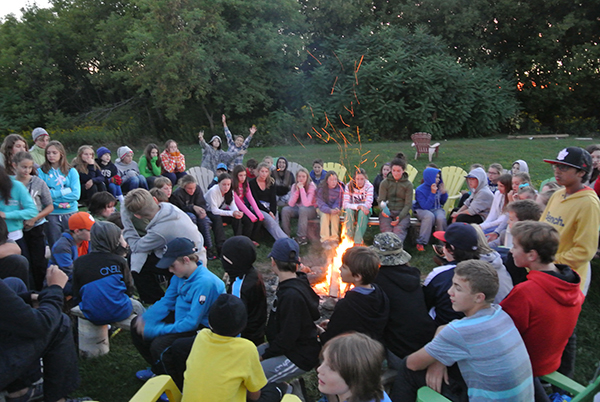
Me to We Leadership CentreDuring free time, they returned to the familiar: basketball, soccer, Zombie Tag, and chatting with friends. It was a whole different story, however, when the grade 7 and 8 students at the Me to We Leadership Camp were in class.

Me to We is an offshoot of Free the Children, a charity established 18 years ago by a young man from Thornhill. What began as one 13-year-old’s mission to fight child labour has become a world-wide movement to inspire compassion and action among the young.

So, what did our students work on at their leadership and outdoor education camp? As rich and manifold as the jambalaya served at dinner, here is what I observed them directly learning:

To persist
To have the courage to share difficult thoughts
To reflect on how fundamentally our lives can differ from others in the world
To be silent
To listen
To be grateful
To work as a team
To be honest
To be mindful
To work through confusion
To question what happiness really is
To take responsible risks
To think by yourself
To experience some of the adversity that affects others in the world daily
To observe how difficult it is to DO what is right even when you KNOW what is right

“Goodness!” you might be thinking. What did the students think of that?

The first report received from a parent was that her son came home with two thumbs up, saying that was the best trip EVER.

And I’m reminded once again that the world is in good hands and will be a better place thanks to this young man and the many others who joined us at camp.

Andrea Fanjoy,
Assistant Head, Academics
You can follow Andrea on Twitter @afanjoy.

The Journey Through KCS

GrowthLots of little ones are joining KCS this week. And this year they’re littler than ever.

As of this September, KCS now has pre-, junior and senior kindergarten, in addition to grades 1 to 8. The excitement among faculty is palpable, and the desire to do our best for these youngest of students as strong as ever. Like we do for every student, we’ll follow their journey through to graduation from KCS with heartfelt interest. Here’s some of what they will come across:

  1. Deeply caring and driven teachers who are constantly improving what they do to best meet their students’ needs.
  2. A school experience committed to giving students the academic foundation and Habits they need to be successful in school and throughout life.  Their learning will be enriched, at times accelerated, and differentiated to meet the strengths and needs of all.
  3. A house system, led by senior students, that brings community, spirit-raising and friendly competition to the school day.
  4. An immersion in student leadership that makes clear everyone can be a leader, and that leadership can unfold in infinite ways.
  5. When in grade 1, they will have a grade 8 buddy who will organize get-togethers, high five them in the hall and be an example of the fine young men and women they will also become.
  6. An extra-curricular schedule with around 35 club and team opportunities available to the students each term.
  7. A regular message that they can make the world better, through acts big and small, through our Wall of Service and service learning projects.

Some will start shy and become contest-winning public speakers. Some will become passionate artists.  Some will discover a penchant for politics, and will debate provincial legislation at the Ontario Legislature in grade 8. Some will bring home championship banners in sports. Some will become published authors in our YAKCS program. Some will discover special talents in math contests and robotics. Some will perform in an orchestra at Roy Thomson Hall. Many will become leaders with experience and skill beyond their young years.

It’s amazing to watch little ones grow. Immersed in the same opportunities, the unique core in every child will blossom in whatever way it chooses to.

That’s why we watch with so much interest. And why we’re so excited to be part of the journey.

Andrea Fanjoy,
Assistant Head, Academics
You can follow Andrea on Twitter @afanjoy.

For Goodness Sake, Get Connected

Red Apple on ComputerThis one’s for teachers. And for everyone else who can pass it on to teachers.

We’re a pretty passion-driven lot. We work with children to meet their vast array of needs because we want to make a difference, the biggest difference we can. Ready to face daunting challenges each day (the more we learn the more challenges we’re aware of), we’re fuelled by a desire to do good.

Well, for goodness sake, get connected.

I’ve downloaded a 60-page guide on Project-Based Learning from a tweet. Videos, blogs, articles, websites, people and resources directly valuable in my day-to-day and strategic work are regularly on my feed. I’ve had Twitter chats with teachers from around the world. Tweets sent during conferences include attachments that boost the learning for all exponentially. My experience isn’t special – it lies in wait for any teacher who gets connected and builds a network. No single conference, workshop or book can replace the quantity and breadth of daily learning that comes from a professional learning network on social media.

Teachers around the world have embraced social media, particularly Twitter, like no other profession. While classroom walls and traditional timetables continue to separate us physically, more and more teachers are reaping the benefits of an infinite number of colleagues from whom to learn. Gone are the days when you have to know everything, solve everything and create everything largely yourself.  We have always tried our best. With a much bigger knowledge base and tool kit than traditional professional development can ever provide alone, our best can now be much better.

If you’re a teacher and not yet connected, take the leap. Twitter stands out for efficiency and access to the largest number of educators and content. For the visually-inclined, check out Pinterest. Enjoy selecting the colleagues of most interest and relevance. No need to tweet. No need to post. Just learn.

I wish you a great school year. With a global professional learning network by your side, you’ll be on your way toward your best one yet.

Andrea Fanjoy,
Assistant Head, Academics
You can follow Andrea on Twitter @afanjoy.
Teachers wanting to learn more about Twitter should check out www.edudemic.com and their “Ultimate Twitter Guidebook for Teachers”.

Getting Dirty

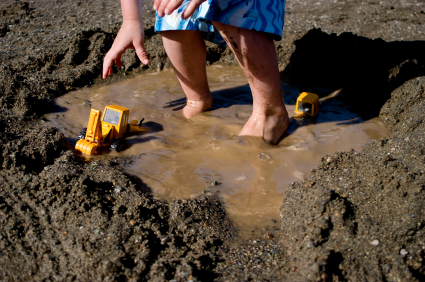
Playing in the mudAs a child, it was playing in the local woods. Now, it’s working in the garden. For some others, it’s part of going to camp or the cottage. For a small number more, it’s volunteer labour abroad or adventure travel.

However you do it, getting dirty doesn’t happen like it used to.

A growing chorus of parents, educators and nature-lovers are concerned about how children today are increasingly removed from nature. Whether the reason is electronics or modern parenting, there is little denying that children don’t linger outside as much as previous generations. Richard Louv, author of Last Child in the Woods, has labeled the result Nature Deficit Disorder and makes the argument that this is behind some of the major health challenges children face today, including obesity, attention disorders and depression. If that isn’t reason enough, nature packs a powerful learning punch. In addition to all that’s worth learning while outside, research makes clear that learning is stronger if it’s multi-sensory. If it comes with a taste, touch, sound and smell in addition to a look, the memory is embedded in multiple parts of the brain and more secure and readily retrievable as a result.

In the footsteps of Louv, and armed with research, forest schools are gaining media attention as an alternative to more time indoors. A recent article in the Toronto Star featured the Guelph Outdoor Preschool, Ontario’s first licensed outdoor preschool. Children will spend the bulk of the day outside, rain or shine, hot or cold. Under their teachers’ care, these lucky little ones will experience flora and fauna and yes, dirt, all while working on the most foundational skills all preschool programs seek to nurture – language, math, science and social studies, in addition to questioning, curiosity, wonder, imagination, flexibility of thought, and persistence. Evidence suggests these children will be off to a good start with their learning.

Not all children have a forest school to go to, and plenty of great learning can and does happen in typical school environments. That being said, it’s summer. School isn’t keeping children inside. Find ways for you and your child to connect with nature. Get outside. And if you need convincing, take Louv’s book with you. He won’t mind if it gets dirty.

Andrea Fanjoy,
Assistant Head, Academics
You can follow Andrea on Twitter @afanjoy.

Summer Learning

SummerCubbies are cleaned. Lockers lay bare. Papers have been sifted through with favourites kept and the rest thrown out.

Summer holidays have arrived, and the weight of the academic world has been lifted for another year.

I’ve been guilty of thinking that children have it relatively easy. I can remember once pointing out to a group of teens how hard their teachers are working, leading extra-curriculars, teaching all day, marking and planning every evening. I deserved their immediate challenge. They reminded me that, in fact, students also have a lot of demands on them. They’re involved in those school extra-curriculars and more, they’re in those classes throughout the day, and they’re doing homework every evening. They have endless expectations on them for managing themselves and their work. Many regularly face misunderstanding, mistakes and reprimand in both academics and social relations. They navigate this world with the vulnerable self-esteem, self-confidence and skill set inherent in being young. Even in the best schools, the days are not easy.

Many parents and teachers bemoan the long gap between June and September. It’s true that some academic learning can take a hit. Having said that, other learning should be savoured in the summer. Because the school year doesn’t always make enough time for it, here is some of the summer learning I hope all children work hard at this holiday:

  1. Learning through play
  2. Learning through mistakes
  3. Learning within one’s strengths and passions
  4. Learning and relaxation in a healthy balance
  5. Learning what and how you want, just for the love of it

Lots of important things are learned at school. And lots of important things are learned outside of school. Like students, teachers also learn a lot over the summer. Maybe, as a result of all their learning, more of this summer learning will work its way into the school year.

Have a wonderful, learning-filled summer.

Andrea Fanjoy,
Assistant Head, Academics
You can follow Andrea on Twitter @afanjoy.

This article will be published in the July 2013 edition of SNAP Etobicoke.

A Notion Worth Knocking

Working the brainI remember the indignation. I was a grade 8 student studying for a science test. I announced with all the wisdom and conviction of a 13-year-old that it was ridiculous studying all this science. “It’s not like I’m going to be a scientist!”

No doubt I would have joined the chorus today that also argues against learning and memorizing facts. Hardly a day goes by that I don’t read or hear the argument that students don’t need to know things like they used to. Anything one needs to know can be found on the internet.

A number of reasons why this notion is incorrect quickly come to mind: students need information as fodder for critical and creative thinking; people don’t always have the internet when they need it; you can’t simultaneously Google everything you need to know to think about a complex issue; much information we learn contributes to our sense of community and identity.

Reading Kathie Nunley’s book A Student’s Brain: The Parent/Teacher Manual, I can now add another definitive reason for why this notion needs knocking. Pure and simple, having to learn anything, anything, makes your brain stronger. The more the brain takes in, the more neural pathways become established. The more those pathways are repeatedly used, the more permanent those pathways become. The more numerous, varied and permanent those pathways are, the more ways in which the brain is ready to learn everything else it’s subsequently exposed to. Much like a muscle that grows whether you’re lifting barbells or babies, the brain is a use-it-or-lose-it organ. If you want to be good at anything in life, learn everything you can.

Along the way, you might even learn what I learned when applying to university. My undergraduate, as it turned out, was in science.

Andrea Fanjoy,
Assistant Head, Academics
You can follow Andrea on Twitter @afanjoy.

This article was first published in SNAP Etobicoke, June 2013.