How Technology Increases the Personal Touch in School

The notion shared in the title may not be obvious. Because the personal touch matters, it’s worth understanding and, for the benefit of students, acting upon.

Of course, technology isn’t a person. It won’t ever replace the power of a teacher who knows and cares for his or her students. It won’t bring the creativity and professional judgment the teacher applies daily in his or her class. So how could technology possibly increase the personal touch?

First, let’s take a hard look at the familiar. The traditional “sage-on-the-stage” approach to teaching unfolds at the pace decided by the teacher. It covers content decided by the teacher, and is delivered in a manner decided by the teacher. While appropriate at times, this approach is imperfect and, for many students, impersonal. These students require a different pace, be it faster or slower. They respond better to a different level of content, whether more simplified or complex, or would understand concepts better with different choices of content.

Technology personalizes school because it brings flexibility in pace, level and content like a teacher alone cannot. Here are some examples:

  • Instead of completing the same math fact sheet, students can use websites like www.thatquiz.org to practise the math facts they need to practise, at the right pace and level of challenge for them. Similar tools exist for all basic skill development.
  • Instead of learning through the lens of textbooks, students can use technology to roam the world for relevant content. Under teacher supervision, students can create their own multi-media “texts”, in the form of wikis, that they and their classmates can study from with pride.
  • Instead of sitting through a lesson that many students may not need (because they already know it) or not follow (because they’re lost), teachers are leveraging technology to personalise instruction. Technology can deliver introductory instruction at a pace controlled by each student (you can pause, rewind, rewatch at will). Students who need different levels of instruction can get that too. Watching instructional videos the night before class makes the in-class lesson more effective and efficient, and leaves more class time for real teacher-student interaction.

The personal touch matters and having a great teacher matters. Technology can help make the most of both.

Andrea Fanjoy,
Assistant Head, Academics
You can follow Andrea on Twitter @afanjoy.

This article was first published in SNAP Etobicoke, November 2012.


A Haunted House that Left Me Scared, and Bursting With Pride

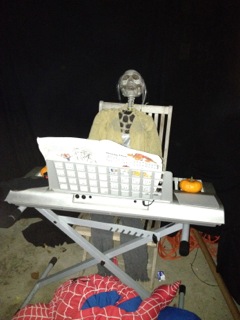
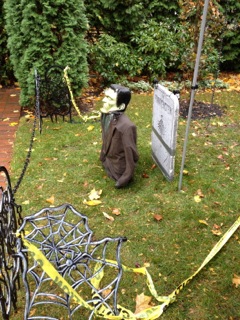
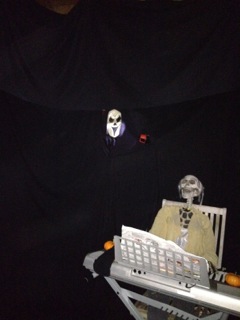
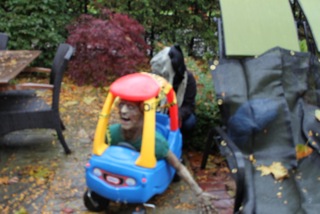
A preschool-aged sibling hid in his room. A writhing trapped rat greeted us at the door. A skeleton sang and swayed while playing the keyboard. A ghost fell on my head. The masterminds? Two boys in grade 4 and their trusty crew of friends, one sister and parents. The mission? To raise money for breast cancer research.

This story goes back to the first day of school. A boy in grade 4 approached me, clipboard in hand. He explained that he had started organizing a Haunted House fundraiser and wanted to meet to discuss it. He knew that’s all it took to launch a leadership project. “Drop by my office and we’ll talk. But remember that you must be willing to persist, and to think flexibly as we plan.” This wasn’t part of a club or program and would test his commitment from the start by making him take responsibility.

He had lots of ideas. He gathered a team. When they learned they couldn’t create a Haunted House at KCS, his friend suggested they could transform his garage. When this boy asked his parents if they could use the garage, his parents replied that they needed a written proposal. The proposal passed, posters were made, a Powerpoint presentation to their classmates was given and a note to their parents posted in the weekly newsletter. Throughout were lots of drafts, changes, challenges, and mistakes. They gave up their recesses, tracked me down a dozen times or more, and devoted two weekends to preparing the garage.

The boys and their siblings raised a significant amount for cancer research. Dozens of visitors experienced an unforgettable Haunted House. This group, through their efforts, made the world better in multiple ways.

And adults of the world are left with a lesson. Don’t ever assume children are too young to lead. Let them lead. We’ll all enjoy a world that’s much richer for it.

Andrea Fanjoy,
Assistant Head, Academics
You can follow Andrea on Twitter @afanjoy.

Leadership, Passion, Cootie Catchers and Flexible Thinking

What happens when those four collide? Thanks to two boys in grade three who approached me last Monday, I can now answer that.

It was recess and I was working at my desk. These two entered my office with something they clearly wanted to say. Trouble is, some things are hard to articulate, especially when you’re eight. Eventually deducing they wanted to do a leadership project, they hadn’t yet thought of what that project would look like. I encouraged them to start from a personal talent or passion, and out came this: “You know”, said one, “I’m really good at making Cootie Catchers. I’m probably the best in the school. I make the biggest in the school, that’s for sure.”

This slideshow requires JavaScript.

Now, you are asking, “What does making Cootie Catchers have to do with leadership?” “How could they make a difference in the world?”

That’s where flexible thinking came in.

We struggled for a bit. It was clearly a new conundrum for all three of us. Where could these popular little games help? Well, they clearly help develop fine motor skill and strength – that’s important in grade one. Maybe they could be made to help practise basic academic skills too? Some trial and error later, we had defined a leadership project that has real value and that the boys have embraced with zeal. Dozens of different Cootie Catchers are being created to practise basic addition in grade one. Students will be given questions, the answer will be found, and the reward, a selection of smelly stickers, will be hidden in the heart of the Cootie Catcher.

I’ve no doubt this will be a hit with the grade ones. The beauty of these projects, however, is what they do for the budding leaders. The boys may not choose to stick with Cootie Catchers as their main contribution to the world. However, they have started a path with leadership, passion and flexible thinking that they would do well to continue on throughout life.

And who knows, maybe the humble Cootie Catcher should have a big future. It’s at least good to know that these boys will leave no stone unturned in their pursuit of ways to make a difference.

Andrea Fanjoy,
Assistant Head, Academics
You can follow Andrea on Twitter @afanjoy.

Making a Difference, Thanks to Parents

I knew it as soon as I heard them.

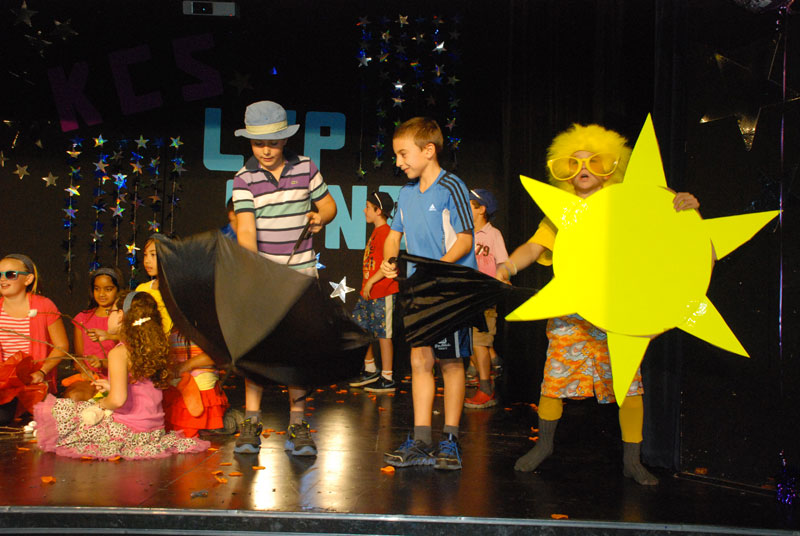
Two Moms, climbing the stairs near the Multi-Purpose Room, heaved a huge sigh.  This was the week of the annual KCS Lip Sync and these intrepid volunteers had just led a dance rehearsal with their children’s class. We crossed paths in the stairwell, we chuckled over the challenge, and off they went.

KCS Lip Sync 2012This is to thank all the parents who devote their time to helping make KCS the special place that it is. We have parents who volunteered through the summer to mentor new families. We have parents who have worked endless hours in the store. We have parents who commit their days and evenings to committee and board meetings as well as in the role of class parents. We have parents who organized an outstanding Welcome Back BBQ! We have parents preparing for our upcoming Special Lunch, parents helping in the library, parents hosting grade parties and parents who have helped supervise field trips.

And those of you who attended last week’s Lip Sync for grades 1 to 4 know that we also have a very special group of parents who are willing to do what for most is unthinkable: choreographing and teaching dance to our youngest and least focused, even dancing alone as the children’s example, in front of a Canada Hall full of spectators. What a terrific show of spirit, confidence and the joy of dance to start the school year.

Thank you to all who have already made a difference at KCS and thank you in advance for making a difference in ways to come. We’ll keep teaching your children to lead and make a difference. And we’ll point to you as examples to follow.

Andrea Fanjoy,
Assistant Head, Academics
You can follow Andrea on Twitter @afanjoy.

School and Other Things that Scare Us

Some lessons need to come from afar to be noticed.

Maasai Warriors visit KCSTwo special guests visited KCS last Friday. Jackson and Wilson, young Maasai warriors from Kenya, came as ambassadors for Free the Children. Draped in their traditional regalia, they told stories of growing up in their mid-African country, fleeing drought, herding cattle and collecting beaded bracelets from their “mammas” when they did good deeds, bracelets which they still wear with pride today.

Mindful of the young audience, they only shared one scary story. It was the story of how schools came to the Maasai. This was a terrifying development for parents, and their terror was passed down to their children. Moms and Dads told their offspring to never go near “school”, as it was a place that took children away from their parents and stole from them their culture and traditions. If policemen tried to force them to go, children were told to run.

Sure enough, the policemen came and children ran. In Wilson’s case, a police officer caught up and threw the young boy over his shoulder. He offered Wilson a candy and explained that school was just as sweet. The officer carried Wilson back to his parents, and, according to Wilson’s recollection, school was similarly explained to them. Wilson and Jackson not only ended up going to school but also became the first in their community to earn university degrees.

In my experience, the value of what is learned from cross-cultural exchanges is beyond measure.  The novelty in their details makes the universal lesson in the story that much more evident and memorable. One lesson from our Friday visit is that change can be both scary and wise. Though our community of Etobicoke and the entire developed world is long past any fear of schooling, we are not done changing and not beyond being fearful of change, even if it is right and positive. A daily read of the newspaper is full of such stories.

Jackson and Wilson are testaments to what can happen when positive change is embraced. Their experience with schooling, despite the rocky start, is a story of thinking flexibly, questioning, being curious, embracing learning (including that which challenged their assumptions) and ultimately, taking responsible risks.

Great lesson. Thanks, Wilson and Jackson, for coming from Kenya to our little corner of Etobicoke so we can learn from it.

Andrea Fanjoy,
Assistant Head, Academics
You can follow Andrea on Twitter @afanjoy.

Thinking, Doing and Checking Assumptions at the Door

By the time this is published, the four months of construction on our house should be nearly done. The experience has left me with more than just an addition.

Shop Class as SoulcraftBrowsing for a good summer read, I stumbled upon Shop Class as Soul Craft by Matthew Crawford. Crawford was a 14-year-old electrician, who moved on to tinkering with car and motorcycle engines, then went to university to earn a PhD in philosophy. Hired to work in a think tank, he assumed he had reached the pinnacle of achievement. He was highly educated, well paid, well dressed and looking forward to the intellectual challenges that would surely ensue.

Assuming the prevailing attitudes of the day, he grew up with the notion that university and the jobs it led to were a higher calling than the trades. University was for people who were good at thinking, while college was for those better at doing. Reverence was reserved for the former.

Not many people have so fully walked down both paths as Crawford. His voice of unique experience reveals that our thinking had more than a fair share of nonsense. First, the notion that all work following university requires supreme thinking he found to be supremely hollow. The many people he met working in the trades spent their days pondering and solving complex problems the likes of which he never found at the think tank.

Equally revealing, Crawford outlines the evolution of both work and attitudes surrounding it. Prior to the onset of the Ford Motor Company and other more efficient models of machine-making, the trades were recognized for what they are – pursuits that offer endless thinking as well as doing, that bring evident value at the end of a day’s labour. The rewards inherent in self-reliance have vanished for many of us today. Of course, university is a training ground for significant work. It simply isn’t the only such training ground.

Smart thinking includes scrutiny of assumptions. Thanks to the scrutiny in Shop Class as Soul Craft, and made real by our home renovation, my summer has included this unexpected bonus of appreciation and humility. Encourage youth to find their calling, and check assumptions at the door.

Andrea Fanjoy,
Assistant Head, Academics
You can follow Andrea on Twitter @afanjoy.

This article was first published in SNAP Etobicoke, October 2012.

It Takes a Village

What does it take to make the world a better place? It takes a village of children – children who are empowered to do so, that is. Here’s what happens when you have such a village:

  • Four boys in grade 4 are organizing a Haunted House fundraiser for breast cancer research;
  • Five girls in grade 2 are organizing a food drive, and four others a toy drive;
  • Two girls in grade 4 are ramping up for their third year of their “Fair Food Friday” awareness campaign;
  • Two others in grade 4 spoke at assembly to remind everyone to say thank you when the door is held for them;
  • Two gentlemen in grade 8 are preparing for this year’s “Walk to School Wednesday” campaign (which has led to exponential increases since it began three years ago in the number of students walking to and from school);
  • Two other grade 8s are delivering math enrichment workshops for younger students;
  • A group in grade six is organizing an art contest;
  • A group in grade 7 is organizing our school’s participation in “The Vow of Silence” to promote awareness of and an end to child labour;
  • One new student in grade three took the initiative to pick up garbage on the field beyond what was asked;
  • Another new student in grade three taught his class about his favourite charity “Helping Hands”;
  • All of our grade four students helped organize our Terry Fox Run;
  • Sixteen House Captains stirred up our KCS spirit;
  • “Compliment Friday”;
  • “Free Hug and High Five Friday”;
  • “Talent for Treats”;
  • “Turn Out the Lights Tuesday”;
  • Volleyball for the Food Bank;
  • A winter coat drive;
  • Art for shelters;
  • Club leaders;
  • Recess helpers;
  • Lunch supervisors…

And that’s just the tip of the iceberg. Be sure to visit our homepage for regularly updated student-led leadership initiatives – we’ll be featuring them in the news feed.

The world has a lot of room to be made better. Adults are unable to do it alone. Empower the children in your village to use their talents and desires to make a difference. You’ll be amazed at the difference they make.

Andrea Fanjoy,
Assistant Head, Academics

You can follow Andrea on Twitter @afanjoy.

Star Habits, Wish Habits

I couldn’t wish for more than what’s happening with our Habits.

We’re starting our third year since the official launch of our Habits of Mind, Body and Action. Anything new needs time to settle, time for all to adjust (or in KCS terms, time to exercise one’s flexible thinking), plus time for glitches to surface and tweaks to be made to make what’s new into a perfect fit.

Lots of such activity took place over the past two years while the Habits were still relatively new. This August, when teachers were asked about how they plan to integrate the Habits in their program for the upcoming year, it was eye-poppingly evident that the adjustment is behind us and we’re now going full speed ahead with our efforts to directly teach the habits that matter most for success in life. Collectively, faculty shared over one hundred ideas they have to teach and leverage the Habits in their classes. Here is a sample:

  • Leader of the Day with a special role to help the class
  • Class mission statements to support growth of the Habits
  • Student-made posters of the Habits
  • Student goal-setting on the Habits
  • Reference to the Habits in school assignments
  • Discussion of the Habits in class meetings and novel studies
  • Students teaching the Habits to other students
  • Students teaching the Habits to their parents and grandparents
  • Connecting the Habits with the study of heroes and leaders

One idea that is particularly out of this world came from grade 4. The students are identifying ‘Star Habits’ and ‘Wish Habits’. A ‘Star Habit’ is a habit they feel they have already established and of which they are proud. A ‘Wish Habit’ is a habit they want to focus on developing in first term. The students looked over all 26 Habits, reflected deeply, made their choices, and explained them in the context of home and school. Star Habit, Wish Habit as their ‘Star’ and ‘Wish’ Habits.

Like the spirit behind our Habits initiative, the students have wishes with a plan. And in the same way that our wishes to teach the Habits are coming true, I’ve no doubt our students’ ‘Wish Habits’ will also come true. What are your ‘Star’ and ‘Wish’ Habits? And what’s your plan to make your wishes come true? If you need some help, feel free to ask one of our grade fours.

Andrea Fanjoy,
Assistant Head, Academics

You can follow Andrea on Twitter @afanjoy.

A Story of Teenage Transformation

I learn a lot from my boys. Over the summer I learned from my 15-year-old just how transformational others can be for bringing out the best in us.

My son Marcel started working at a local restaurant. He is mopping floors, washing dishes, stocking fridges and cleaning bathrooms. Working hard at what he doesn’t love has not been a forte of his. And though I’ve already hinted at a transformation, that doesn’t mean he’s come to love disinfecting toilets.

He does, however, love his new job with an uncommon exuberance for his otherwise typical teenage persona. Why?

The people he works with. They bring out the best in him. It’s a small family-owned restaurant with staff, mainly adults, who work hard, smart, and side-by-side. They treat this 15-year-old with respect and the expectation that he contribute with as much effort as everyone else. And when the restaurant closes and they do the final cleaning up, they all indulge their common interest in listening to music (“Mom, I can’t believe we all know the same songs!”). This job and the wonderful people there have unleashed a transformation that is spilling over into other parts of his life. Though I still can’t get him to clean our bathrooms, I’m grateful for the tired, self-respecting young man who comes home after work.

An earlier blog post, The Leader in All of Us, was about the many small ways, even inadvertent ways, we can demonstrate leadership. My son is the lucky target of such leadership. The people we surround ourselves with do more than just affect our day. They can profoundly affect who we are.

May we all be surrounded by people who bring out the best in us. And may we all follow their lead.

Andrea Fanjoy,
Assistant Head, Academics

You can follow Andrea on Twitter @afanjoy.

Why Do We Have To Go To School?

Do your kids ask this?

Long ago I used to think therein lay the foe that I would slay as an educator. It was asked simply because schools hadn’t yet found a way to make learning enticing enough. While I continue my quest to make it as inviting as possible (you get more bees with honey after all), I have surrendered to the fact that it’s really hard to beat the happiness of holidays. I burst with joy when I hear children say that they miss school when away, but have stopped torturing myself when not all relish it as much.

So, while neither I nor anyone else has made school the quintessential “place to be” for all children, my career-long efforts have at least given me a response to the question of why children have to go to school. At least, this is what I think the response should be.

  • To acquire knowledge needed to understand the world and as fodder for our thinking.
  • To develop skills that allow us to share our understanding and thinking.
  • To learn how to learn (for it must never end).
  • To learn how to get along and work with many others, including people not of our choosing.
  • To learn how to struggle, even fail, and get back up again.
  • To learn that our actions matter in the world, and to proceed with care.
  • To learn who we are by facing challenge and temptation.
  • To acquire abilities and dispositions that matter in life – curiosity, empathy, persistence, adaptability, leadership and more – so we can wisely navigate our own path to happiness.

It may be hard to beat summer holiday, and I’m glad children have it. Without a doubt, children also learn a lot of value over the summer, not to mention all other occasions outside of school. But more learning must be done while young, much more, and that is what schools are for. Or should be.

I have a clear answer for my sons’ question. I’m left, however, asking my own.

Andrea Fanjoy,
Assistant Head, Academics
You can follow Andrea on Twitter @afanjoy.

This article was first published in SNAP Etobicoke, August 2012.