Summer Learning

SummerCubbies are cleaned. Lockers lay bare. Papers have been sifted through with favourites kept and the rest thrown out.

Summer holidays have arrived, and the weight of the academic world has been lifted for another year.

I’ve been guilty of thinking that children have it relatively easy. I can remember once pointing out to a group of teens how hard their teachers are working, leading extra-curriculars, teaching all day, marking and planning every evening. I deserved their immediate challenge. They reminded me that, in fact, students also have a lot of demands on them. They’re involved in those school extra-curriculars and more, they’re in those classes throughout the day, and they’re doing homework every evening. They have endless expectations on them for managing themselves and their work. Many regularly face misunderstanding, mistakes and reprimand in both academics and social relations. They navigate this world with the vulnerable self-esteem, self-confidence and skill set inherent in being young. Even in the best schools, the days are not easy.

Many parents and teachers bemoan the long gap between June and September. It’s true that some academic learning can take a hit. Having said that, other learning should be savoured in the summer. Because the school year doesn’t always make enough time for it, here is some of the summer learning I hope all children work hard at this holiday:

  1. Learning through play
  2. Learning through mistakes
  3. Learning within one’s strengths and passions
  4. Learning and relaxation in a healthy balance
  5. Learning what and how you want, just for the love of it

Lots of important things are learned at school. And lots of important things are learned outside of school. Like students, teachers also learn a lot over the summer. Maybe, as a result of all their learning, more of this summer learning will work its way into the school year.

Have a wonderful, learning-filled summer.

Andrea Fanjoy,
Assistant Head, Academics
You can follow Andrea on Twitter @afanjoy.

This article will be published in the July 2013 edition of SNAP Etobicoke.

A Notion Worth Knocking

Working the brainI remember the indignation. I was a grade 8 student studying for a science test. I announced with all the wisdom and conviction of a 13-year-old that it was ridiculous studying all this science. “It’s not like I’m going to be a scientist!”

No doubt I would have joined the chorus today that also argues against learning and memorizing facts. Hardly a day goes by that I don’t read or hear the argument that students don’t need to know things like they used to. Anything one needs to know can be found on the internet.

A number of reasons why this notion is incorrect quickly come to mind: students need information as fodder for critical and creative thinking; people don’t always have the internet when they need it; you can’t simultaneously Google everything you need to know to think about a complex issue; much information we learn contributes to our sense of community and identity.

Reading Kathie Nunley’s book A Student’s Brain: The Parent/Teacher Manual, I can now add another definitive reason for why this notion needs knocking. Pure and simple, having to learn anything, anything, makes your brain stronger. The more the brain takes in, the more neural pathways become established. The more those pathways are repeatedly used, the more permanent those pathways become. The more numerous, varied and permanent those pathways are, the more ways in which the brain is ready to learn everything else it’s subsequently exposed to. Much like a muscle that grows whether you’re lifting barbells or babies, the brain is a use-it-or-lose-it organ. If you want to be good at anything in life, learn everything you can.

Along the way, you might even learn what I learned when applying to university. My undergraduate, as it turned out, was in science.

Andrea Fanjoy,
Assistant Head, Academics
You can follow Andrea on Twitter @afanjoy.

This article was first published in SNAP Etobicoke, June 2013.

Student Leadership, Gone Viral

The following was first written for our community two years ago. Leadership projects are as viral as ever at KCS. Students clearly have great potential to make the world a better place. Please pass this on so more schools can help unleash that potential.

A small selection of photos from student leadership initiatives.

This slideshow requires JavaScript.


Student Leadership, Gone Viral

My day began by walking past a multicultural food drive organized by five boys in grade 6. Not much later, a student in grade 1 announced to me that he is saving his allowance to buy food for charity. Shortly after, a girl in grade 5 emailed to let me know she is helping a group of grade 3 students organize a talent show. I popped into a grade 5 class and witnessed a group starting to organize a poster contest. That afternoon, a different student in grade 5 came by to ask if he can start a student newspaper, similar to the one the grade 8s established a couple years ago. On my way out at the end of the day, I learned from a grade 4 student that he made a colouring and activity book for the grade 3 classes as a supplement to their unit on the rainforest. This, in addition to the dozens of leadership, community service and service learning projects I know our older students are working on. All in one day.

That is when it became clear student leadership was going viral.

The 21st century is for people who can make success happen. It is a century where leadership skills aren’t just helpful for the few, but required by all. At Kingsway College School, student leadership is a major pillar in our effort to prepare students for the 21st century. While not every day is punctuated by this number and breadth of student-initiated leadership projects, it happens often enough. If you long for a day like I had, the following are some steps that helped get us here:

1. Make time for it. Leadership is a timetabled subject in grades 6 to 8. Students learn about the important aspects of leadership, such as initiative, persistence, active listening, participation and flexible thinking. They use these periods to come up with their own leadership projects. They research, prepare their proposal, work out the logistics and deliver on their project. Awareness campaigns, charity drives, fundraisers and school and community events are some of the more popular projects, though the possibilities are endless. Reflection on the project and self-assessment of their growth is also a valuable part of the experience, and set the students up to be self-aware leaders throughout life.

2. Make leadership for all. Leadership is an egalitarian, unelected pursuit at KCS. It is open to anyone who wishes to initiate it and follow through. In fact, in the older grades, all students are required to learn about and experiment with leadership in their leadership classes. We don’t give students the choice of learning to read, and we believe we shouldn’t give them the choice of learning to be leaders. If it matters, everyone needs to start the journey.

3. Make it personal. Leadership can manifest itself in infinite ways, with the most powerful leadership being rooted in personal interests. Helping children find and leverage their passions to make a difference is an appropriate, though overlooked, role for education. At our school, one boy who loves to read committed himself to writing book reviews for the library. A group of girls who love to dance came up with a “Get Out of your Comfort Zone” Challenge, encouraging students and teachers to perform in assembly. Another boy and his friend prepared and delivered an unforgettable presentation on Down’s Syndrome, breaking myths surrounding that condition. There are dozens of different projects underway, each adding dimensions to everyone’s school experience that the faculty alone could never provide.

4. Let them lead, with guidance only. Many students are naturals at leadership. If invited, they will organize a group to deliver on a significant community project, regardless of age. Some students don’t find it quite as easy. They will need guidance. Give it to them. Also, give the students lots of freedom to change or drop their ideas, and even to follow through with unsuccessful projects, without penalty. Let this be a realm where they can learn to lead the way they learned to walk, being allowed to fall, and then cheered when they get back up and try again.

5. Let them be small. Very rarely are students solely responsible for huge leadership projects. Craig Kielburger, founder of Free the Children, is an inspiration but most children and youths, if really in charge, will come up with smaller ideas. Adults should resist the temptation to jump in and take the lead. It may end up big and polished, and it may even make a truly significant difference to the community or charity of choice, but it isn’t developing the students into leaders. When we step in, it’s the adults’ leadership skills that get honed, not the students. In fact, when faced with the large quantity of projects that need to be coordinated, small is generally the wiser choice for all.

6. Have a variety of opportunities. Leadership experiences at KCS take many forms: earning a brick on our Wall of Service in return for initiating an act of service; lunch supervision roles, where students assist supervising teachers; assisting with clubs and teams; House Captains; peer tutoring; leading assemblies; as well as all the opportunities to come up with one’s own project. We also point out to students the many unplanned opportunities for leadership during class, at recess and outside of school through setting a positive example, resolving conflicts or initiating an activity. The variety ensures there are many opportunities for everyone, at every stage of their leadership journey.

7. Have them share what they know. The presentation of leadership projects is at the heart of making them go viral. The school-wide presentations of our older students inspired the younger students to follow their lead. The result is an ever-increasing number of projects. Let the presentations keep happening. Visibility and quantity matter when creating a culture of leadership.

A word of warning. If you embark on establishing student leadership throughout the school, be prepared for an onslaught of students stepping up. Leadership potential is lying dormant, but will potentially overwhelm you if awoken. Larry Rosenstock, founder of San Diego’s High Tech High, has said a critical attribute for success in the 21st century is a tolerance for ambiguity. For a profession that is more comfortable with prudent adult planning, unleashing school-wide student leadership will rock your world.

Relax. It’s worth the ride.

Andrea Fanjoy,
Assistant Head, Academics
You can follow Andrea on Twitter @afanjoy.

Teacher, Meet Brain.

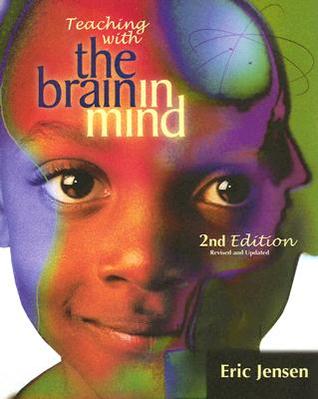
Teaching with the Brain in MindThat’s how it felt to read Teaching with the Brain in Mind by Eric Jenkins. While the bond between the brain and learning has been known for centuries, the two have been notably coy. It is only recent research which has started sharing and subsequently sparking the intimate side of this complex relationship. And like the rush of first love, it will blow your mind.

My measure of a great book on education is the degree to which it ends up highlighted. Barely a page of Jenkins’ book escaped my yellow swipe. Starting with Neuroscience 101, Jenkins addresses many of the major areas related to learning and highlights the research and implications it has for teaching. From birth and beyond, he looks at preparing the brain for school; the connections between movement, emotions, and one’s physical environment with learning; managing the social brain; and optimizing motivation, engagement, critical thinking, memory and recall. Clearly affecting a significant chunk of the school experience, Jenkins is devoting his career to having teachers ‘teach with the brain in mind’.

Some insights include:

  1. The brain changes and can even grow new neurons throughout life. Nature and nurture both clearly play a role in defining who we are, with growing evidence revealing that nurture can override some nature, even to the degree of changing the impact of our genes.
  2. Exercise offers much more than just physical health. If you desire a denser and better brain, make regular exercise a lifelong habit.
  3. Much of what distinguishes teenage behaviour is rooted in the enormous changes taking place in their brains. Teens even temporarily regress in a number of abilities, such as their ability to recognize emotions in others.
  4. While collaborative learning gets most professional press these days, brain research supports the integration of group activities with traditional learning tasks for optimal learning.
  5. Emotions play a central role in learning and can hinder as much as enhance the brain’s ability to remember. Teachers would benefit from mindfully leveraging them.
  6. Frequent opportunities for movement, and breaks where no new learning happens, are important for long-term storage of learning.

Teachers, indulge in the intimate details of the learner-brain relationship. Meddle even. This is one couple that needs you in the middle.

Andrea Fanjoy,
Assistant Head, Academics
You can follow Andrea on Twitter @afanjoy.

This article was first published in SNAP Etobicoke, May 2013.

Habits Worth Having

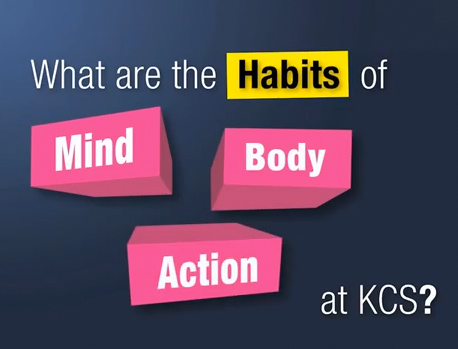
What Are The Habits of Mind, Body and Action?Our students have lots of habits. Rather than trying to break them, we’re shamelessly celebrating them in our just-released school videos on how we develop lifelong learners at KCS.

If your habits need a little tweaking, you might be inspired by some of our students and the habits they’ve already embraced in their lives:

  • A student in grade 4 whose favourite habit is to take responsible risks, because it reminds her to try something new
  • A student in grade 7 whose favourite is to persist, because it’s what he knows he most needs to do
  • A student in grade 6 whose favourite is to share what you know, because if everyone did so we would all be smarter. Besides, collaborating is fun.

Check out our KCS Habits of Mind, Body and Action and think about which is your favorite? Why? Then share it with others, and do a little inspiring of your own.

Understanding the Teen Mind

Working in education doesn’t make parenting easier. It does, however, let me spend part of my work time learning about why children behave as they do. Increasingly, what I learn is rooted in brain research. Once one of life’s greatest mysteries, the thinking behind behavior is being revealed like a classic whodunit, thanks to magnetic-resonance images of the living, processing brain.

Questioning MindOf all the stages of development, parents and educators strive hardest to understand the teen years. An exciting yet characteristically turbulent, boundary-pushing stage where adults may often be inclined to ask, “What were you thinking?”, we’re fortunate to now have an answer. Two parts of the brain feature prominently in adolescence. The prefrontal cortex is the part of our brain most linked with mature judgment and self-control. The amygdala is the seat of our emotions. The biological details of what these two are doing during adolescence are best left to worthier publications than this column, but a satisfying metaphor shared by Ron Morrish, behavior specialist, is that of a construction site. The prefrontal cortex undergoes significant growth and change from the preteen years until the early twenties. It effectively becomes a construction site that, like any other, is unavailable for regular use. Where does the detour take an adolescent mind? The amygdala. This helps explain the oft-incomprehensible emotional swings that the adolescent, and those in their wake, must ride.

This has big implications for what we do as parents and educators. Dr. Ron Clavier, Clinical Psychologist and Neuroscientist, has laid out these implications, and related strategies, in his acclaimed book Teen Brain, Teen Mind: What Parents Need to Know to Survive the Adolescent Years. Humour, extensive experience and knowledge of the physiological underpinnings of this amazing stage have made Clavier a most-welcome voice in my world at school and home. If there is a teen or pre-teen in your life, I’m guessing he would also be a welcome voice in yours.

Dr. Clavier is speaking at Kingsway College School, 4600 Dundas St. West, at 7:00 p.m. on Wednesday, February 6th. Admission is free, and copies of his book will be available for sale. More details are available at www.kcs.on.ca/Speakers. Parents, educators, teens and all others who want to better understand the intriguing teen mind are welcome to join us.

Andrea Fanjoy,
Assistant Head, Academics
You can follow Andrea on Twitter @afanjoy.

Exams Got You Down? Just PAUSS

The following blog first appeared one year ago. It’s as relevant now as it was then. We all face challenges from time to time, and how we face them makes all the difference. That’s where the KCS Habits come in.

At KCS, it’s our mission to develop lifelong learners with the habits to face and embrace life’s challenges. Many of our students and parents have an extra one of those challenges on their plate right now.

Exams.

Students in grades 6-8 write exams starting January 28th. Love them or dislike them (yes, we’ve had students say they love them!), learning to prepare for and take exams is a challenge we all have to face at some point. Starting them in grade six, with ample guidance and time learning how to prepare, is the best way to start. Though a big deal, exams at KCS are also a safe opportunity to face this challenge, ‘try your best’, and learn from mistakes.

Looking at our Habits poster in my office Friday morning, I wondered which of the habits students should focus on to be successful preparing for exams. Five stood out. When written down, it became clear they made for a nice little acronym – a beacon for calm in the storm of stress that often surrounds the ‘e’ word. The acronym is PAUSS. The habits are:

Persist – this is a marathon, not a sprint

Adapt – old patterns of studying and time management likely need to change

Use past learning – use notes and old tests; use strategies that you already know to work, and avoid those that you know don’t

Show self-control – stick to the study plan; focus on the task; remember to also rest, eat well and get exercise

Strive for accuracy – follow the study keys, test yourself, aim to understand any errors

Exams inherently stir up anxiety. PAUSS, happily, does not.

If your child is writing exams, encourage them to PAUSS. And watch with pride as your child develops habits that matter. Take heart. Dread will soon be replaced with delight, and doubt will be replaced by well-earned confidence. And the unknown challenges to come will face a tougher foe.

Christmas Came Early

A joint post by Derek Logan and Andrea Fanjoy

Over the last few nights, both KCS and St. George’s on-the-Hill Nursery School held their Annual General Meetings. Voting on the amalgamation of the two schools was held, and we are excited to announce that the amalgamation has been wholly supported by the parent communities of both schools. As a result, the next few months will be full of new opportunities as we come together and go about the business of aligning our programs.

Those of you who know KCS know that there is something special about this place. To work here is to experience the proverbial 1 + 1 = 3. We all love what we do. We gratefully learn from and collaborate with each other, day in and day out. We’re frank about the challenges we face. And we’re determined to do our absolute best, pushing our boundaries so our best keeps getting better.

With the amalgamation of St. Georges and KCS, we will all have new colleagues. Faculty and staff from both schools are keen to meet, learn from each other and collaborate. Each of us bring experience and perspective that the other may not have, and that will make our best better.

GiftAs we head into the holidays, as adults, we can reflect how Christmas has changed for us since we were children. We now tend to experience the joys of the season through the eyes of little ones while we reflect on the year past and the year to come. However, the excitement of new experiences and the things we appreciate hasn’t changed – the appreciation of a meaningful gift hasn’t changed either. In the staff room the other day, chatting with our new colleagues from St. Georges Nursery School, it became apparent that Christmas had come early for us grown-ups as we received the gift of new opportunity.
We look forward to a big new year. And we look forward to all the time we’ll spend getting better, together.

Derek Logan
Head of School

Andrea Fanjoy,
Assistant Head, Academics
You can follow Andrea on Twitter @afanjoy.

Testing What Matters in Life

How did you do on your last test?

If you’re not a student you probably can’t remember. Tests are for students, right?

Formal education has a long history of testing. Spelling, math, science, history – no other institution tests more than schools. Obviously.

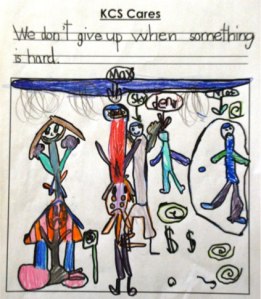
KCS CaresWhat’s not as top of mind, however, are the tests that we face minute-by-minute, wherever we are, whomever we’re with and whatever we’re doing. These are the tests of character that appear in our interactions with others, choices of how to spend our time, how we work, how we play, and how we respond to the challenges thrown our way. And if you’re following what most experts are saying, it is character, and specifically traits such as initiative, curiosity, grit, creativity, and adaptability, that will best determine our success in life.

Educators and parents alike spend a lot of time thinking about tests, whether designing, marking or preparing children to do their best with them. Tests help us monitor growth in students and effectiveness of teaching. They have value. But most of these tests don’t measure what matters most. They aren’t designed to.

So, what would a test of character look like? Simple. Watch what others do, of their own volition, and particularly when out of the gaze and direction of authority figures. Minute-by-minute.

And if you want to help prepare students to do well on these tests? Provide a school experience that not only teaches character but also includes the encouragement, time and support needed so students can practice the skills and traits that matter, and do so for their own purposes. Students of character need freedom to initiate, create, persist at solving real problems, make a difference and more, not for marks and not because they’re told to. They need a school that believes in the infinite potential of children, if we let it take shape, and a school which recognises that this means doing a number of things differently.

Educators, watch what your students do with free time. That’s testing what matters. And give them a school experience that lets them develop the traits and skills that matter most. That’s preparing them to ace the test. You won’t be disappointed.

Andrea Fanjoy,
Assistant Head, Academics
You can follow Andrea on Twitter @afanjoy.

This article was first published in SNAP Etobicoke, December 2012.

Why KCS is the best

There are so many wonderful things about KCS! Let me tell you about a few things that make our school so special. First of all the teachers are so kind because they help you when you need it, they make you feel better when you’re sad, they have a great sense of humor and they will spend their time at recess to help you finish something. The students are also amazing because they are so enthusiastic to learn, they help other people, they are willing to spend their time at recess to finish up something or help someone else finish up something and they always follow the three school rules. The athletic programs at KCS are great because every single person always tries their best, shows good sportsmanship and they show their school spirit. The students are also very welcoming to visitors and if it is your first day they make you feel that you have been here for your whole life. That’s why KCS is the best school ever!

Kiana
Grade 5 student