Wake Up to Something Wonderful

Wake up with the ARTSTen days ago was our last Wake Up With the Arts (WUWA) for 2013-14. My parents arrived later the same day for their first visit in a year. They’ve now left, and though I’m just finding the time to write now, this blog has been on my mind since last Thursday. It’s a story I simply have to tell.

Wake Up With the Arts is the brainchild of our arts department and rooted in the desire to open up more showcase and performance opportunities, particularly of a kind that have less pressure and demand than the Christmas, closing and other special concerts of the year. About once a month from 8:00 to 8:30, around a dozen performances are shared by students from JK to grade 8, student artwork is on display on our three gallery walls and many bulletin boards, and coffee and muffins are on offer in the foyer. With only rare exceptions for the youngest students, teachers have no role in organizing these performances. The expectation is that they’re the initiative of the student(s) who sign up. Solo vocal, piano, violin, guitar, percussion, brass and woodwind performances tend to make up the majority of the mix. Students also organize duets, ensembles and multi-grade groupings in any of the performing arts, including dance and drama. Parents, nannies, teachers and fellow schoolmates gather in the foyer to enjoy and cheer on the performers before rushing off for the rest of their day.

That alone is wonderful enough, but there’s more.

  • For numerous young children, this is the first occasion when they’re willing to perform in front of a group. At this most recent WUWA, I learned that one of our new students in grade 3 would perform a solo guitar piece for the first time. He had seen a previous WUWA and saw that other students perform even when new to their instrument and even when they made mistakes. He saw that the audience loved the performance regardless. He told his Mom that if those students can do it, he could do it too.
  • At a WUWA last year, a student in grade 2 decided to improvise a piano piece for her performance. I wasn’t there to hear the piece but I was thrilled to hear that her courageous artistic spirit had a place to be showcased at KCS.
  • A different time a group of grade ones rounded up their grade 8 buddies to sing Christmas carols together.
  • Some of the music is familiar, while some are originals composed by the students.
  • One of our grade 4 boys has frequently showcased his exceptional hiphop dance moves – an inspiring example to get more young men dancing.
  • Another boy in grade three has twice sung for us a cappella, and most recently he led the whole audience in “thinking of a happy thought” and invited us to join him in the chorus of the hit “Happy” by Pharrell Williams.

It’s no secret that children have tremendous capacity and often outright ability in the arts. It’s not always easy to showcase them enough. And it’s rare that all students have a regular opportunity to “share what they know”, just for the love of it and their willingness to take a risk. Polished or not, every performance makes a difference. It tells future performers “If I can do it, so can you”. It has all in the audience beaming with delight and bursting with pride. And it reminds all in attendance of how wonderful the world can be, and a school can be, if we make time to see what students want to share.

Come if you can next year. There’s no better way to Wake Up.

Andrea Fanjoy,
Assistant Head, Academics
You can follow Andrea on Twitter @afanjoy.

JKs Look for Spring in High Park

We can all agree that this past winter was brutal and seemingly endless.  Generally speaking, spring has never been more anticipated and welcomed than this year.  Where does winter end and spring begin?

We had timely discussions in our JK classrooms, prior to the official date, so we would recognize spring when it arrived.  We read kid-friendly books with promises of better things to come. We printed spring words using our best HWT (Handwriting Without Tears) letters.  We drew hopeful pictures of spring in the brightest colours we could find.  We took a few pictures in the playground with our iPads of even the slightest hint that spring was around the corner: receding snow banks, patches of ice from the previous day’s melt, and stubborn hedge buds reluctant to unfurl.  Spring just wasn’t coming to us fast enough!

We decided to go on a field trip looking for spring.  High Park was close and pretty expansive with its alluring variety of habitats: the wetland, the woodland, and the endangered black oak savannah. Surely we would find spring there! Following a lovely warm spell of sunny weather, snow had fallen on the weekend prior to our trip: one last blast of that relentless polar vortex.  Our unfortunate traffic delay on the Humber Bridge, due to road work, hinted that we were definitely getting closer to spring!

Our two JK classes, along with teachers and parent supervisors, were greeted by two knowledgeable and captivating guides, Katrina and Mallory, who invited us into the intriguing High Park Nature Centre for the first part of our tour.  Our students impressed them with their first-hand knowledge of spring during our lively discussion, book reading, and introduction to the resident critters: turtle, lizard, and snake. Our students carefully created seed balls by rolling together mud and seeds for our outdoor planting activity: our contribution for the upcoming Earth Day and for the restoration of the rare black oak savannah.

Once outdoors again, in winter jackets and snow pants, our students hurled their seed balls into an open grassland. They were encouraged to undertake a sensory exploration while engaged in a nature hike into the woodland.  We captured signs of spring with the iPads: tufts of green grass emerging from the leaf piles, footprints in the mud, and buds on branches. We heard the songs of many birds calling for mates and announcing their readiness to start building nests.  Our keen guiders kept reaching into their educational pouches, bringing out soft replicas of the elusive birds, and coaxing their proper songs with gentle tummy squeezes. We captured images of the trees through bark rubbings, and we hugged a few trees.

It was over too quickly! Both the children and adults agreed that it was an amazing field trip.  The bus ride home seemed a little quieter, but no one fell asleep! There were so many images dancing in our heads, luring us to come back again.

Yes, we found spring, but we still want MORE!

On a personal note, I have experienced High Park as a wonderful place for families to spend quality time together.  There is nothing more humbling than hand-feeding tiny tame chickadees at the south end of the park. It is not unusual for a butterfly to land on you as you stroll through the beautiful gardens. The chipmunks along the pathways love to gather snacks thrown for them.  There are great playgrounds, opportunity for many sports, a small zoo, a pioneer museum, and many special events. What a great place for all family members to slow down, take a mental break, get one with nature, and engage in fun physical activities! I highly recommend High Park as a place to visit frequently.

Sharon Freeman, RECE
JK Teacher

It Works! (Question and Be Curious, But How? – Part II)

Question and be CuriousI thought it would!

A few months ago I wrote about the book Make Just One Change and the methodology it shared for teaching how to come up with good questions. For all the value of questioning, it seemed to me that the profession was pretty barren on direct methods for teaching this skill. Instead, some students seem to come by questioning naturally, and others pick it up as they mature, or not. Of course, students are exposed to lots of questions at school, and they’re regularly invited to come up with questions. Despite this, my gut was telling me we could accomplish more.

Then I read about the Question Formulation Technique (QFT). Immersing students in question-asking, it also offers the benefit of learning from one’s peers, it releases students from the threat of judgment, and it includes informed reflection, so students would start developing not only the habit of asking questions, but also the habit of asking increasingly effective ones. The method struck me as straightforward and destined to work. I had to try it out, and our grade 6 teachers were willing to let me. Their students were about to start their culminating social studies assignment and they needed questions to begin. Enter the QFT.

The Question Focus (or QFocus) was ‘Canadians Making the World Better’. The process began with a ‘question frenzy’, where groups of 3-4 students, one also being the ‘recorder’, came up with questions based on the QFocus. Rules of engagement were shared before the 7-minute frenzy: ask as many questions as you can; do not stop to answer, judge or discuss; write every question as it’s stated; and any statements were to be turned into questions. The recorder typed the questions in the class Edmodo newsfeed, thereby allowing all students to eventually see the questions of the whole class when the exercise was done.

The frenzy was followed by a brief exercise in open and closed-ended questions; a discussion on the students’ current purpose in asking questions (their QFocus and their assignment); and then an exercise in choosing and justifying their top three questions from the many others they came up with earlier.

The end result? Better questions than the teacher had seen students come up with in past years. They were mature questions that even caused concern in some parents who thought they were too hard (until they learned they came from their children). The students were welcome to change their questions if they felt they needed to, but instead most chose to stick with them, and by doing so ended up writing longer and better assignments than required.

Good questions are at the heart of great learning. At KCS we’ve seen over and over again that students are capable of more than most would expect, if we only persist in finding how to unlock it. We’ll be adding QFT to our list of tools for unlocking potential in students. And this will be one area of education where I no longer have that nagging feeling that we don’t do enough.

Andrea Fanjoy,
Assistant Head, Academics
You can follow Andrea on Twitter @afanjoy.

They Grow Up So Fast

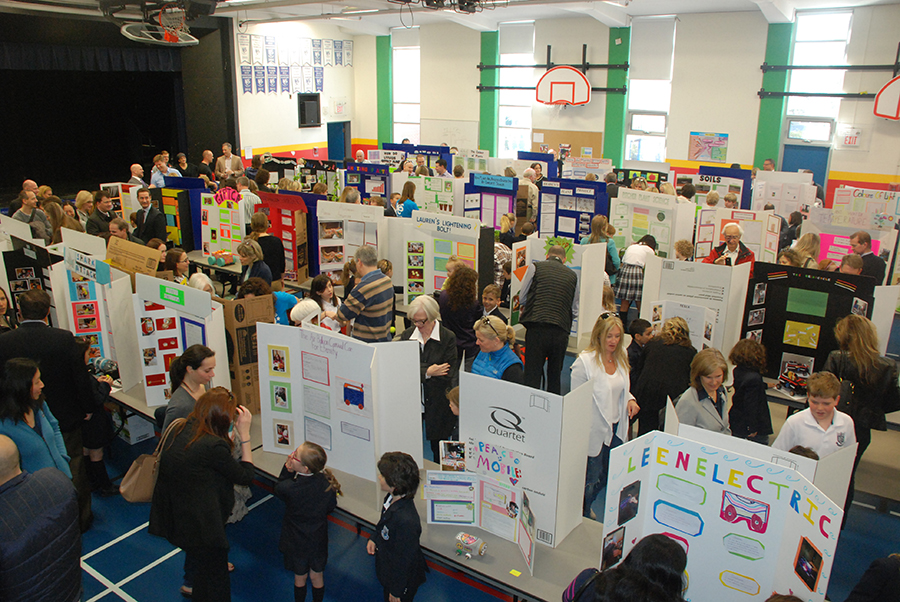
Primary Project FairToday I was at the front doors as students and their parents began arriving for our annual Primary Project Fair.  It was wonderful to witness the smiles on the faces – and that was just the parents!  As usual the students put forth their best efforts to create terrific projects that each of them can be proud of, but there was certainly some sense of relief on the part of many parents that this project was over at least for another year, and maybe forever (if they no longer had any children entering grades 1-3 in the future).

As a Dad of a 15 year old and a 17 year old, I can certainly empathize with that feeling among the parents.  I remember looking forward to the end of some project, recital, or experience with my kids.  But this morning also reminded me of a couple of parents that I was fortunate to come across when my kids were younger who shared some advice that has stuck with me (incidentally, you get a lot of advice as a Head, some helpful).  One of these individuals was a KCS parent, who I encountered early in my career at our school who said to me, “Before you know it, they will have grown up, and you’ll look back on these times more fondly than when you were going through them.”  I have to admit, with my daughter about to go off to university in September, that message has come to mind many times during this, her grade 12 year.  There are times this year when I wish we still had grade 13 in Ontario.

The other parent is somebody I have spent quite a lot of time with over the years as a result of my son’s soccer.  One night, we were on the sidelines on a cold and rainy night, and I must have said something that sparked him to turn to me and say, “You only have a few years in your life to do this sort of thing, and when it’s over, you’ll miss doing it.”  You hear a lot of things as a parent involved in minor sports with your kids, much of it not worth repeating.  However, this comment really resonated with me both then and now.  I’m already anticipating feeling like this even though we still have a few summers left of club soccer, and maybe some university soccer afterwards.

It was so good to see so many of our primary parents, grandparents and friends here today to show support for our students.  Your memories of this project may be different than what your children remember, but I am confident you will look back on this time at some point in the future and miss it, at least a little.

Derek Logan
Head of School

Can you come down?

VillageofIslingtonWhen administrators are called and asked to come down to a classroom, some concerning scenarios can come to mind. For all the planning that goes into a day at any school, there’s always an element of unpredictability.

Recently I received one of those calls from a teacher. Without pause I headed down. To my relief, she wanted to share how her recent effort to introduce more student-centered project-based learning (PBL) with her young students was playing out. Her classroom was a busy hive of learning, with children researching different aspects of Islington Village’s history. They were following the research process they’d been learning since grade 2, and discovering fascinating stories that happened on the very ground that they live, play and learn on every day. The greater student choice was part of the responsible risk for this teacher – would the students end up successful, can they handle the freedom, the challenge? These are among the many good questions teachers consider in everything they do. She took the risk to give more freedom than usual, and was so excited to see how they were responding that she asked me to come check it out.

I’ve enjoyed many of those moments with our increased effort to bring project-based learning to KCS. Blog followers already know about the fish project in JK. Our grade 7 science teacher shared his delight at how all of his students are responding to the new Lego robotics challenge they face this term, designing a device that would help in the event of a natural disaster. Our grade 6 to 8 students are embracing the current art challenge to create their showcase piece on ‘celebration’, in any way their hearts and skills take them. Our primary teachers shared their efforts at a recent meeting and it’s clear that they’re all taking steps and seeing promise.

The unpredictability of the school day isn’t always an educator’s favourite part of this profession. Tough things happen and we’re the first responders. Some unpredictability this year has been a real treat, however. The success of PBL, while not unpredictable, was a surprise I didn’t know was coming with that call from a teacher. It’s a surprise that I look forward to our teachers and students, and me, experiencing more and more at KCS.

Andrea Fanjoy,
Assistant Head, Academics
You can follow Andrea on Twitter @afanjoy.

KCS gets IT

Electives - Computer ProgrammingWe might get it around here but we can now say that we get I.T. around here – as in information technology… software development. Thanks to one elective and the help of the students learning to code more quickly than me, I’m increasingly getting IT too.

Elementary schooling isn’t what it used to be. Sure, there are a number of things we do that you would recognize. But, appropriately, our students and teachers are also learning what we couldn’t even conceive of learning in grade school when we were young. And we’re loving it.

A group of grade 7 and 8 students and I are learning how to use the coding language Visual Basic to create our own video game. We have an instructor from Real Programming 4 Kids who is walking us through the steps of creating the necessary bits and bytes of a simple annihilation game. You know those ants that bedevil you at the back door or the cottage? They’re lucky they won’t meet our game AntKill!

I love learning side-by-side with the students. Teens in their element are a sight to behold. They’re helpful, respectful, attentive and persistent. If they’re not listening when they should be, it’s because they’re reading ahead in the notes, eager to build their program. And they’re mighty proud of their growing skills.

Electives fall in the category of Learning for the Love of It, something we directly strive to provide. That means time when students are learning not what the teacher tells them to, not what the Ministry or their parents say they should, and nothing that will be marked. Including clubs and teams of course, student-driven leadership and learning projects, YAKCS and more, it’s learning rooted in student choice and driven by interest and the desire to stare down challenge.

I am learning for the love of it too. And with all the good learning skills that step up when passion is involved, one day I know I’ll join the few in fully getting IT.

Andrea Fanjoy,
Assistant Head, Academics
You can follow Andrea on Twitter @afanjoy.

It’s popular, it’s anonymous, it’s the new social media

anonymous_childFacebook and Twitter are household names. Instagram and Snapchat are becoming increasingly popular with our grades 5-8 students as they focus on sharing photos instead of text. The latest social networking sites gaining in popularity over the past year are those that allow anonymous questions and answers.

These websites encourage users to create an account or login via an existing Facebook or Twitter account. Anyone can post comments, questions and answers to anyone else’s profile, anonymously. Herein lies the opportunity to engage in negative, inappropriate and potentially abusive online behavior.

Ask.fm is the most popular example. Others include spring.me, Whisper, Secret, Wut and Sneeky. Has your child come across any of these? The best course of action is to engage in regular conversations about technology. Share new apps, favourite apps, by-gone apps, funny online photos (cats seem popular) and even ask your child to teach you something about social media and online privacy. Your child may eventually feel comfortable sharing information you may not be aware of. Give it a try!

Stacy Marcynuk
Director of IT, Curriculum

Further Reading:
The Economist – Anonymous social networking, Secrets and lies
Anonymous social networking apps: What parents can do about them
Safety Beyond Facebook: 11 Social Media Apps Every Parent Should Know About
Common Sense Media – 11 Sites and Apps Kids Are Heading to After Facebook

Fish 1 and Fish 2: A JK Dream Come True!

FishName02It all started with a kindergarten app designed to teach sight words, numbers, letters, addition and subtraction.  For every three correct answers, students receive a coin.  With these coins, children buy items to complete an aquarium including several varieties of fish, fish food, plants, gravel, sand, and décor.  The fish swim about darting towards the digital-fed food and hide if the iPad screen is tapped.  It is intriguing, engaging, and most of all FUN, even for certain teachers!

This led to a discussion of an appropriate classroom pet and how to keep it alive and healthy. Our class PBL (Project Based Learning) was launched with its many key elements: significant academic content with 21st century skills, a driving question, a need to know, student voice and choice, in-depth inquiry, revision and reflection, and a public audience.

Naming our fishThe list included a dog, a cat, an ant, a snail, a fish, a whale, a butterfly, a worm, and a rabbit. It was decided that ants might tickle, and they would be hard to find at this time of year.  A worm might be too squiggly, and a snail might be too slimy.  A whale would be too big to fit through the door, and how would we transport it to school?  A rabbit would just jump everywhere!  Who would walk the dog?  Who would clean up the messes left by the animals; no one put up their hands.  It was suggested that the teachers could look after the animals on the weekend!  Some children have allergies to certain animals, and some were afraid that they would bite.

A vote was taken and the majority ruled that an aquarium would be the best idea.  We talked about the needs of a fish to keep this living thing alive and healthy.  The children concluded that the fish needed clean water, a tank and food to eat. Some decorations would be nice.  Everyone offered to help feed the fish and to keep the tank clean.

Tank01The children contributed to a class shopping list recorded by pictures and words using inventive spelling, and guesses of cost for each item.  We then put forth a budget as children guesstimated how much money we would request from administration. The requests varied anywhere from 1 cent to 100 dollars.  On Thursday, March 6th we headed to the office of Madame Fanjoy and presented our budget.  Madame Fanjoy loved our idea of the fish tank and agreed to give us funding for a project that she deemed worthwhile and exciting.

Tank02The children “read” lots of books, examined colourful plastic fish, and visited wonderful places like Ripley’s Aquarium and pet stores.  In response to a request for a possible family guest speaker with aquarium experience, one of our parents approached us with an amazing proposal.  She had a client in the pet products industry eager to donate the needed supplies to set up our class aquarium and to provide a specialist to assist and educate us.

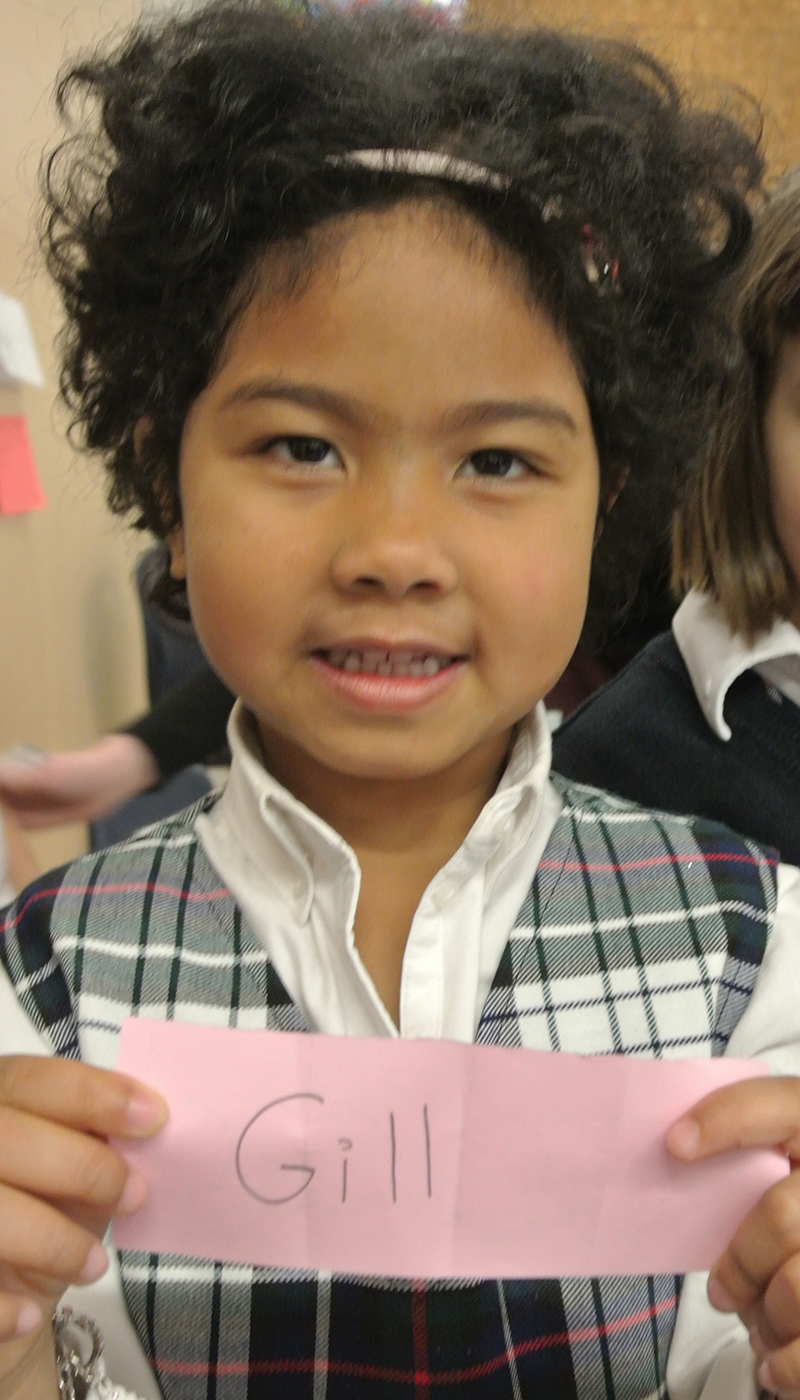
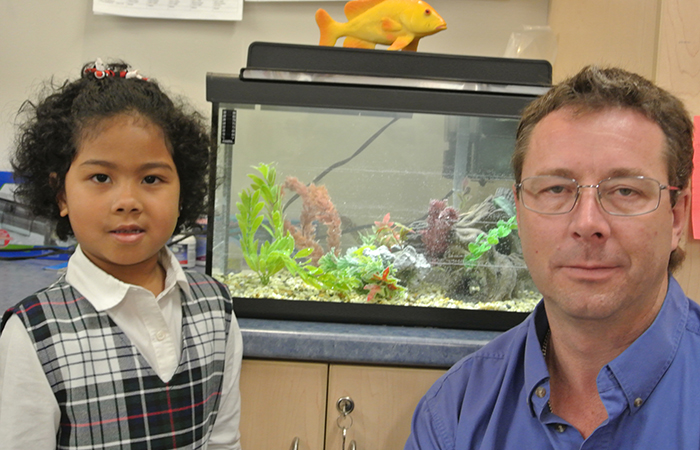
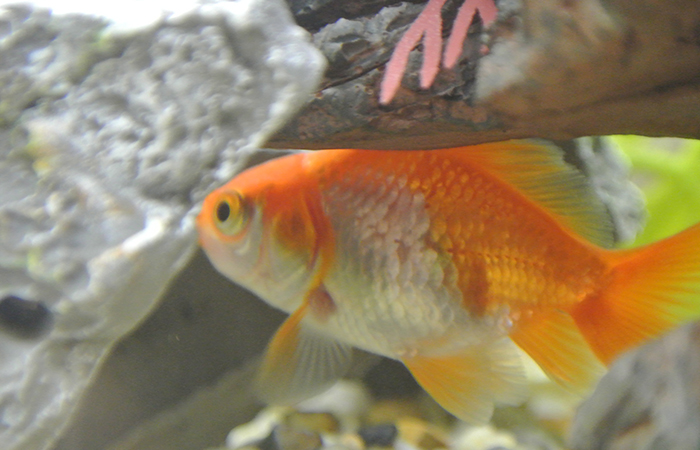
Tank03On April 3rd, Jae Hovius, Ontario Aquatic Specialist for Rolf C Hagen Inc., gave the JK class a captivating, informative, and hands-on session.  He truly enjoyed the experience as much as the JK children did. On April 8th, we excitedly welcomed our two goldfish, and the children aptly named them Gill and Goldie-Antonio.  Our much loved pets seem to have settled in well despite all the attention of the many inquisitive, beautiful faces peering at them through the glass.

The learning does not stop here.  There will be so many observations to be performed, pictures to be drawn, photos to be taken, and responsibilities to be taken on.  We are very excited about this project and look forward to sharing its progress with our KCS families and friends.

Sharon Freeman, RECE
JK Teacher

When Good Enough is Best

Father and SonYesterday, I read an article that reproached me for the hours I spend working. Today, I read a different article that pointed out the psychological benefits of devoting time to a cause you believe in. Happily, those two are one in the same for me and I sit here on a Sunday morning, writing.

My reading is often like that: passionate, supported arguments for one notion, followed by equally passionate, supported arguments for the opposite. Parents and educators are like that too. Disparate notions for what’s best, fervently held, abound.  Navigating it all is a job I embrace.

I recently pored through Alex Russell’s book Drop the Worry Ball and immediately appreciated his message. Russell and many others argue that today’s parents are by-and-large ‘over-parenting’, excessively involved so our kids have maximum happiness in life. Russell argues that we need to let children experience more failure. But other books and articles add relevant nuance. Letting children experience failure has value, but not all experiences of failure are good. Letting children forge their own path in the external world is important; knowing when and how to step in is equally so. Overprotecting our children from harm has significant downsides; blindly putting our children in harm’s way clearly has its own. Having a close and loving relationship with our children is a positive thing; but good parenting can lead to those crushing words, “I hate you!”

Most adults inherently recognize the complexity in raising children, and nothing will stop us from wanting what’s best for ours. That’s why we cling tightly to the Worry Ball. A recent article in The Atlantic, How to Land Your Kid in Therapy, however, brings a welcome message to this cacophony of parenting perspectives. It’s our desire to be great parents that’s the problem. Aim to be a “good enough” parent. And then step back. Wendy Mogul, author of The Blessing of a Skinned Knee reassuringly adds that children even “need to think it’s a tragedy of earth shattering proportion that they’ve been born into the wrong family at some point.” Phew!

That takes us back to Russell’s message. Your children are well loved, served and protected. Amid the competing perspectives on raising children there emerges a sage middle ground. If you’re like most of us today, try to relax, step back and let their lives unfold on their own a bit more. When the unpleasant happens, ask, “Am I needed here?” Arguably, this is one part of life where being good enough is in fact doing what’s best.

Andrea Fanjoy,
Assistant Head, Academics
You can follow Andrea on Twitter @afanjoy.

Alex Russell is speaking at KCS Monday, April 14, 2014 at 7 p.m. All are welcome and admission is free. His book Drop the Worry Ball will be available for sale at the event.

The Art of Parenting in a World of Worry

WorriedEighteen years ago, expecting our first, I remember saying that I intended to have a different learning activity ready at home for every day of my child’s youngest years.

That was the first of countless parenting notions that didn’t go at all as planned.

It’s easy to laugh at some of what my husband and I thought before the reality of parenting hit. Many assumptions were thoroughly throttled when it became clear our boys were their own individuals, with their own minds (funny we didn’t assume they’d get that from us!).

What isn’t funny is the worry that comes with parenting these days. Media and much of society suggests that there’s plenty to worry about; the threat of future unemployment, mixing with the wrong crowd, bullying, drugs, excessive online gaming, online predators, ‘failure-to-launch’ from home and more lurk in the dark edges of our minds. These potential threats are alarming, to be sure. They are worthy of our watchful eye, and intervention when needed. But Alex Russell, clinical psychologist and author of Drop the Worry Ball: How to Parent in the Age of Entitlement, suggests that the more alarming and widespread problem is how many of us are responding to the threats.

Drop the Worry Ball is an account of how our generation of parents has saved our children from failure, to the unhealthy end that they’re unable to deal with failure on their own. Our well-intended efforts to ensure their lives unfold as desired have left them ill-prepared to face the obstacles, the “non-catastrophic failures”, inherent in a life fully-lived.  Be resilient is one of our KCS Habits because it’s an attribute that’s both a necessary yet under-appreciated part of success. Where children used to learn resilience, today they’re experiencing crippling anxiety or engaging in avoidance behaviours (endless gaming being one example) to alarming degrees. Many feel entitled to getting their way, and have become deft at manipulating parents to make it so. Messing up and not getting what we want is unpleasant, sometimes deeply so. That being said, they’re a powerful way, and arguably the only way, to learn how to pick oneself up, learn from mistakes, and face life undaunted. They’re a whole lot better than a life unlived.

I don’t know if my parents worried as much as I worry about my boys. I do know they let me face life with a great deal of freedom, and my fair share of non-catastrophic failures. They kept their worry in check so that I might become the adult I am today. If my husband and I can keep Russell’s message in mind, our boys will also become self-reliant adults, as my husband and I assumed they would be.

It just may not unfold as planned.

Alex Russell is speaking at KCS Monday, April 14th at 7 p.m. All are welcome and admission is free. His book Drop the Worry Ball will be available for sale at the event.

Andrea Fanjoy,
Assistant Head, Academics
You can follow Andrea on Twitter @afanjoy.