Who We Become

“The quietest people have the loudest minds.”…This is exactly how I would describe myself. It’s like it was written for me. But KCS has helped me express all that creative energy swirling through my mind by teaching me about the importance of communication, the importance of patience, and most of all, the importance of being yourself.” — A grade 6 student

LearningEach May, our grade 6 students write a final five-paragraph essay describing the most important ways in which they’ve grown over the course of the year. The three paragraphs that followed the one above described in detail how the myriad of lessons, projects, opportunities and personal choices throughout the year led to this student’s self-assessment. It’s all part of how this one student came to know more about what matters in life. All of our students have their own story of growth.

That’s half of what I love about KCS. Each day we’re surrounded by students growing, whether in reading, writing, math, research, public-speaking, confidence, leadership, service, performance, creativity, empathy and every other possible way that matters.

The other half of what I love about KCS is how, as a member of staff, we also get to grow. While we collectively bring many strengths to our jobs, and we gladly share them with our students, we’re all also constantly growing, whether through curriculum reviews, workshops, returning to university, endless online courses, professional learning networks, professional reading, and frequent meetings, formal and informal, to address challenges, seize opportunities, and just become better every day.

This summer had me learning about design thinking, electronics with Littlebits and programming with Arduino. Three years ago, I never would have imagined I’d be learning those things! I’ve also been learning a lot about all the creative energy that can be expressed with these in the KCS tool kit, and I look forward to sharing more about how this will increasingly happen at KCS in upcoming blogs.

There’s actually a lot more I love about KCS, but watching students grow, and having the opportunity to grow alongside them, is what I anticipate most as the new school year is set to begin. KCS students can look forward to a great year of learning ahead. KCS staff look forward to the same.

Andrea Fanjoy,
Assistant Head, Academics
You can follow Andrea on Twitter @afanjoy
Getting Dirty

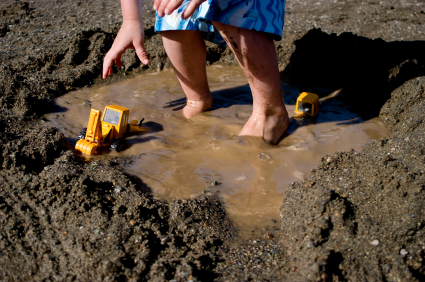
Playing in the mudAs a child, it was playing in the local woods. Now, it’s working in the garden. For some others, it’s part of going to camp or the cottage. For a small number more, it’s volunteer labour abroad or adventure travel.

However you do it, getting dirty doesn’t happen like it used to.

A growing chorus of parents, educators and nature-lovers are concerned about how children today are increasingly removed from nature. Whether the reason is electronics or modern parenting, there is little denying that children don’t linger outside as much as previous generations. Richard Louv, author of Last Child in the Woods, has labeled the result Nature Deficit Disorder and makes the argument that this is behind some of the major health challenges children face today, including obesity, attention disorders and depression. If that isn’t reason enough, nature packs a powerful learning punch. In addition to all that’s worth learning while outside, research makes clear that learning is stronger if it’s multi-sensory. If it comes with a taste, touch, sound and smell in addition to a look, the memory is embedded in multiple parts of the brain and more secure and readily retrievable as a result.

In the footsteps of Louv, and armed with research, forest schools are gaining media attention as an alternative to more time indoors. A recent article in the Toronto Star featured the Guelph Outdoor Preschool, Ontario’s first licensed outdoor preschool. Children will spend the bulk of the day outside, rain or shine, hot or cold. Under their teachers’ care, these lucky little ones will experience flora and fauna and yes, dirt, all while working on the most foundational skills all preschool programs seek to nurture – language, math, science and social studies, in addition to questioning, curiosity, wonder, imagination, flexibility of thought, and persistence. Evidence suggests these children will be off to a good start with their learning.

Not all children have a forest school to go to, and plenty of great learning can and does happen in typical school environments. That being said, it’s summer. School isn’t keeping children inside. Find ways for you and your child to connect with nature. Get outside. And if you need convincing, take Louv’s book with you. He won’t mind if it gets dirty.

Andrea Fanjoy,
Assistant Head, Academics
You can follow Andrea on Twitter @afanjoy.

Teacher, Meet Brain.

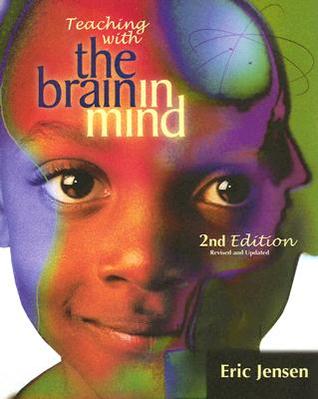
Teaching with the Brain in MindThat’s how it felt to read Teaching with the Brain in Mind by Eric Jenkins. While the bond between the brain and learning has been known for centuries, the two have been notably coy. It is only recent research which has started sharing and subsequently sparking the intimate side of this complex relationship. And like the rush of first love, it will blow your mind.

My measure of a great book on education is the degree to which it ends up highlighted. Barely a page of Jenkins’ book escaped my yellow swipe. Starting with Neuroscience 101, Jenkins addresses many of the major areas related to learning and highlights the research and implications it has for teaching. From birth and beyond, he looks at preparing the brain for school; the connections between movement, emotions, and one’s physical environment with learning; managing the social brain; and optimizing motivation, engagement, critical thinking, memory and recall. Clearly affecting a significant chunk of the school experience, Jenkins is devoting his career to having teachers ‘teach with the brain in mind’.

Some insights include:

  1. The brain changes and can even grow new neurons throughout life. Nature and nurture both clearly play a role in defining who we are, with growing evidence revealing that nurture can override some nature, even to the degree of changing the impact of our genes.
  2. Exercise offers much more than just physical health. If you desire a denser and better brain, make regular exercise a lifelong habit.
  3. Much of what distinguishes teenage behaviour is rooted in the enormous changes taking place in their brains. Teens even temporarily regress in a number of abilities, such as their ability to recognize emotions in others.
  4. While collaborative learning gets most professional press these days, brain research supports the integration of group activities with traditional learning tasks for optimal learning.
  5. Emotions play a central role in learning and can hinder as much as enhance the brain’s ability to remember. Teachers would benefit from mindfully leveraging them.
  6. Frequent opportunities for movement, and breaks where no new learning happens, are important for long-term storage of learning.

Teachers, indulge in the intimate details of the learner-brain relationship. Meddle even. This is one couple that needs you in the middle.

Andrea Fanjoy,
Assistant Head, Academics
You can follow Andrea on Twitter @afanjoy.

This article was first published in SNAP Etobicoke, May 2013.

Habits Worth Having

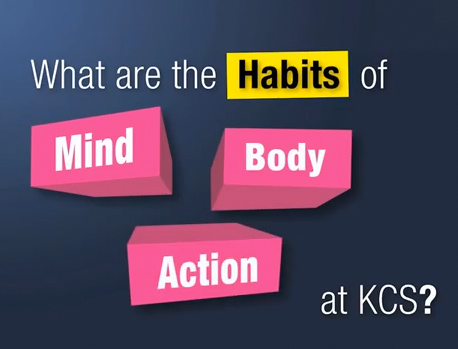
What Are The Habits of Mind, Body and Action?Our students have lots of habits. Rather than trying to break them, we’re shamelessly celebrating them in our just-released school videos on how we develop lifelong learners at KCS.

If your habits need a little tweaking, you might be inspired by some of our students and the habits they’ve already embraced in their lives:

  • A student in grade 4 whose favourite habit is to take responsible risks, because it reminds her to try something new
  • A student in grade 7 whose favourite is to persist, because it’s what he knows he most needs to do
  • A student in grade 6 whose favourite is to share what you know, because if everyone did so we would all be smarter. Besides, collaborating is fun.

Check out our KCS Habits of Mind, Body and Action and think about which is your favorite? Why? Then share it with others, and do a little inspiring of your own.