Pourquoi apprendre le français? / Why learn French?

« Why learn French? » If your child asked you this question tonight over dinner, what would your answer be? And how might your own experiences with learning the language influence that response?

The truth is there are many reasons to learn French, as our Grade 7 students recently discovered during a brainstorming session with graphic recorder, Disa Kauk. Their individual ideas contributed to the creation of two stunning visual reminders of ‘Pourquoi apprendre le français?’ and I encourage you to have a closer look at them the next time you are in the school.

In order for learning to endure in any subject area, we must see the value in what we are learning and understand our own reasons for learning it. This is especially important in the French as a Second Language classroom as most students only have a chance to practice their skills here at school. Students need to realize that French exists outside the walls of the classroom as well. With a curriculum now focused on authentic communication and real-life situations, this is truer than ever and families can play a vital role. Simply having a conversation with your child about the importance of learning French is a great starting point as it shows your child that French is valued outside of school. But you don’t have to stop there.

Parents often ask how else they can support their child’s French learning at home. Consider family movie nights in French by picking a DVD of a movie already familiar to your child in English and watching it together in French. Instead of watching the Leafs game in English, choose a station with French commentary. Point out French words on packages, in magazines, in stores and during your travels when you come across it. Visit a museum or gallery and take a tour in French. Listen to a French radio station. Take out French library books. You may even consider joining an organization like Canadian Parents for French which furthers bilingualism by promoting and creating opportunities for youth to learn and use French. Detailed information on exchange programmes, summer camps and many other unique language-learning opportunities is available on www.frenchstreet.ca. The possibilities are endless!

As a French teacher, I have seen a real difference in the classroom when students buy into their learning by taking opportunities outside of school to enjoy learning French. When they have more chances to practice their skills in the real world, they are more inclined to transfer that enthusiasm to the classroom and beyond.

Pourquoi apprendre le français? It’s never too early – or too late! – to start this conversation. When will you have yours?

img_9166

Everything a School Should Be (Part 1)

Let’s take a moment and think about everything a great school should be doing for students. There’s the curriculum – collectively many hundreds of pages of content and skills, wrapped up in subjects, that schools need to make sure all students learn. Then there’s tailoring the curriculum, because ensuring all students learn requires adjustments for each and every one. On top of that there’s enrichment programming, character education, learning skills, collaboration skills, critical and creative thinking, leadership and citizenship, appreciation of nature and the arts, and so much more. Schools need to engage minds, inspire physical health and activity, develop resilience, and nurture the artistic spirit. Direct instruction matters. Project-based learning matters. Clubs, teams, field trips, inspiring speakers, cross-grade integration activities, and spirit-raising events matter. Throughout the delivery of all of the above, a school needs to help students with the inevitable bumps – social, emotional, mental, academic, physical – that happen and directly interfere with everything else if not well addressed. And all of this, and more, needs to happen in an aligned, whole-system manner so it’s optimal both in how it’s experienced and in the difference it makes. Without a doubt, a great school must do many things exceptionally well.

Yet to follow the dialogue, one might think it’s otherwise.

We hear boasts of schools that are outstanding on singular measures, but left wondering how these feats are achieved without sacrifice in other areas of the school. We read that schools should focus improvement efforts on only a small number of areas at once, as if all other important things can wait, for years. We learn of exciting new programs that have great appeal, but represent just a tiny fraction of what’s needed for deep, longstanding impact. This is fine reading, but none are the story that students most need. None are the story we should want for our children.

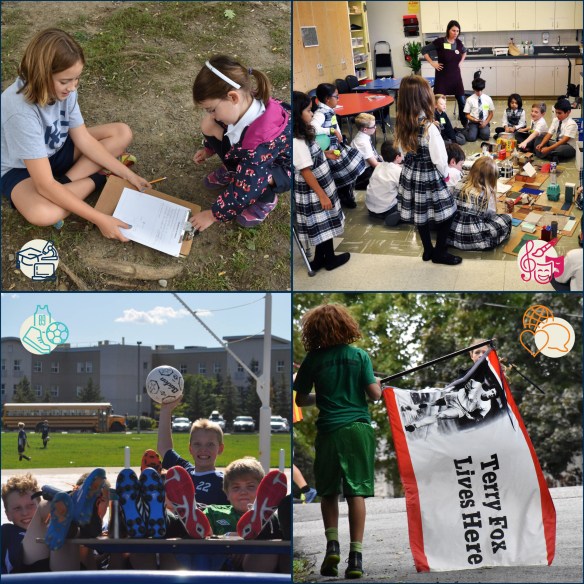
At KCS, we’re transparent in our unrelenting commitment to being everything a school should be. Our Four Doors to Learning program in academics, arts, athletics and citizenship reflects years’ worth of creative, collaborative effort so that our story is the full story students need. Our faculty are constantly adding new professional learning so that this effort reflects the wisest judgment we can muster. And we’re constantly striving to improve in as many ways we can, and in all ways that matter.

KCS is committed to being everything a school should be. If there’s anything singular about where we strive to be outstanding, that’s it. We know that other schools strive for this as well, but it’s a story we don’t hear often enough. It makes for a long story, with many lengthy chapters. In a busy world and crowded social media space, it’s a story that takes time to tell and time to hear.

That’s okay. Children love long stories. So should we.

Part 2 of this post, to be published shortly, will share the story of how KCS is constantly striving to improve in its effort to be everything a school should be.

Four Doors Collage.jpg

The Numbers Have It

mathAs classrooms across Ontario echo with the sounds of excited students, the hot topic making waves in Ontario has been math scores. The news for many, unfortunately, has not been as sunny as our summer weather.

At Kingsway College School, our approach to math (and everything else) is proactive, based on proven practice, tailored to our students, and built through teamwork.  For example, in our first week of school, I observed a few of our grade 3 and 4 students completing a math placement activity with one of our specialist teachers, Mr. Graham Marshall.  Working in small groups, the students tackled a range of challenging questions.  Once evaluated, these assessment results will be used by both Mr. Marshall and his Primary and Junior colleagues to support differentiated instruction and a tailored curricular course for these students.

Math doesn’t come easily to some. And it comes very easily to others. A school’s job is to make sure all these students learn. KCS continuously strives to uncover the most effective strategies to support and if need be, accelerate students as they all navigate the ins and outs of the math curriculum.  Standardized test results make clear that we’re doing our job. Though fall will soon be here, we’re delighted that the KCS math story is the sunny one that all students deserve.

The Call to Be a Defining Force

Goodness, these are unusual times. Anyone following world news, regardless of political leanings, knows that remarkable things are happening. For years now, it’s been said that the future will be increasingly unpredictable; that global interdependence will be increasingly entrenched and often uncomfortable; and that the challenges we’ll all have to face will be increasingly complex. It’s looking like the future is here.

That’s why we all, increasingly, need to step in.

Eight years ago, KCS made its intentions clear. Our vision and mission statement, adopted then, captured our aspirations:

To be a defining force in developing lifelong learners
By stewarding a learning environment that inspires us to reach our ultimate potential.

This statement is rooted in our longstanding determination to do our best for our students. It’s equally rooted in something else, something that many of our families may not have thought much about, and something worth pointing out.

Teachers join the profession to do their best for students. All KCS staff share that dedication to the children and families we serve. Doing our best means we also need to help realize the potential in education as a whole. There is a tremendous effort that goes into the education of every child. And while there is much that is sound and good in the profession, there has always been significant room for growth. As the world becomes increasingly complex to navigate, the room for growth expands. KCS is not a school that simply strives to offer what other schools, even great schools, offer. We’re a school prepared to push the boundaries of the profession, in ways that are balanced, impactful, and progressive. KCS is a school prepared to wrestle with challenges, be patient when the time for change isn’t right, and to act when creative, valuable ideas are ready. We are willing and able to be a defining force in developing lifelong learners.

Over the past eight years (and more, to be honest), KCS faculty have introduced many new practices that, to our knowledge, were either unique or rare in the profession. The small-group instruction in our Super Skills and Workshop classes; our Wall of Service; our Habits of Mind, Body and Action; our Young Authors of KCS program; our multiple approaches to Student Leadership and service; Wake Up with the Arts; our use of design thinking for innovative learning and student-staff collaboration; and more came to be because our faculty wanted to go further. Pushed by pioneers in the field, remixing promising practice, and following the inspiration from others to create brand new solutions, we keep pressing forward.

Students have always deserved the best education. What’s best is changing and the need for growth is imperative. And it’s not about one school. Our vision statement “To be a defining force in developing lifelong learners” makes clear that it’s not about KCS being ‘the’ defining force. Frankly, such a limited vision would underserve students. Our wish is that all educators work together to make education the best it can be for now and for this increasingly unforeseeable future. We’ll keep doing our part. And we look forward to another year of learning and inspiration from all others who heed the call.

What does Mental Health mean to you? Let’s talk about it!

Tomorrow, Wednesday, January 27, is Bell Let’s Talk Day.  This is a day where Canadians are encouraged to talk, text, and tweet in order to help encourage conversation around mental health, increase awareness, reduce the stigma, and raise funds to support mental health initiatives across the country (to learn more, go to http://letstalk.bell.ca/en/ ).

Here at KCS, we have made it a priority to address the importance of mental health and wellness for our students and our staff.  We strive to promote overall wellness through our programs, curriculum and extra-curricular offerings, and we’re determined to keep the conversation going every day. We encourage students to talk to their teachers, parents, or other adults in their lives when they are feeling as if something may not be quite right.  We work to assure all of our students that if they choose to talk to someone here at KCS, they know the conversation will happen without judgement or the need to feel any shame for how they are feeling.  And in doing so, we hope that this helps to reduce some of the stigma that exists around mental health.

Over the past couple of weeks, in grades 1 – 8 either your child’s health teacher or I have taken some time to talk about mental health.  The conversations and lessons have been tailored to be age- and developmentally appropriate, and aligned with the Ministry of Education Health curriculum.  As part of the lessons, and in following one of the Bell Let’s Talk initiatives of answering the question: “What Does Mental Health Mean to You?”, the students were asked to fill in a thought bubble to share their ideas around mental health.  These are now displayed in our front lobby and throughout the school.  Our youngest students framed their answers by telling what they do when they are worried about something; our grade 4s answered the question “What Makes me Happy?”; and our grade 5 to 8 students and many faculty explained what mental health means to them.

The answers are moving, insightful, and show that there is a growing understanding of what mental health and wellness means at KCS.  These answers weren’t prompted; they came from the heart of everyone who chose to share their ideas.  Read them, and be inspired to do your part to make sure this is a conversation that will continue each and every day. It is just that important.

Tamara Drummond
Director of Student Life

Common Sense on Character

One of our KCS Habits of Mind, Body and Action

One of our KCS Habits of Mind, Body and Action

“It’s great to have him back, but I already run my class and raise my daughter according to his book.” — a KCS teacher

I knew it as soon as I heard Ron Morrish, speaker and author of Secrets of Effective Discipline and With All Due Respect, over 10 years ago. His message on how to develop self-discipline in children would transform my approach as both educator and mother of two young boys. Seven years ago he first spoke at KCS. This month he visited with faculty once again.

Many parents and visitors have remarked on the manners and behaviour of our students. Stand-out moments for visitors are how often they’re greeted by students and have the door held open for them. For a bustling community of 369 students, over 60 staff, and the many parents and others who join us each day, the atmosphere is happy, respectful and purposeful. While there are many good reasons for that, one is Ron Morrish and how KCS has incorporated his pointers into our day.

Ron is the first to say that much of his advice captures how many of us were raised. He says it’s the “common sense” that, unfortunately, is less common these days. So what’s included in this common sense on character? Here’s a small sample:

  1. Always model the behaviour you seek
  2. Teach the behaviour you seek; don’t assume children should know how to behave at all times
  3. Be clear and ensure follow-through on directions
  4. Make sure small things are done properly and consistently (manners, holding doors, routines)
  5. When mistakes happen, require a “do-over”; mistakes mean more practice doing things right
  6. Take proactive steps so children can be successful behaving as they’ve been taught
  7. This all takes persistent work

Parents, you’ll be glad to know that your children’s teachers spent an afternoon enjoying a refresher from Ron Morrish. And to the parents and educators seeking more self-discipline among the young in your midst, consider looking into Ron’s teachings. As it has for many of us, it could really make a difference for you too.

Andrea Fanjoy,
Assistant Head, Academics
You can follow Andrea on Twitter @afanjoy.

Bell Let’s Talk Day and Beyond

Mental HealthThe statistics tell us that 1 in 5 Canadians will experience a mental health issue in their lifetime, yet 2 out of 3 of those individuals will never seek help, choosing instead to suffer in silence because of the stigma that surrounds mental health issues. That stigma stops people from getting the help that they need and can make those individuals feel even more isolated.  But we can change that, and we’re encouraging our students to do so.

On Wednesday, January 28, our grade 7 and 8 students will join thousands of other students from grades 7 through 12 from across Canada as they participate in the Bell Let’s Talk Day webcast. This webcast will feature Clara Hughes, Michael Landsberg and other guests who will share their personal stories and help encourage those watching to work to end the stigma using Bell’s Let’s Talk 5 simple steps:

  1. Language Matters
  2. Educate Yourself
  3. Be Kind
  4. Listen and Ask
  5. Talk About It

Although Bell Let’s Talk Day takes place on Wednesday, January 28th, talking about mental health issues is not just a one day event.  We encourage our students to have these conversations every day and we actively work to help them better understand what overall student wellness includes.  If they can recognize when something just does not feel right, and they know that they will be listened to without shame or fear, then we’re doing our part to help reduce the stigma and encourage dialogue around such an important topic.  We also know that prevention and early intervention are key for those experiencing a mental health issue.  This was a reason why our school trained our faculty and staff in Mental Health First Aid during 2014.  It is why we strive to promote overall student wellness through our programs, curriculum, and extra-curricular offerings.  It is a reason why our Parent Network began the #KCS_TTM (Talk That Matters) Speaker Series for students this year.  And finally, it is because knowing each and every one of the students at the school is important, not just for academic planning, but also to ensure that we can see when that conversation needs to happen as early intervention in the area of mental health is so important.

Tamara Drummond
Director of Student Life

Mental Health at KCS

Mental HealthAccording to Children’s Mental Health Ontario, in Canada, one person in three will experience a mental health problem in their lifetime and 70% of those mental health problems begin during childhood or adolescence. However, it also notes that mental health crises can be avoided with early intervention and support.  At KCS, we are working hard to help provide some of that support.

When your children return to school on September 3rd all of our teaching staff and many of the non-teaching staff will have been certified in Mental Health First Aid. The rest will become certified as the year progresses.  Just as physical first aid does not make one a health care professional, mental health first aid does not turn the faculty and staff into mental health professionals; however, what it does do is allow us to recognize signs and symptoms of a wide range of mental health concerns so we are better equipped to have a conversation with you about what we are seeing, as well as what some of the possible next steps may be.  But this isn’t all we are doing.

We have been having the conversations about mental health for quite some time – our Encouraging Dialogue Speakers Series over the past three years have focused on mental health concerns in order to better educate our wider school community.  Our Habits of Mind, Body, and Action and the three school rules (Respect, Manners and Try Your Best) help to provide balance, enable resilience, and create a common language that we can use to talk about what our students are experiencing and what they can do to help themselves and each other. Teachers attend weekly divisional meetings where, among many other topics, we discuss concerns that we may have and work together to best help the student(s) in need.  Teachers attend workshops, conferences, take courses, participate in personal learning and reading to strengthen their understanding and awareness, and better their strategies for doing what is best for our students.  Our small class sizes allow us to truly get to know each child, allowing us to recognize when something just doesn’t seem right.  Class meetings are held where students can talk about what is going well, and what concerns they may have.  During Health class and other instructional time, teachers use the Steps to Respect or Second Steps program, along with other resources, to help provide their students with skills in areas such as stress reduction, dealing with disappointment, sharing successes, navigating friendships and positive relationships, dealing with bullying, and negotiation and compromise.

In September of 2013, a new position was established at KCS, Director of Student Life, so that there would be a designated person, a trained counsellor, to address the needs of the students and provide them support and guidance.

You may recall Andrea Fanjoy’s blog about our Student Voice this past spring.  We asked the students to let us know how they perceived the health and wellness at KCS and what we could do to make it better.  We listened, and we have put some of those ideas into action – being physically, socially, emotionally, and intellectually healthy makes us mentally healthy as well.

But most importantly, what we are doing about mental health at KCS is talking about it and working to end the stigma.  As Clara Hughes said when promoting Clara’s Big Ride “Let’s turn mental illness into mental wellness”. By having the conversation we are helping to do just that.

Over the pasts few years, schools and businesses across the country have begun to make positive steps towards this goal.  KCS belongs to the Canadian Accredited Independent Schools (CAIS).  Each year, CAIS holds a conference for Heads and Chairs in October.  One of the speakers at this year’s conference is Eric Windeler, from The Jack Project, who will speaking on the topic of mental health, and explaining why it should be a school’s top priority.

If you have any questions on this topic, please come in and speak to us.  For further information and additional reading please see the following websites.

Tamara Drummond
Director of Student Life

Getting Dirty

Playing in the mudAs a child, it was playing in the local woods. Now, it’s working in the garden. For some others, it’s part of going to camp or the cottage. For a small number more, it’s volunteer labour abroad or adventure travel.

However you do it, getting dirty doesn’t happen like it used to.

A growing chorus of parents, educators and nature-lovers are concerned about how children today are increasingly removed from nature. Whether the reason is electronics or modern parenting, there is little denying that children don’t linger outside as much as previous generations. Richard Louv, author of Last Child in the Woods, has labeled the result Nature Deficit Disorder and makes the argument that this is behind some of the major health challenges children face today, including obesity, attention disorders and depression. If that isn’t reason enough, nature packs a powerful learning punch. In addition to all that’s worth learning while outside, research makes clear that learning is stronger if it’s multi-sensory. If it comes with a taste, touch, sound and smell in addition to a look, the memory is embedded in multiple parts of the brain and more secure and readily retrievable as a result.

In the footsteps of Louv, and armed with research, forest schools are gaining media attention as an alternative to more time indoors. A recent article in the Toronto Star featured the Guelph Outdoor Preschool, Ontario’s first licensed outdoor preschool. Children will spend the bulk of the day outside, rain or shine, hot or cold. Under their teachers’ care, these lucky little ones will experience flora and fauna and yes, dirt, all while working on the most foundational skills all preschool programs seek to nurture – language, math, science and social studies, in addition to questioning, curiosity, wonder, imagination, flexibility of thought, and persistence. Evidence suggests these children will be off to a good start with their learning.

Not all children have a forest school to go to, and plenty of great learning can and does happen in typical school environments. That being said, it’s summer. School isn’t keeping children inside. Find ways for you and your child to connect with nature. Get outside. And if you need convincing, take Louv’s book with you. He won’t mind if it gets dirty.

Andrea Fanjoy,
Assistant Head, Academics
You can follow Andrea on Twitter @afanjoy.

Summer Learning

SummerCubbies are cleaned. Lockers lay bare. Papers have been sifted through with favourites kept and the rest thrown out.

Summer holidays have arrived, and the weight of the academic world has been lifted for another year.

I’ve been guilty of thinking that children have it relatively easy. I can remember once pointing out to a group of teens how hard their teachers are working, leading extra-curriculars, teaching all day, marking and planning every evening. I deserved their immediate challenge. They reminded me that, in fact, students also have a lot of demands on them. They’re involved in those school extra-curriculars and more, they’re in those classes throughout the day, and they’re doing homework every evening. They have endless expectations on them for managing themselves and their work. Many regularly face misunderstanding, mistakes and reprimand in both academics and social relations. They navigate this world with the vulnerable self-esteem, self-confidence and skill set inherent in being young. Even in the best schools, the days are not easy.

Many parents and teachers bemoan the long gap between June and September. It’s true that some academic learning can take a hit. Having said that, other learning should be savoured in the summer. Because the school year doesn’t always make enough time for it, here is some of the summer learning I hope all children work hard at this holiday:

  1. Learning through play
  2. Learning through mistakes
  3. Learning within one’s strengths and passions
  4. Learning and relaxation in a healthy balance
  5. Learning what and how you want, just for the love of it

Lots of important things are learned at school. And lots of important things are learned outside of school. Like students, teachers also learn a lot over the summer. Maybe, as a result of all their learning, more of this summer learning will work its way into the school year.

Have a wonderful, learning-filled summer.

Andrea Fanjoy,
Assistant Head, Academics
You can follow Andrea on Twitter @afanjoy.

This article will be published in the July 2013 edition of SNAP Etobicoke.