Unsolicited Parenting Advice from my Mom

“Your only job as a parent is to prepare your child for the day they leave the nest and go out to face the world without you.” – My mom’s advice to me on the day my first daughter was born.

My mom gives me a lot of advice – probably a little too much, to be totally honest. But when it comes to advice about raising my own kids, she’s actually pretty restrained. However, when she does offer her opinion, it’s always a variation on the same theme – independence builds resilience.

Growing up I often learned this lesson the hard way. When a note was sent home in Grade 3 about my repeated inability to complete (or sometimes even start!) my homework, her response was, “Sounds like you need to figure this out. I suggest you start by talking to your teacher.” When I left my clarinet on the subway in Grade 6, her response was, “I think the TTC has a lost and found. I suggest you start by looking them up in the phonebook.”

I don’t want to make it sound like I was thrown to the wolves. She didn’t just throw her hands up and say, “Not my problem.” Instead, she would give me advice and point me in the direction of a solution. But it was always up to me to put the plan into action. Yes, I got docked some grades and earned a few detentions, but I always came out of it with a new set of problem-solving skills. Over time, I realized that most of the problems in my life were not the end of the world. They were bumps in the road that I had to learn to deal with.

I have tried to take this same approach with my students throughout my teaching career. I cannot count the number of times I’ve sat on the floor beside a kindergarten student and said, “No, I won’t put your boots on for you. But I will help you figure out how you can do it yourself.” The truth is, every single time I want to grab those little boots, pop them on, and end their frustration. But I know that if I just trust in their ability, they’ll end up walking out to recess with a sense of pride and accomplishment. More importantly, I know that they are also walking away better prepared to face the next inevitable problem.

No matter how much we want to protect them, the simple fact is that our kids are always going to have to deal with disappointments, setbacks, and frustrations. They are going to get cut from a team. They are going to not be invited to a party. They are going to get rejection letters from universities. They are going to be told that they didn’t get the job. They are going to face medical issues, personal struggles, and tragedies.

Unlike my mom, I don’t really like to offer unsolicited advice. But it’s hard to hold your tongue when you work side-by-side with a generation that is notably struggling with mental health. More and more young kids are struggling with anxiety and a lack of resilience. While there are many reasons for the rise of mental health issues in kids, one major factor is the way in which we try to protect them from hardship. Because when we go out of our way to remove obstacles from our kids’ lives, we rob them of the opportunity to learn from their mistakes, develop coping strategies, and become more emotionally resilient.

So the next time your child is facing a challenging situation, ask yourself “Can they handle this on their own?” If the answer is yes, step back and let them try. If the answer is no, give them some guidance and advice, and then step back and let them try. Trust your kid enough to give them the space they need to build their own independence and resilience. They’ll thank you for it. Now if you’ll excuse me, I need to call my own mom and say thanks myself.

Recommended Reading

  • “Drop the Worry Ball: How to Parent in the Age of Entitlement” by Alex Russell and Tim Falconer
  • “Anxious Kids, Anxious Parents: 7 Ways to Stop the Worry Cycle” by Lynn Lyons and Reid Wilson
  • “How Children Succeed: Grit, Curiosity, and the Hidden Power of Character” by Paul Tough
  • “Grit: The Power of Passion and Perseverance” by Angela Duckworth


Just Call Us ‘Guides on the Ride’

Thirty years ago I started teacher’s college. ‘Sage on the stage’ was how we were taught to teach back then. Thanks to 30 years of students, that practice has been humbled into one role among multiple others. This summer, all KCS faculty and I learned about a promising new option, that of ‘guide on the ride’, from the book Empower by A. J. Juliani and John Spencer. I’m strapped in with my helmet on. My current ride? Cryptocurrency.

Yes, cryptocurrency.

In September, we launched our new StEP entrepreneurship program. StEP invites students with entrepreneurial ambitions to pursue their big ideas, learn the basics, access mentorship, and potentially acquire seed money for viable ideas. As soon as this new opportunity was announced, a student stepped forward. His passion? You guessed it.

My role in this program is to support all grade 6-8 students who take the same first step, connect them with mentors, and provide basic instruction in value propositions, minimum viable products, design thinking, prototyping, customer interviews, and prepping pitch decks. What I provide is significantly enhanced by our partnership with Future Design School and a growing list of established entrepreneurs in the KCS community who are willing to speak, entrepreneur-to-entrepreneur, with our students.

Thirty years ago, cryptocurrency didn’t exist (that was still 21 years away). Now I get a front row seat in this and other budding areas of potential entrepreneurship at KCS. Guiding students on journeys they chart is full of unforeseeable learning, accented with bumps and hidden curves. Like the up and down of a roller coaster, it’s impossible to know where the journey will go and much scarier than the experience of a lecture. Though just one month into the year, multiple other teachers at KCS are telling me of their own trips into the unknown. The excitement and trepidation expressed in my office evoke summer memories of Wonderland. We’re strapped in and hanging on. This year promises to be an interesting ride.

World Mental Health Day Every Day

“There is a growing recognition of the importance of helping young people build mental resilience, from the earliest ages, in order to cope with the challenges of today’s world.” – World Health Organization

October 10 is World Mental Health Day, a day set aside by the World Health Organization (WHO) to educate, increase awareness, and mobilize efforts to promote better mental health around the globe. This year, the focus for World Mental Health Day is Young People and Mental Health in a Changing World, a topic that is obviously near and dear to the hearts of everyone at KCS.

For far too long, mental health was seen something that mainly affected adults. It just wasn’t on the radar when it came to young kids. But one only has to glance at the statistics and facts provided by organizations such as CAMH to see that there is a clear need for families and schools to pay close attention to the mental health of our young people. Perhaps most telling of all is the fact that 70 per cent of mental health problems begin during childhood or adolescence.

Faced with numbers like that, it’s clear that we must continue to make mental health awareness a core component of our overall wellness strategies at KCS. Events like World Mental Health Day and the annual Bell “Let’s Talk” campaign certainly help to bring greater awareness and understanding that helps to reduce the stigma around mental illness. But it can’t stop at awareness. Any effective strategy must also include a proactive approach to both prevention and recovery.

We know that when children are given the skills that they need to foster resiliency and accept challenges as an obstacle they are able to work at to overcome, they are better equipped to cope with adversity and the inevitable bumps in the road of life. Because early intervention is key, learning these skills can and must begin at a very young age. When children learn and recognize that they do have the skills and the strength to pick themselves up and dust themselves off after something does not go as planned, they are building up that resiliency.

At KCS we recognize this and continue to make mental health a fundamental priority. Beginning right from PK, our students are encouraged to talk about and recognize their feelings. Social-emotional growth and development is an intentional component of our curriculum, and the adults in the building use those “teachable moments” to role model and discuss dealing with disappointment and asking for help.  Our faculty and staff are certified in Mental Health First Aid, allowing us to recognize early warning signs and symptoms of mental distress, and assist our students in getting the help they need.

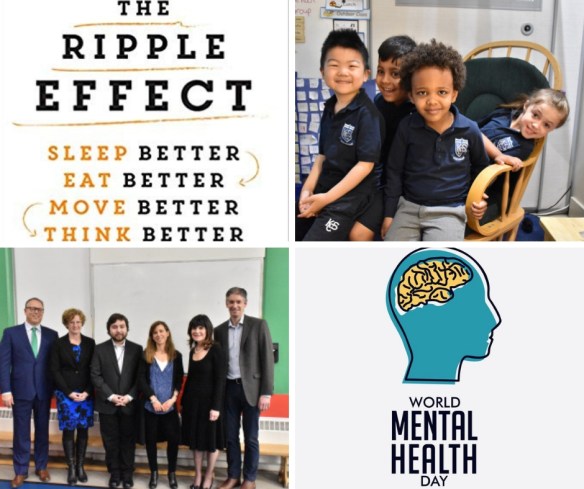
We also recognize that we need to help our entire school community better understand the importance of mental health and wellness.  Through our Encouraging Dialogue Speaker Series, we have shared information about brain development, mental health, and our children, volunteerism and contributing to the community, moving from stress to strength, developing resiliency, internet, and online safety, and we will continue in January 2019 when Greg Wells – author of The Ripple Effect – comes to speak with us about our overall well-being.  The more we talk about mental health, the better we understand its importance – not just on World Mental Health Day, but every day.

Untitled design (2)

Five Things KCS is Thankful for in our 30th Year!

1) The one and only Ricardo – salter of icy sidewalks, handyman extraordinaire, and our foremost class clown!

2) Our alumni are now grown up enough to work here!

3) Foula’s big smile and bigger heart! Whether she’s looking after a sick student, helping a new family find their way around the school, or simply greeting everyone who walks through our doors, she does it all with a seemingly endless supply of happiness and joy.

4) Three additions, one amalgamation, lots of renovations, and (coming soon) a new park too!

5) The visionary and dedicated founders of KCS. Because if they hadn’t followed their dream thirty years ago, we wouldn’t get to be a part of this amazing school that they built for all of us. So from the bottom of our hearts, THANK YOU!!!

KCS thankful

Grounded in Tradition, Driven by Innovation

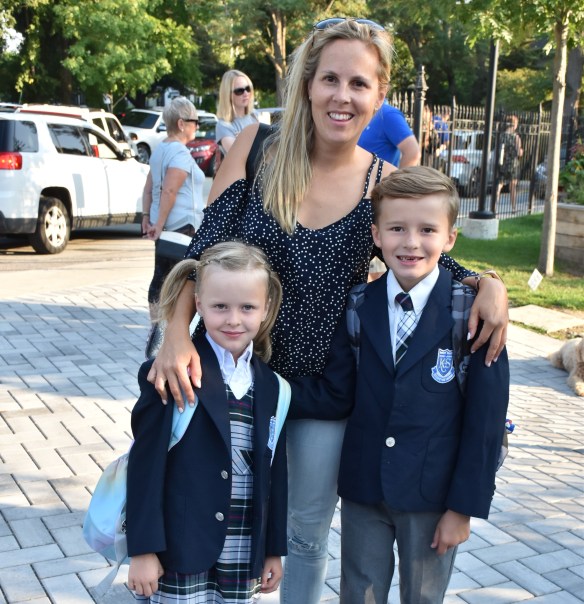
“Although so much of KCS has changed, there is still so much that remains the same, and that’s one of the many things that makes this school so special.” – Laura, a KCS parent and alumna, reflecting on her children’s first day of school this September, thirty years after her own first day as a Grade 1 student at KCS.

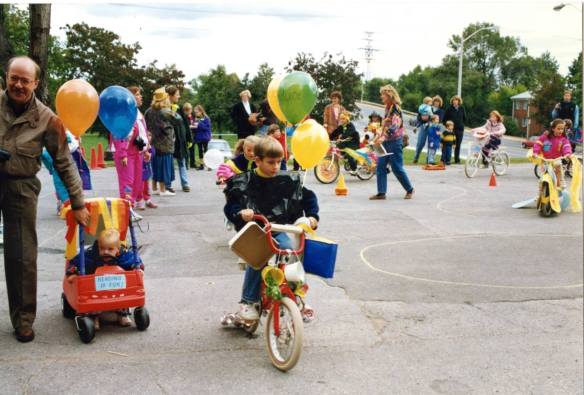
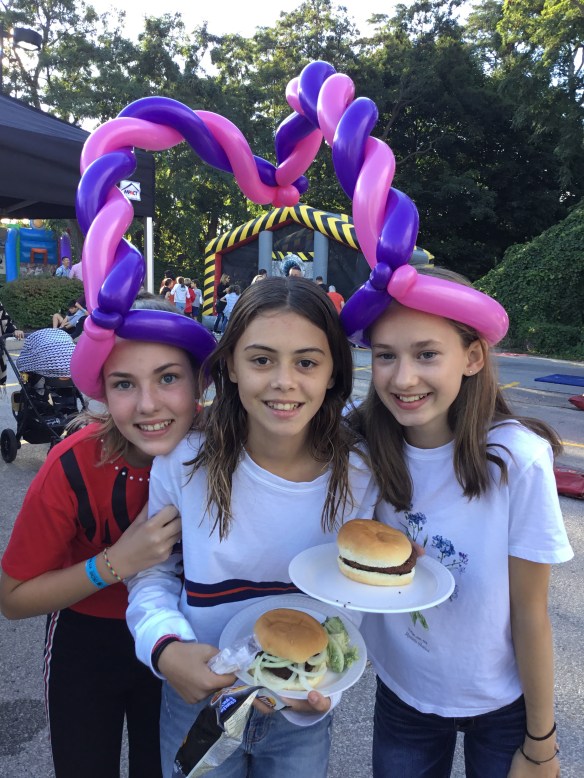
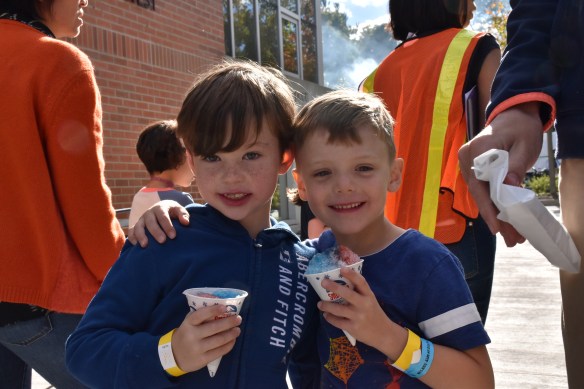
Last weekend was KCS’s Welcome Back BBQ, an annual event we’ve been celebrating since the school began thirty years ago. In many ways, it wasn’t that different from our very first BBQ, held back when we were just a small school with only 50 students. Both of them featured hamburgers, hot dogs, sunshine, and (most importantly) families and friends joining together to celebrate the start of a new school year.

But this year’s BBQ wasn’t a total time capsule. Along with the classic traditions, the 2018 iteration also featured climbing walls, airbrushed tattoos, and kids showing off their best Fortnite dance moves. Because while traditions are important, you can’t let them completely define you. You have to be open to new ideas and innovations that build on a strong foundation laid by years of thoughtful traditions.

This holds true for everything at KCS, not just BBQs. For example, our academic program is built around a strong core of traditional direct instruction. Our youngest students learn the basics of reading though teacher-led small lessons on phonics and decoding. Older students are formally taught a wide range of study skills to help them find success in exams and tests. And students of all ages spend time practicing and memorizing core math facts that help them make complex computations more quickly and easily. In many ways, all of these would have felt very familiar to the students and teachers at our first BBQ.

However, we also know that tradition must be partnered with brave innovations and experimentation. It’s safe to say that nobody in the late eighties was talking about the importance of young students developing an entrepreneurship mindset, but that’s exactly what we’re doing with our new StEP initiative. Our innovative electives program encourages passion-driven learning and gives students the chance to explore their own big ideas. We’ve also got our students creating wearable technology with Arduino, writing code with Scratch, and learning the process of design thinking. All of these exciting programs go to show that thirty years into our story, we’re balancing traditional teaching and learning with a healthy dose of revolutionary ideas.

Some things – like hamburgers and hot dogs – will stand the test of time. But that doesn’t mean you have to be bound by tradition. After all, a nice gluten-free bun and a side of quinoa salad can make that burger taste even better!

First Day of School 2018 - 7897024.jpg


42258274_1937716842989234_1591249275377942528_o

IMG_0662.jpeg

DSC_5442.JPG