Everything a School Should Be – Part 2

Teachers join the profession to do their best for students. Doing one’s best includes a vast array of efforts, a sample of which were shared in Part 1 of this post.

Doing one’s best also means a determined, responsible commitment to constant improvement, wherever merited and as manageable.

At KCS, we’re constantly looking at what we do, identifying where we wish to grow, and taking measured steps forward from year-to-year. Many steps are identified by individual teachers, or grade partners, or divisions of teachers. Some steps are school-wide. Some are new initiatives; while others are ongoing efforts that began in previous years and continue to be an area of focus.

Here is some of what we’re focusing on this year:

  1. Living the Mission – Always our #1 focus, our mission is to be the defining force in developing lifelong learners. Currently, this effort includes Project-Based Learning; direct efforts to teach questioning skills; the growth of KCS as a Makerspace, with our new Innovation Lab and increased “making” throughout the school; the use of design thinking for deeper thinking, learning and problem-solving; and the launch of a new program called “High Resolves” in our senior grades as part of our global education efforts.
  2. Assessment – This is a multi-year area of focus. We launched a new report card last year and some adjustments will be made this year. We also launched our new secure electronic portfolio, Sesame, and we continue our roll-out to include all students from PK to grade 3. A blog will soon follow to explain why this is an exciting addition to KCS!
  3. Movement Project – This is also an ongoing area of focus under the leadership of our Director of Student Life, Tamara Drummond. Standing desks, chairs that allow for movement, fidget toys, and new practices that invite more frequent movement in the school day are becoming increasingly widespread throughout the school.
  4. Reading Evolution – A number of years ago we introduced a reading program that helped many of our students better consolidate the fundamentals of reading. The cumulative effect of this program is now a very noticeable increase in the reading skills of all of our students. Driven by internal data, reading instruction is evolving to meet the growing readiness for greater challenge.
  5. ELP and Reggio-inspired programming – Following widespread professional development, visits to other schools, and engagement of a consultant, the PK, JK and SK faculty have enthusiastically embraced Reggio-inspired programming as a strong complement to the Ministry of Education curriculum. While direct instruction on core skills will continue, students will also be given more time to practise being deep thinkers and learners through self-directed inquiry.
  6. Professional Development – PD has always been a regular feature of employment at KCS. All teachers have a generous budget for PD and they pursue various opportunities of relevance to their role. This year we launched a new means of sharing PD that allows all staff to see what others have done, and get a glimpse into what they learned. This is an efficient and effective new way to share professional learning and encourage greater awareness of the various PD offerings available to all.
  7. Canadian Accredited Independent Schools (CAIS preparation) – This merits a blog of its own, and one will follow later in the year. CAIS oversees a comprehensive accreditation process for independent schools that aspire to excellence. KCS is CAIS-accredited, and all staff will be working this year on an internal review in preparation for our upcoming accreditation review in November of 2017.

At KCS we’re constantly learning so that we can keep improving in all ways that matter, each and every year. Creative thinking is inspired when multiple challenges synergize into innovative solutions. Progressing thoughtfully and responsibly, changes aren’t always immediate. They’re discussed, and if considered worthy they’re piloted. If successful, they spread. When imperfect, they’re tweaked. And they’re not limited by the notion that we can only focus on a few areas. Collectively, there are positive changes happening throughout the school, based on what teachers feel needs improvement, and what they can manage well. Being everything a school should be includes constantly trying to do better. Doing our best means we won’t accept anything less.

Haircut, Anyone?

We knew we were in for a treat when PK, JK and SK students joined KCS three years ago. But we didn’t expect manicures, facials and haircuts!

Anyone walking down our Senior Kindergarten hallway last week will have doubtless noticed the many signs advertising these services and more, for a price, by our SK students. No, this is not a mandated unit of study. Much better, it’s what an enterprising and imaginative young group decided to make happen.

From what I’ve seen, these young entrepreneurs are working on establishing about a dozen of our KCS Habits – habits that will set them apart wherever their future takes them. Their writing and counting are also getting emotion-driven practice. Positive emotions are booster fuel for learning.

Thanks to our faculty’s efforts with Project-Based Learning and their readiness to support student initiative, the whole KCS community benefits from dozens of student projects equally delightful. But this is the first where I can also get all fancied up for the holiday season. Thank you SKs!

This slideshow requires JavaScript.

Andrea Fanjoy,
Assistant Head, Academics
You can follow Andrea on Twitter @afanjoy.

It’s a Team Game.

At KCS, we have our very own Amazing Race in grade 7! And you’ll have to trust me that so many things about it are indeed amazing. In teams, students complete projects that span many subject areas. Because that’s how life is. We don’t learn things in silos. Everything connects! Learning includes information about: travel advisories and blogs, music, games, global challenges, comparison of statistics, environmental stewardship, maps, and more. Our students prove that when given the opportunity to learn and the adults get out of the way, great learning can happen. In grade 7, the culmination of this learning leads to the Amazing Race Challenge. Groups of students solve clues to get from one area of the school to another. Each challenge requires them to use their skills and knowledge, perseverance and group effort. It is a wonderful snapshot of their growth in learning in so many areas. Successful groups encourage each other, are empathetic, show leadership, and play to each member’s strengths. It’s a team game.

What happens behind the scenes is a team game too. Teachers excitedly work out logistics, research new technology, bring forward innovative ideas, and brainstorm solutions.  Who is more excited on the day of the Amazing Race Challenge: students or teachers? It’s hard to tell. Although I’ve been at KCS for 15 years, I’m still very humbled by how willing our team is to: jump in, propose ideas, organize, supervise, take photos, offer prep time or materials, try new technology tools, and so MANY more little and big things.  They put the students first in all that they do. I’m honoured to be part of the team. It is a team game.

Ms. Gaudet
Grade 7 Teacher and Citizenship Coordinator

When Islington History Came to Life

Learning like this is priceless.

Thanks to local artists, the Islington BIA and many generous others, Islington Village showcases local history in 26 murals throughout the community.  With exquisite detail, they give a realistic image of life long ago. But it takes more than that to make history come to life. For that, it takes an inquiring mind, some time and vivid imagination. Recently those all came together in our grade 3 classes at Kingsway College School.

These young students were given the task of choosing one of the murals, researching it and preparing a poster to tell the story captured in the mural in their own words. It seemed that this was an opportunity many were waiting for. No ordinary project, this one had heightened meaning for them thanks to the murals they’ve seen throughout their childhood. They learned about what happened on the ground on which they live, play and go to school. With personal fervour, some went beyond the murals to pursue further research on the War of 1812, World War II, Hurricane Hazel, multiculturalism and more – topics that are well outside of the grade 3 curriculum. Many also joined their families on a guided walk through the village. This was the first time our grade 3s studied the murals but its success has already sparked a desire to expand the effort next year.

Projects aren’t new to these young students. Fun learning isn’t new to them either. What made this project special were the murals that we so fortunately have right in our community, and the opportunity to delve into the local story behind them.

At Kingsway College School, there are numerous ‘Habits’ that we aim to establish in our students. One of those Habits is ‘Share What You Know’. The murals of Islington are a powerful example of the value of ‘sharing what one knows’. In the wake of this project our students have equally ‘shown what they know’ by sharing their posters in the school and through social media. Some other great Habits were wonderfully evident thanks to this mural project: ‘Embrace Learning’, ‘Respond with Awe and Appreciation’, ‘Think Creatively’ and ‘Persist’.

That’s learning that’s priceless.

Andrea Fanjoy,
Assistant Head, Academics
You can follow Andrea on Twitter @afanjoy

Can you come down?

VillageofIslingtonWhen administrators are called and asked to come down to a classroom, some concerning scenarios can come to mind. For all the planning that goes into a day at any school, there’s always an element of unpredictability.

Recently I received one of those calls from a teacher. Without pause I headed down. To my relief, she wanted to share how her recent effort to introduce more student-centered project-based learning (PBL) with her young students was playing out. Her classroom was a busy hive of learning, with children researching different aspects of Islington Village’s history. They were following the research process they’d been learning since grade 2, and discovering fascinating stories that happened on the very ground that they live, play and learn on every day. The greater student choice was part of the responsible risk for this teacher – would the students end up successful, can they handle the freedom, the challenge? These are among the many good questions teachers consider in everything they do. She took the risk to give more freedom than usual, and was so excited to see how they were responding that she asked me to come check it out.

I’ve enjoyed many of those moments with our increased effort to bring project-based learning to KCS. Blog followers already know about the fish project in JK. Our grade 7 science teacher shared his delight at how all of his students are responding to the new Lego robotics challenge they face this term, designing a device that would help in the event of a natural disaster. Our grade 6 to 8 students are embracing the current art challenge to create their showcase piece on ‘celebration’, in any way their hearts and skills take them. Our primary teachers shared their efforts at a recent meeting and it’s clear that they’re all taking steps and seeing promise.

The unpredictability of the school day isn’t always an educator’s favourite part of this profession. Tough things happen and we’re the first responders. Some unpredictability this year has been a real treat, however. The success of PBL, while not unpredictable, was a surprise I didn’t know was coming with that call from a teacher. It’s a surprise that I look forward to our teachers and students, and me, experiencing more and more at KCS.

Andrea Fanjoy,
Assistant Head, Academics
You can follow Andrea on Twitter @afanjoy.

Fish 1 and Fish 2: A JK Dream Come True!

FishName02It all started with a kindergarten app designed to teach sight words, numbers, letters, addition and subtraction.  For every three correct answers, students receive a coin.  With these coins, children buy items to complete an aquarium including several varieties of fish, fish food, plants, gravel, sand, and décor.  The fish swim about darting towards the digital-fed food and hide if the iPad screen is tapped.  It is intriguing, engaging, and most of all FUN, even for certain teachers!

This led to a discussion of an appropriate classroom pet and how to keep it alive and healthy. Our class PBL (Project Based Learning) was launched with its many key elements: significant academic content with 21st century skills, a driving question, a need to know, student voice and choice, in-depth inquiry, revision and reflection, and a public audience.

Naming our fishThe list included a dog, a cat, an ant, a snail, a fish, a whale, a butterfly, a worm, and a rabbit. It was decided that ants might tickle, and they would be hard to find at this time of year.  A worm might be too squiggly, and a snail might be too slimy.  A whale would be too big to fit through the door, and how would we transport it to school?  A rabbit would just jump everywhere!  Who would walk the dog?  Who would clean up the messes left by the animals; no one put up their hands.  It was suggested that the teachers could look after the animals on the weekend!  Some children have allergies to certain animals, and some were afraid that they would bite.
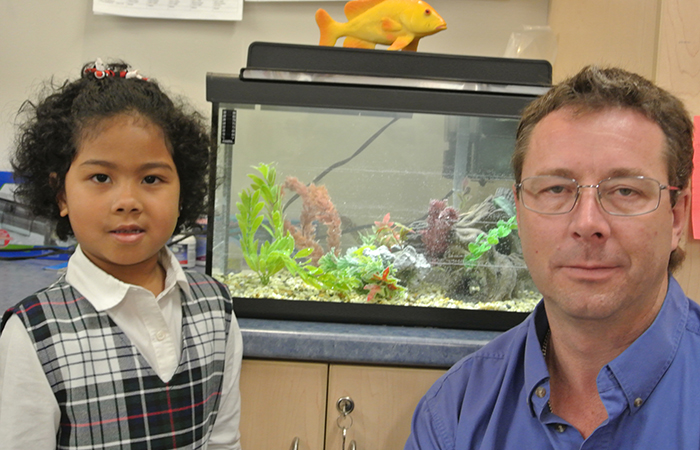
A vote was taken and the majority ruled that an aquarium would be the best idea.  We talked about the needs of a fish to keep this living thing alive and healthy.  The children concluded that the fish needed clean water, a tank and food to eat. Some decorations would be nice.  Everyone offered to help feed the fish and to keep the tank clean.

Tank01The children contributed to a class shopping list recorded by pictures and words using inventive spelling, and guesses of cost for each item.  We then put forth a budget as children guesstimated how much money we would request from administration. The requests varied anywhere from 1 cent to 100 dollars.  On Thursday, March 6th we headed to the office of Madame Fanjoy and presented our budget.  Madame Fanjoy loved our idea of the fish tank and agreed to give us funding for a project that she deemed worthwhile and exciting.

Tank02The children “read” lots of books, examined colourful plastic fish, and visited wonderful places like Ripley’s Aquarium and pet stores.  In response to a request for a possible family guest speaker with aquarium experience, one of our parents approached us with an amazing proposal.  She had a client in the pet products industry eager to donate the needed supplies to set up our class aquarium and to provide a specialist to assist and educate us.

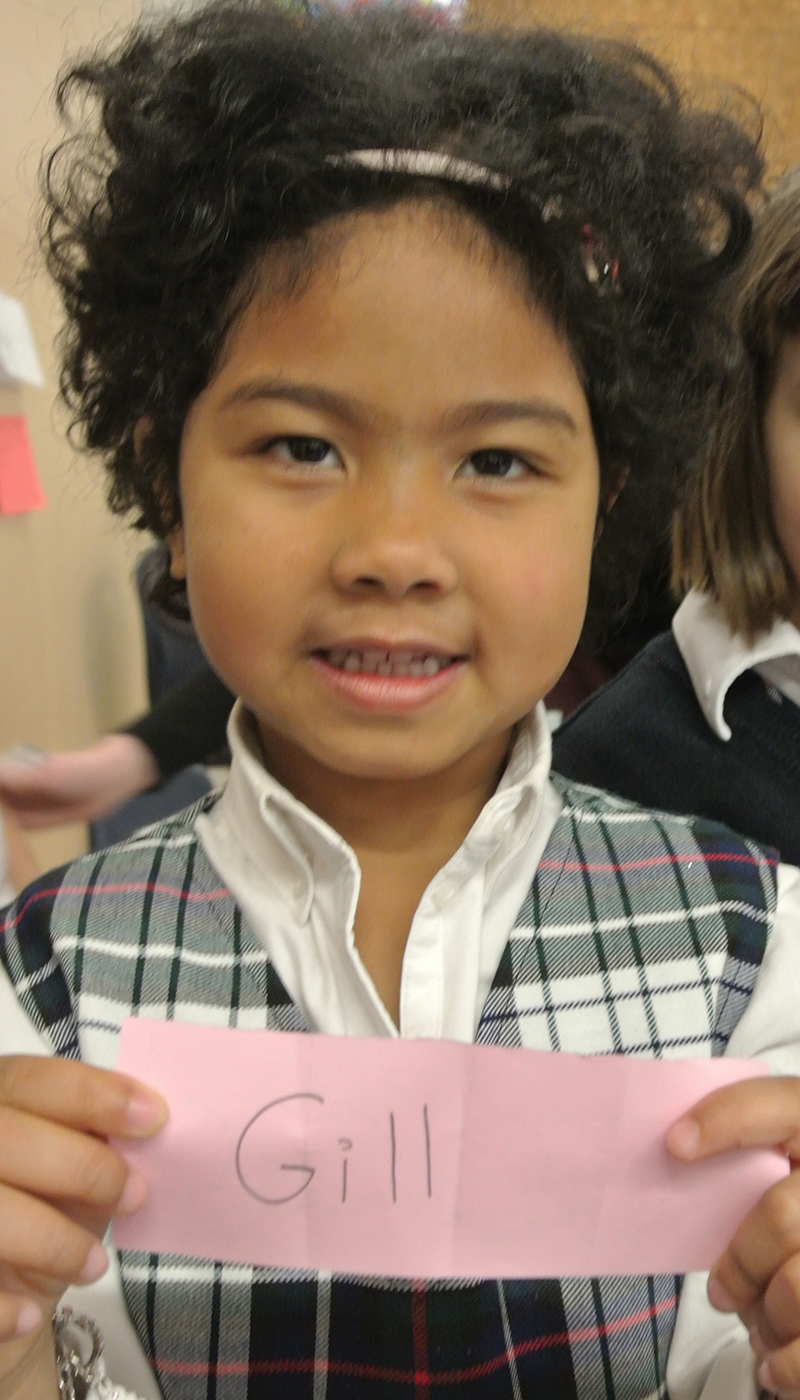
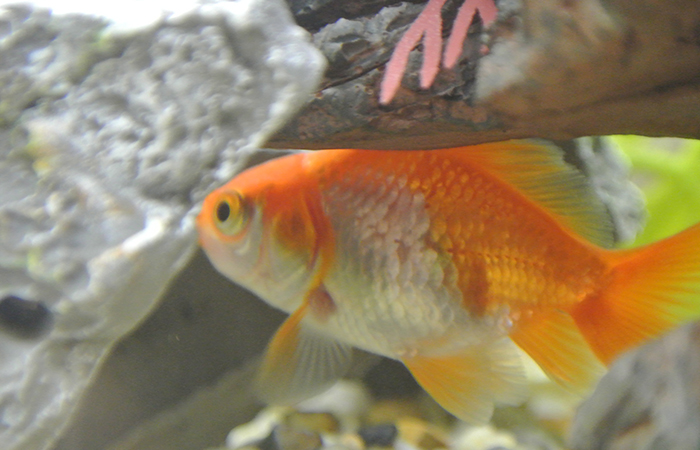
Tank03On April 3rd, Jae Hovius, Ontario Aquatic Specialist for Rolf C Hagen Inc., gave the JK class a captivating, informative, and hands-on session.  He truly enjoyed the experience as much as the JK children did. On April 8th, we excitedly welcomed our two goldfish, and the children aptly named them Gill and Goldie-Antonio.  Our much loved pets seem to have settled in well despite all the attention of the many inquisitive, beautiful faces peering at them through the glass.

The learning does not stop here.  There will be so many observations to be performed, pictures to be drawn, photos to be taken, and responsibilities to be taken on.  We are very excited about this project and look forward to sharing its progress with our KCS families and friends.

Sharon Freeman, RECE
JK Teacher