The Week of Thinking Flexibly

It became abundantly apparent to me how little we talk of it.

I was covering a grade 3 library class, and I started by saying the lesson was about my favourite habit. Hands shot up and student after student took a stab at claiming what it was sure to be. With nary a second in between, ‘show self-control’, ‘create’, ‘act with empathy’, ‘persist’, ‘think creatively’, ‘do what is right’ were offered up with conviction. Goodness, these kids know what matters in life. And to be honest, I certainly am fond of every habit they offered. They aren’t my favourites, though.

The lesson was about thinking flexibly. It’s a habit that reminds me of my most special stories. It takes me way back to the year I lived in and backpacked throughout Europe. It takes me back to the years I lived in Japan. It reminds me of the many years I spent learning French and then Japanese. It reminds me of the most special books and inspiring courses in my life. It also reminds me of why I love what I do. Not a day goes by that I’m not challenged to think flexibly, considering an opportunity or addressing a concern that just the day before may not have even entered my consciousness.

Last week, in particular, was a week of thinking flexibly. It included a wonderful collection of emails and conversations with a parent who equally enjoys thinking flexibly on the topic of education. It included the lesson in thinking flexibly for the grade threes. It included a deeply moving Remembrance Day ceremony that, once again, took me briefly away from the charmed life we enjoy and into the tragedy and sacrifice faced by soldiers both living and gone.

Then, just before the end of this short week, the grade 8 teachers, Mr. Logan and I received an email from a student who believes a change in part of our homework practice is in order.

And so, I look forward to my meeting with her, and indulging once again in my favorite habit.

What’s your favourite habit? Please also tell us why it’s special to you, either by adding a comment, sending an email or tweeting me @afanjoy. Stories have a way of sticking. And the habits are worth sticking to.

Andrea Fanjoy,
Assistant Head, Academics
You can follow Andrea on Twitter @afanjoy.

How Technology Increases the Personal Touch in School

The notion shared in the title may not be obvious. Because the personal touch matters, it’s worth understanding and, for the benefit of students, acting upon.

Of course, technology isn’t a person. It won’t ever replace the power of a teacher who knows and cares for his or her students. It won’t bring the creativity and professional judgment the teacher applies daily in his or her class. So how could technology possibly increase the personal touch?

First, let’s take a hard look at the familiar. The traditional “sage-on-the-stage” approach to teaching unfolds at the pace decided by the teacher. It covers content decided by the teacher, and is delivered in a manner decided by the teacher. While appropriate at times, this approach is imperfect and, for many students, impersonal. These students require a different pace, be it faster or slower. They respond better to a different level of content, whether more simplified or complex, or would understand concepts better with different choices of content.

Technology personalizes school because it brings flexibility in pace, level and content like a teacher alone cannot. Here are some examples:

  • Instead of completing the same math fact sheet, students can use websites like www.thatquiz.org to practise the math facts they need to practise, at the right pace and level of challenge for them. Similar tools exist for all basic skill development.
  • Instead of learning through the lens of textbooks, students can use technology to roam the world for relevant content. Under teacher supervision, students can create their own multi-media “texts”, in the form of wikis, that they and their classmates can study from with pride.
  • Instead of sitting through a lesson that many students may not need (because they already know it) or not follow (because they’re lost), teachers are leveraging technology to personalise instruction. Technology can deliver introductory instruction at a pace controlled by each student (you can pause, rewind, rewatch at will). Students who need different levels of instruction can get that too. Watching instructional videos the night before class makes the in-class lesson more effective and efficient, and leaves more class time for real teacher-student interaction.

The personal touch matters and having a great teacher matters. Technology can help make the most of both.

Andrea Fanjoy,
Assistant Head, Academics
You can follow Andrea on Twitter @afanjoy.
This article was first published in SNAP Etobicoke, November 2012.


A Haunted House that Left Me Scared, and Bursting With Pride

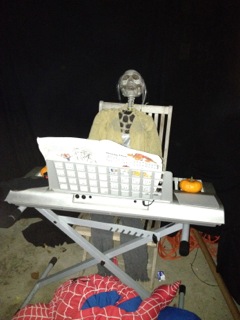
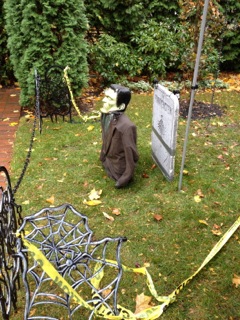
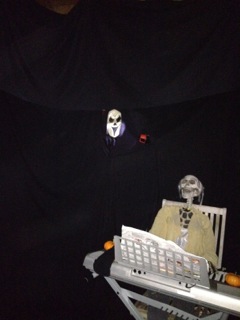
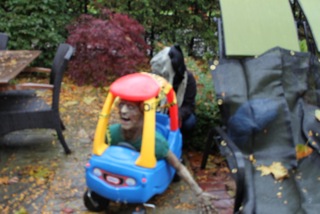
A preschool-aged sibling hid in his room. A writhing trapped rat greeted us at the door. A skeleton sang and swayed while playing the keyboard. A ghost fell on my head. The masterminds? Two boys in grade 4 and their trusty crew of friends, one sister and parents. The mission? To raise money for breast cancer research.

This story goes back to the first day of school. A boy in grade 4 approached me, clipboard in hand. He explained that he had started organizing a Haunted House fundraiser and wanted to meet to discuss it. He knew that’s all it took to launch a leadership project. “Drop by my office and we’ll talk. But remember that you must be willing to persist, and to think flexibly as we plan.” This wasn’t part of a club or program and would test his commitment from the start by making him take responsibility.

He had lots of ideas. He gathered a team. When they learned they couldn’t create a Haunted House at KCS, his friend suggested they could transform his garage. When this boy asked his parents if they could use the garage, his parents replied that they needed a written proposal. The proposal passed, posters were made, a Powerpoint presentation to their classmates was given and a note to their parents posted in the weekly newsletter. Throughout were lots of drafts, changes, challenges, and mistakes. They gave up their recesses, tracked me down a dozen times or more, and devoted two weekends to preparing the garage.

The boys and their siblings raised a significant amount for cancer research. Dozens of visitors experienced an unforgettable Haunted House. This group, through their efforts, made the world better in multiple ways.

And adults of the world are left with a lesson. Don’t ever assume children are too young to lead. Let them lead. We’ll all enjoy a world that’s much richer for it.

Andrea Fanjoy,
Assistant Head, Academics
You can follow Andrea on Twitter @afanjoy.

Perspective

The following commercial was shared with me earlier this week.  I’m sharing it not to promote the organization, but the message.  In the grand scheme of things, sometimes the “problems” that we think we have are really not problems.  I’m keeping this one in my back pocket to use with my kids the next time they complain about something inconsequential.


Derek Logan
Head of School

Leadership, Passion, Cootie Catchers and Flexible Thinking

What happens when those four collide? Thanks to two boys in grade three who approached me last Monday, I can now answer that.

It was recess and I was working at my desk. These two entered my office with something they clearly wanted to say. Trouble is, some things are hard to articulate, especially when you’re eight. Eventually deducing they wanted to do a leadership project, they hadn’t yet thought of what that project would look like. I encouraged them to start from a personal talent or passion, and out came this: “You know”, said one, “I’m really good at making Cootie Catchers. I’m probably the best in the school. I make the biggest in the school, that’s for sure.”

This slideshow requires JavaScript.

Now, you are asking, “What does making Cootie Catchers have to do with leadership?” “How could they make a difference in the world?”

That’s where flexible thinking came in.

We struggled for a bit. It was clearly a new conundrum for all three of us. Where could these popular little games help? Well, they clearly help develop fine motor skill and strength – that’s important in grade one. Maybe they could be made to help practise basic academic skills too? Some trial and error later, we had defined a leadership project that has real value and that the boys have embraced with zeal. Dozens of different Cootie Catchers are being created to practise basic addition in grade one. Students will be given questions, the answer will be found, and the reward, a selection of smelly stickers, will be hidden in the heart of the Cootie Catcher.

I’ve no doubt this will be a hit with the grade ones. The beauty of these projects, however, is what they do for the budding leaders. The boys may not choose to stick with Cootie Catchers as their main contribution to the world. However, they have started a path with leadership, passion and flexible thinking that they would do well to continue on throughout life.

And who knows, maybe the humble Cootie Catcher should have a big future. It’s at least good to know that these boys will leave no stone unturned in their pursuit of ways to make a difference.

Andrea Fanjoy,
Assistant Head, Academics
You can follow Andrea on Twitter @afanjoy.

School and Other Things that Scare Us

Some lessons need to come from afar to be noticed.

Maasai Warriors visit KCSTwo special guests visited KCS last Friday. Jackson and Wilson, young Maasai warriors from Kenya, came as ambassadors for Free the Children. Draped in their traditional regalia, they told stories of growing up in their mid-African country, fleeing drought, herding cattle and collecting beaded bracelets from their “mammas” when they did good deeds, bracelets which they still wear with pride today.

Mindful of the young audience, they only shared one scary story. It was the story of how schools came to the Maasai. This was a terrifying development for parents, and their terror was passed down to their children. Moms and Dads told their offspring to never go near “school”, as it was a place that took children away from their parents and stole from them their culture and traditions. If policemen tried to force them to go, children were told to run.

Sure enough, the policemen came and children ran. In Wilson’s case, a police officer caught up and threw the young boy over his shoulder. He offered Wilson a candy and explained that school was just as sweet. The officer carried Wilson back to his parents, and, according to Wilson’s recollection, school was similarly explained to them. Wilson and Jackson not only ended up going to school but also became the first in their community to earn university degrees.

In my experience, the value of what is learned from cross-cultural exchanges is beyond measure.  The novelty in their details makes the universal lesson in the story that much more evident and memorable. One lesson from our Friday visit is that change can be both scary and wise. Though our community of Etobicoke and the entire developed world is long past any fear of schooling, we are not done changing and not beyond being fearful of change, even if it is right and positive. A daily read of the newspaper is full of such stories.

Jackson and Wilson are testaments to what can happen when positive change is embraced. Their experience with schooling, despite the rocky start, is a story of thinking flexibly, questioning, being curious, embracing learning (including that which challenged their assumptions) and ultimately, taking responsible risks.

Great lesson. Thanks, Wilson and Jackson, for coming from Kenya to our little corner of Etobicoke so we can learn from it.

Andrea Fanjoy,
Assistant Head, Academics
You can follow Andrea on Twitter @afanjoy.
Star Habits, Wish Habits

I couldn’t wish for more than what’s happening with our Habits.

We’re starting our third year since the official launch of our Habits of Mind, Body and Action. Anything new needs time to settle, time for all to adjust (or in KCS terms, time to exercise one’s flexible thinking), plus time for glitches to surface and tweaks to be made to make what’s new into a perfect fit.

Lots of such activity took place over the past two years while the Habits were still relatively new. This August, when teachers were asked about how they plan to integrate the Habits in their program for the upcoming year, it was eye-poppingly evident that the adjustment is behind us and we’re now going full speed ahead with our efforts to directly teach the habits that matter most for success in life. Collectively, faculty shared over one hundred ideas they have to teach and leverage the Habits in their classes. Here is a sample:

  • Leader of the Day with a special role to help the class
  • Class mission statements to support growth of the Habits
  • Student-made posters of the Habits
  • Student goal-setting on the Habits
  • Reference to the Habits in school assignments
  • Discussion of the Habits in class meetings and novel studies
  • Students teaching the Habits to other students
  • Students teaching the Habits to their parents and grandparents
  • Connecting the Habits with the study of heroes and leaders

One idea that is particularly out of this world came from grade 4. The students are identifying ‘Star Habits’ and ‘Wish Habits’. A ‘Star Habit’ is a habit they feel they have already established and of which they are proud. A ‘Wish Habit’ is a habit they want to focus on developing in first term. The students looked over all 26 Habits, reflected deeply, made their choices, and explained them in the context of home and school. Star Habit, Wish Habit as their ‘Star’ and ‘Wish’ Habits.

Like the spirit behind our Habits initiative, the students have wishes with a plan. And in the same way that our wishes to teach the Habits are coming true, I’ve no doubt our students’ ‘Wish Habits’ will also come true. What are your ‘Star’ and ‘Wish’ Habits? And what’s your plan to make your wishes come true? If you need some help, feel free to ask one of our grade fours.

Andrea Fanjoy,
Assistant Head, Academics

You can follow Andrea on Twitter @afanjoy.

The Leader in All of Us

Read any good books over the summer?

I hope you all had time to enjoy the ‘dog days’ of summer. I know you didn’t have homework to supervise and uniforms to wash. While you may have continued working, I hope summer offered you time to slow down and curl up to a good book.

Our teachers did. All of our teachers read the book The Leader in Me, by the late Stephen Covey, renowned author of “7 Habits of Highly Effective People”. Every summer, KCS faculty read a common book that relates to an area of focus for the upcoming year. I stumbled upon The Leader in Me while browsing through the shelves at Chapters last Christmas. It told the stories of schools around the world, not too many, that had embraced what we also embrace at KCS: Habits that matter and ubiquitous student leadership. These are exceptional schools that have had exceptional impact. We’re on the same path.

Everyone has the power to be a leader. In fact, we exert our influence all the time, often without even knowing it. Last week all faculty watched Drew Dudley’s TEDxToronto talk “Leading with Lollipops” (http://www.youtube.com/watch?v=hVCBrkrFrBE ). A few words and an impromptu gesture on his part served to keep a peer in university and catalyzed a relationship that led to marriage. And he doesn’t even remember it. We’re all leaders, whether or not we know it. By recognizing and encouraging leadership in everyone, children included, there’s no limit to the positive impact on the world.

This may not have been the theme of the books you read over the summer. But I thought you’d like to know that this was the theme of what we read. Leadership is ubiquitous at KCS. And little by little, our students help make the world a better place. There’s always room for more. We hope you’ll embrace our Habits and join us.

Andrea Fanjoy,
Assistant Head, Academics

You can follow Andrea on Twitter @afanjoy.
The Yin and Yang of Learning

There’s nothing like our grade two International Celebration to remind me of the Yin and Yang of learning.

Last Friday, our grade twos showed up in costumes from around the world. In their grade-two way, they did a brilliant job at assembly and then back in their classrooms sharing what they knew about their adopted countries.

What I love about this is the way these projects immerse students in how different life can be elsewhere. Some people argue we should focus on our similarities with others, and of course there are many. However, I’m most grateful for our differences, because it’s our differences which make us reflect anew on ourselves.

When I lived in Japan, not a single day went by when I didn’t learn something new, something that made me pause and adjust my understanding of the world and what was possible in it. Among all those lessons was that of Yin and Yang, and the notion that life is full of complementary opposites – it always was, is, shall be and should be – just like night and day.

This flies in the face of the primal Western mindset – the conviction that all can and should be great, that happiness should be a singular goal, and that frustration, setbacks, and grief are bad and to be avoided.

Heavy stuff from a grade two showcase.

Taking place one week before the end of school, I can’t help but reflect on the year. We wholeheartedly strive to maximize the Yang (light) part of the duality. Learning should have many successes. It should have moments of unbridled joy. There are so many such moments at KCS that a book couldn’t capture them all, let alone a blog.

It’s also important to remember the presence and the role of the Yin (dark).The year has also had frustrations, tears, injuries, and conflicts. There have been disagreements, hurt feelings, difficult discussions, and problems that lingered longer than anyone wanted. We work hard to minimize them, yet they happen anyway.

Life happens in complementary opposites, and life happens at KCS. Learning to be resilient is one of our KCS Habits because being resilient is necessary to get through the bumps inherent in a life fully lived.

We’ll keep working to make as much happiness as possible at KCS. And we’ll keep working to help our students face any setbacks. Knowing what matters in life includes both.

Thanks for the reminder, grade twos. And thanks to everyone, teachers, parents and students, who live through the Yin and Yang with us. It has been a great year of learning.

Andrea Fanjoy,
Assistant Head, Academics

You can follow Andrea on Twitter @afanjoy.
With Awe and Appreciation

One popped in to help my Mandarin student with his pronunciation.

Two co-chaired a gala that will live on as the most fun gathering of pirates, Willy Wonkas, Godfathers, Flappers and other assorted book characters Etobicoke has ever seen.

Two others worked steadfastly, as always, in our Parent Network Store.

I sat with six at our strategic planning meeting on Tuesday. Another six joined the grade ones on their outdoor education trip.

About a dozen worked in the hallways putting up 309 pieces of “Hero” art.

Thirty hosted dinner parties for hundreds of grateful KCS Moms, Dads, Friends and Staff.

Dozens more gave generously in time, expertise and goods to our Feast of Fiction extravaganza.

… and that doesn’t even cover the whole week.

One of our KCS Habits is Respond with Awe and Appreciation.  Between all of the above, and the countless other ways parents help make KCS what it is – New Family mentors, Welcome Back BBQ, special lunches, library helpers, various fundraisers, Open House volunteers, the Board of Governors and committees, class parents, and many more  – I am filled with the awe and appreciation we aim to establish in our students.

With effort, the world can be pretty awesome. With appreciation for the huge contributions of our parents, our little corner of the world is.

Andrea Fanjoy,
Assistant Head, Academics