Laughs at the Legislature

Our grade fives have the good fortune to learn about government. No, that wasn’t sarcasm.

Find humour is one of our Habits, and a particularly welcome one for the government unit. I’m no stranger to the passionate possibilities for a unit on government, but the content to cover with ten-year-olds leaves a bit to be desired. It’s a unit requiring special intervention. That’s where the good fortune comes in.

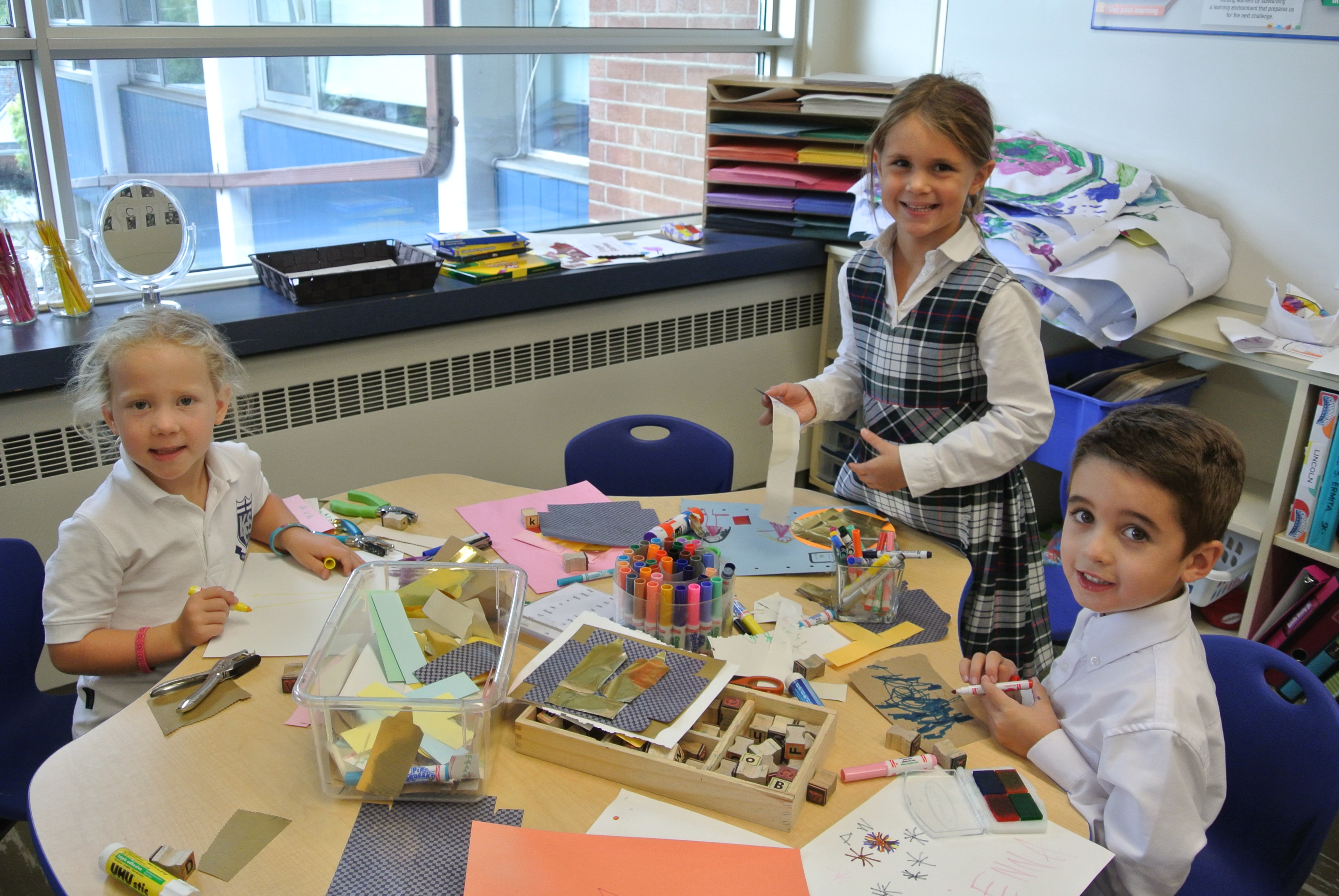
The culminating task designed by our grade five teachers shows all the students learn a great deal about how government works, and have a hoot while doing so. Each is asked to design a parliamentary CD cover and song list. With tongue in cheek, hit songs include:

  • What Does the Speaker Say?
  • That’s My Party
  • The Electoral Guitar
  • Speaker in the Sky with Diamonds
  • Most Votes Ever (Remix)
  • Eye of the Premier
  • We Are MPPs
  • The New Law Has a Flaw
  • The Page is on a Rage
  • Take a Seat on my Side
  • Happy House of Commons
  • and as a salute to the recent season, Rudolph the Red-Nosed Premier.

This slideshow requires JavaScript.

As our students get older, they will come to appreciate the serious work of government. Hopefully, they’ll also continue to be comfortable with a little respectful rib-poking. It’s healthy and encourages a creative culture.

Thanks grade fives. Your recent showcase gave us all some great chuckles. We’ll be sending your work to the Legislature. The evening news suggests they could use a laugh too. Any contribution you make to a happy, healthy, creative year ahead in government would be welcome news indeed.

Andrea Fanjoy,
Assistant Head, Academics
You can follow Andrea on Twitter @afanjoy.

Where Courage Happens

Lots of wonderful, just-plain-happy things happen at KCS. This week’s Blue Spruce celebration, complete with costumes, contests and cupcakes, is one fine example of such a thing. Yesterday’s grade 8-primary buddy get together to play Stinky Pig, Octopus and Soccer Bench Ball is another great example. Overhearing one SK ask another if she could join him, and his reply of yes – a simple thing but oh-so-important for that one girl – is a third example from the last 24 hours that leaves me smiling.

Some things are a bit more complicated, a bit tougher, and I’ve seen plenty of them since September too. Wake Up With the Arts is an exceptionally heart-warming monthly student performance, but there’s no question it’s courage-on-display. The event is entirely student-driven, and performances include students who perform solo, often on new instruments, or dancing something they choreographed themselves. We had our annual grade 7 and 8 speech contest and these remarkable youth held us spellbound by their effort and courage to stand in front a large crowd to deliver their speeches. Other moments of courage happen on the playground, or in the classroom, and they may be more private but they’re significant none-the-less. Our mission is to prepare students for challenges. They happen here. And our students respond with such courage you can’t help but be inspired to watch.

All of this reminded me of a great video a former student introduced me to. It’s a good one to watch and share with those you love. The world’s most remarkable people had to summon courage to face challenges and overcome failure, and their example should inspire us all.

January will bring a new year that I’m sure will be full of happy happenings at KCS. It will also bring many moments of courage. I wish you all a new year full of both.

Andrea Fanjoy,
Assistant Head, Academics
You can follow Andrea on Twitter @afanjoy.

What a Term

Andrea is quiet.Lately, I’ve been keeping quiet. Our assemblies over the past number of years have gotten longer and longer, full of student presentations, leadership projects and other special events that are now blissfully common at KCS. Since late last year, I’ve spoken less often at assemblies so the students can speak more.

At last Friday morning’s assembly, I desperately wanted to speak to the students about how proud I was of all their efforts over first term. Then I learned what was in store for the student-led assembly: grade 1 and 3 presentations, a Reason for the Season presentation, a Yoga presentation for an upcoming school-wide unit, Compliment Friday, other leadership project presentations and more. I stayed in the audience. The activity of our students and the greater KCS community was much more important than anything I intended to say.

At the beginning of the year, I wrote about our intended journey for the year. I’ve written previously about athletic successes, our unique Wake Up with the Arts, new math initiatives, and our ongoing efforts to expand project-based learning at KCS. All these things are well underway. The momentum in our Four Doors to Learning continues to grow and the students increasingly impress. For specifics from the term, our KCS Facebook page best tells the detailed tale.

I’ve found other ways to let the students know how much I appreciate their efforts to do their best, and enrich KCS in doing so. Next week at interviews, parents and teachers will have time devoted to doing the same. Even from struggles and mistakes, there has been significant growth and learning. For the many students who’ve thrown themselves into a project, club, team, or subject, they’ve learned that with exceptional effort comes exceptional results.

It’s been a great journey so far. And I couldn’t be happier than to let the students, and all that happens at KCS, do the talking. I’ll keep quietly watching and bursting with pride.

Andrea Fanjoy,
Assistant Head, Academics
You can follow Andrea on Twitter @afanjoy.

E is for our Early Learning Program

Early Learning ProgramA is for the alphabet, which we learn every which way.

B is for building campsites, castles, “Bad Guy Alarms”, and whatever else our imaginations want to build. It’s also for birds enjoying our feeders in the Outdoor Classroom.

C is for counting everything. And caterpillars, in the classroom.

D is for dressing up, decoding words and drawing at our desks.

E is for eyes, and how earnestly we lock ours with yours as we tell you what we’re doing.

F is for our fish Gill and Goldy Antonio. It’s also for learning to be good friends.

G is for the magnifying glasses we use to look for bugs.

H is for our Handwriting Without Tears workbooks and exercises.

I is for initiative and imagination, developed through play. I is also for iPads, used every day.

J is for jewelry. We make friendship bracelets and necklaces as a way to teach patterns.

K is for kinesthetic learning – creating 3D shapes with Play Dough, building words out of letter tiles, making letters with pebbles, and tracing numbers in salt.

L is for listening to teachers and friends. It’s also for our older Learning Buddies.

M is for magic potions made at the water table, mystery readers, and math games. It’s also for learning from mistakes.

N is for noisy, because that’s how it should be when language learning happens all the time.

O is for our beloved new Outdoor Classroom.

P is for self-portraits, painting, and learning through play.

Q is for the Habit ‘Question and Be Curious’, so evident among young students. May it last forever.

R is for reading, and being read to. It’s also for resilience when times are tough, because sometimes they are.

S is for the slime made on Halloween, ‘Stinky Pig’, snack, and using all of our senses to learn.

T is for the Three School Rules, and trips to the farm, theatre and the symphony. It’s also for the team of ELP teachers who make this ABC story come true.

U is for upset tummies. Unfortunately anxiety is starting younger and younger, so we strive to create a warm and welcoming environment that encourages positive risk taking.

V is for visualizing numbers in different ways (dots on dice, ten frames, manipulatives, stones).

W is for ‘Whole Body Listening’, because listening with your ears isn’t enough.

X is for, you guessed it, the xylophone. Happily, that’s an instrument we play in the ELP.

Y is for young authors – exploring the foundations of storytelling by drawing 3-panel comics (beginning/middle/end)

Z is for zippers. “The bane of our existence.”

Andrea Fanjoy,
Assistant Head, Academics
You can follow Andrea on Twitter @afanjoy.

Getting Out

I love this wonderful corner of Toronto. Living and working here, and spending my days with those who do the same, is one of my greatest good fortunes in life.

A recent field trip reminded me of the blessings of getting out.

This past Friday, the grade 8s, Ms Gaudet and I went to Variety Village, where 240 special athletes arrived to participate in the Four Corners provincial-qualifying track and field meet organized by Special Olympics Ontario. James Noronha, Youth Group Leader at St. Georges-on-the-Hill Church as well as Manager of Program Services at Special Olympics Ontario, gave our grade 8s the opportunity to be marshalls, timers and ambassadors at the event.

Whether demonstrating shotput, enticing reluctant long jumpers, announcing race starts, timing runners, or cheering on their adopted school teams, our students demonstrated exuberance, patience, kindness, adaptability, clarity in communication, focus on task and unlimited appreciation for these exceptional athletes. In return, we were all inspired by many athletes’ undeniable skill, and all athletes’ determination to try their best, pride in participation, and willingness to take the leap, throw the shotput, and run the race, especially when for some it was new and unsettling. When I asked some of our students what stood out most for them, they shared it was the athletes’ smiles. They noticed that regardless of how an athlete did, each ended their event with a smile so immense it felt they grabbed our hearts as they raised their fists in victory.

My words can’t quite describe how beautiful a day it was, and how different a day it was. It’s good for everyone to get out of their usual stomping grounds for many reasons, of course. How fortunate we were that we got out, and that our reason was to be at Variety Village, spending the day with special athletes and Special Olympics. May we all get out more often.

Andrea Fanjoy,
Assistant Head, Academics
You can follow Andrea on Twitter @afanjoy.
The ‘H’ Word

“I’ve never overseen homework in my house. My kids know to settle down and get it done.” — A KCS parent

I’ve long envied that mother, as I know first-hand that homework doesn’t always work like that. In fact, based on everything I’ve heard and read over many years, it’s clear that the homework experience can range from the sublime to the ridiculous. While a common element in schools throughout the world, there’s little that’s common about how it plays out at home.

If there were a one-size-fits-all solution to homework, rest assured, we would have embraced it. In its absence, KCS offers what we believe is the next best thing – a balanced approach that respects individual students and families; that has value, while also respecting the value of free time, particularly in childhood; and that directly asks students and parents to let us know when homework gets out of hand. Every October, KCS teachers ask parents how homework is going. Every May, we ask parents in our annual Family Satisfaction Survey if they agree with our guidelines of approximately ten minutes per grade (e.g. grade 3 x 10 minutes = 30 minutes) and with minimal need for adult support. We also ask if parents are satisfied with their child’s ability to complete homework within these guidelines.

What do they tell us? Year after year, and for every grade, the majority of parents are satisfied with our guidelines. Overall, 81% of parents in last year’s survey stated they support our guidelines. Among those who don’t, 8% said the guidelines represent too much homework and 13% said they represent too little homework. Regarding the homework experience, 75% of parents are satisfied with their child’s ability to complete homework within the guidelines and with minimal adult assistance. Homework can be a difficult habit to establish for many children. While it’s clear a number of students are still working on becoming efficient and independent, it’s encouraging to see that the majority of our students are managing homework well.

A telling trend emerges when looking at the results from year-to-year. In fact, what’s ‘telling’ is the lack of a trend. Since we started asking about homework a number of years ago, there is considerable variability within grades year over year. Where one year the parents with children in a given grade may be close to 100% in support of our guidelines, the next year’s results may reveal that only 70% of parents support the guidelines for that grade. The following year, it may be high again. Consistent consensus on homework is nowhere to be found.

What’s a school to do? First, schools need to do their own homework on how to best design, assign and support it. A few years ago, KCS undertook this challenge and you can find the results in the report “Homework at KCS”. Second, schools need to reach out to parents. Parents know best how homework is going in their household. The same homework assigned to a class may take one child five minutes and another 50. The same assignment may be readily done by some children without parents’ help, while other students may be entirely unable to begin without an adult by their side. Finally, schools need to be prepared to make individual adjustments to homework where needed. Multiple hours of homework each night is as unhealthy as it is unwise. While we can’t promise it will always be sublime, it should never be ridiculous.

Hopefully, homework isn’t a bad word in your home. Because we know it has the potential, we’re doing our best to make it the best it can be. For that, we need your help. In this one way, we step away from our guidelines. For us to do our homework, we need you by our side.

Andrea Fanjoy,
Assistant Head, Academics
You can follow Andrea on Twitter @afanjoy.
Toy Hacking, Tinkering and Other Great Pastimes

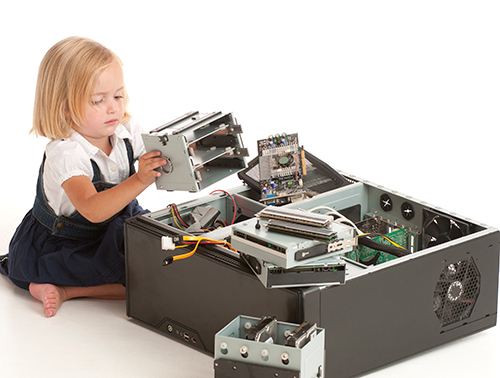
GirlBuildsPCSmallRemember the nasty kid next door in the movie, Toy Story? It turns out he was on to something.

There’s something wonderful gaining steam throughout the world. It’s a marriage of the old and new, the practical and whimsical, small-scale pleasure and make-the-world-better possibility. It includes programmable clothing, ‘reconfigured’ toys, books that conduct electricity, and an experience in creation that truly has no bounds. It’s called the Maker Movement, it’s for ordinary folk ages 3 to 103, and it’s an exercise in learning that’s worth learning about.

While adult examples can be pretty sophisticated, here’s an example of how it can work with children. Let’s say a 10-year-old has a stuffed dog. It’s a fine toy and much loved. But let’s say that child has had the chance to play with microcontrollers, LED lights, and sensors. Maybe she’s been introduced to electronics and simple programming languages designed for neophytes of all ages. Maybe she’s witnessed others inventing weird and wonderful contraptions using everything from computer programming, 3D printing, sewing, woodworking, electronics and any number of strategically-chosen odds and ends. That 10-year-old might decide to write some code, set up a microcontroller with LEDs and sensors, upload the code, open up the dog, embed the hardware, stitch him up, and enjoy a dog whose eyes now light up when it’s ‘owner’ picks him up. How’s that for learning?

Thanks to the Maker Movement, this is happening. And we’re taking steps to make it happen at KCS. Anyone wanting to see this in action with children and youth is encouraged to check out MakerKids in West Toronto. To see “big kids” in the Maker Movement, you might want to visit the Toronto Mini Maker Faire at the Toronto Reference Library November 22nd and 23rd.

The Mini Maker Faire is in my calendar. And unleashing the Maker Movement at KCS is on my to-do list. Let the tinkering begin.

Andrea Fanjoy,
Assistant Head, Academics
You can follow Andrea on Twitter @afanjoy.

Math at KCS

MathYou’ve likely already noticed that math is a hot topic in mainstream media these days. While newsrooms haven’t always been following the subject, we have.

Monitoring the profession from a global perspective, and debating strengths and limitations of our current practice, are part of the day-to-day work at KCS. This determination to do our best for every student over the years has led to a number of initiatives, such as:

  • Constantly growing collection of tools for differentiating instruction in the classroom, so all students can learn what they need at the level that’s right for them
  • Introduction of math workshops (small-group dedicated instruction) in grades 6 to 8
  • Introduction of JUMP Math in grades 2 to 5, where we think it’s the best fit
  • Introduction of the online math program Math Help Services in grades 7 and 8, where we think it’s the best fit
  • The use of Khan Academy to help support differentiated instruction
  • Widespread participation in the Brock University Caribou Math Challenge
  • The use of the University of Waterloo Math Problem of the Week in multiple grades for rigorous problem-solving
  • Introduction of computer programming with Visual Basic through our electives program, a language that requires significant use of advanced math

These are on top of our longstanding commitment to ensuring students master their basic math facts; avoiding the use of calculators except when appropriate and in the oldest grades; having ample experience with problem-solving; and enjoying generous use of concrete materials in their youngest years.

In the Family Satisfaction survey, a number of parents asked about our math program, in particular math in our older grades. I’m happy to report that our Canadian Achievement Test scores from last year are the best ever in the school’s history, with our senior students on average achieving in the 91st percentile across Canada in math concepts, and the 93rd percentile in computation and estimation. In fact, from grades 3 to 7, the grades that undertake the CAT test, the average percentiles were all at their highest ever, ranging from the 84th to the 94th percentile. We regularly hear from alumni and their parents that our students do very well in grade 9. Any feedback to the contrary is explored to determine what, if anything, can be done better.

Our math teachers have worked tirelessly over the years to help every student master what they need to know. For students who can’t get enough math, we won’t stop looking for more to give. For students who find math a relatively daunting challenge? Attentive teachers, with multiple tools, some being online, is great news for them too. And when news media have moved on to other issues, we’ll still be learning, debating and improving what we do.

Andrea Fanjoy,
Assistant Head, Academics
You can follow Andrea on Twitter @afanjoy.

Can They Feel Their Brain Growing?

HeadandArrowssmallIt’s a tough habit to break. In a school full of students who impress in myriad ways, it’s hard not to hand out generous amounts of praise.

What’s the harm? Plenty. This recent article by Sal Khan “The Learning Myth: Why I’ll Never Tell My Son He’s Smart” is a worthy reminder to tread carefully with praise. The possibilities are endless if we do.

(Parents and students wanting to stretch their brains might enjoy checking out Khan Academy and their large library of brief, instruction videos on a whole array of topics.)

Andrea Fanjoy,
Assistant Head, Academics
You can follow Andrea on Twitter @afanjoy.

The Journey to Come

“It is good to have an end to journey toward; but it is the journey that matters, in the end.”

Ernest Hemingway

Here we are, at the start of a new school year. Our teachers have been hard at work planning this year’s journey, much like parents planned the wonderful family holidays we’ve heard about since our students’ return. In the same way that our students will soon be goal-setting for the term, here are the school-wide areas of focus, the ends if you will, that our teachers are working toward:

  1. Living the Mission, with the Habits of Mind, Body and Action; Project-Based Learning; service learning; student leadership; Learning for the Love of It; and more  that support the development of lifelong learners, that I look forward to sharing as the year unfolds
  2. Student Wellness, following up on feedback from students in our Student Voice; faculty and staff-wide professional development (PD) on mental health first aid and faculty PD on Attention Deficit Hyperactivity Disorder; a review of our Social-Emotional Learning practices; and full launch of our concussion protocol
  3. Technology, with more 1:1 and 1:2 access from grades 3 and up, and increased access to iPads in grades JK to grade 2
  4. Assessment, with the development of a new report card for next school year and the exploration of other new tools to help capture and share the story of our students’ growth
  5. Writing, with the pilot of new tools in multiple grades
  6. Social Studies and French, to align with the new Ministry curriculum in these subjects

Some of our areas of focus are ongoing from previous years. Others are at the start of a multi-year focus.

Much like a good journey, you can’t plan for everything. Surprises likely lurk, as do bumps in the road that will need to be worked around. Ongoing collaboration, flexible and creative thinking, persistence and responsible risks will carry us forward. At KCS, that’s what happens on the journey, and that’s what matters in the end.

Andrea Fanjoy,
Assistant Head, Academics
You can follow Andrea on Twitter @afanjoy.